






A Call for Trust, Transparency, and Needo-Consumption in the Digital Economy
Trust Deficit in a Digital World
In an increasingly digitized global economy, “Put Trust in Antitrust” is more than just a reformist slogan—it is a foundational mandate of the Needonomics School of Thought (NST). The essence of this thought framework lies in replacing greed with need, and manipulation with mindfulness.
Today, India is grappling with what NST describe as a high coefficient of distrust—an invisible yet powerful force eroding confidence in institutions, markets, governance structures, and even interpersonal transactions. This trust deficit is particularly acute in the digital economy, where expectations outpace delivery, and technological power concentrates in the hands of a few dominant players.
In traditional sectors like agriculture and industry, the absence of a level-playing field has long been a concern. However, the digital space—often viewed as democratic and decentralizing—is now threatened by monopolistic practices, algorithmic bias, and data-driven exploitation. The dominance of tech giants, often operating as gatekeepers of information and commerce, poses a serious challenge to consumer sovereignty, market competition, and economic ethics.
Need for a Redesigned Antitrust Framework
In this context, the Digital Competition Bill offers a much-needed opportunity to restructure the regulatory landscape for the digital era. But legislation alone is not enough. What we need is an ethical compass, rooted in trust, transparency, and fairness—values enshrined in Needonomics.
The current antitrust framework was largely designed for the industrial age. It focuses on price manipulation, market share, and mergers. However, in the digital economy, market power is wielded not just through pricing, but through control over data, algorithms, search rankings, visibility, and user behavior. Traditional tools of competition law often fall short in addressing these challenges.
The Needonomics approach to antitrust calls for moving beyond legalistic deterrence to building an ecosystem where trust becomes institutionalized. To do so, digital infrastructure must be neutral—free from bias, favoritism, or opaque algorithmic prioritization. This neutrality is essential for ensuring fair access, preserving consumer choice, and upholding economic justice.
Trust Cannot Be Mandated—It Must Be Earned
According to Needonomics, trust is not a commandment to be enforced but a natural outcome of ethical conduct. In digital markets, where data asymmetry is rampant and terms of service are often unreadable or non-negotiable, the absence of trust breeds disempowerment. Users become passive participants in a game they do not understand.
Therefore, antitrust laws must shift focus from punishment to prevention. Regulation should not be reactive but anticipatory and participatory. There should be space for civil society engagement, ethical oversight, and continuous dialogue between stakeholders. Regulators must preemptively prevent dominance, not just penalize it once the damage is done.
When trust is earned, compliance becomes voluntary, and the market transforms from a battleground into a community of ethical exchange.
NST: A Playground for New Ideas in the Global Economy
The Needonomics School of Thought (NST) emerged from a deep dissatisfaction with the greed-driven economics dominating global policy. NST sees the economy not merely as a machine of production and consumption but as a social and moral space, where values shape value.
NST provides a playground for fresh thinking, especially relevant in an era where competition has turned unhealthy. From data hoarding to platform lock-ins and manipulative advertising, competition today has become predatory rather than productive. This calls for a paradigm shift—one that aligns with the spirit, not just the letter, of regulation.
References
- Goel, M.M, From Need to Nurture: A Needonomic Roadmap for Revitalizing Rural India, August 10, 2025.
- Goel, M.M, Three D’s of Sustainable Success in Needonomics Language June, 2025
- Goel, M.M, Reinterpreting Dr. B.R. Ambedkar through the Lens of Needonomics May 07,2025
- Goel, M.M, Needonomics: A Panacea for Society’s Ills April 08,2025
- M. M. Goel, . Consumption of Food in Needonomics Framework: A Sustainable Path to Health and Equity March 03, 2025
- M. M. Goel, Viksit Bharat @ 2047: Gita-Inspired Needonomics for Overcoming Challenges, Seizing Opportunities & Charting the Roadmap with audio podcast February 17,2025
- M. M. Goel, Ethical Pathways for IMF and World Bank Prosperity Sharing: Niti Gun Insights under the Needonomics Framework, with audio podcast January 15, 2025.
- M. M. Goel, Vikshit Bharat: Bridging Dattopant Thengdi’s Vision with Needonomics for Inclusive Growth with audio podcast, December 16,2024.
- M. M. Goel, Needonomics for Teachers and Researchers in Economics Part 3, November 26,2024.
- M. M. Goel, Needonomics for Teachers and Researchers in Economics Part 2, November 12,2024.
- M. M. Goel, Needonomics for Teachers and Researchers in Economics Part 1, October 16,2024.
- M. M. Goel, Lessons of Needonomics for Service Sector in Present Times, ( with audio podcast) October 02,2024
- M. M. Goel, Revitalizing Indian Manufacturing with Needonomics: Leveraging Labor for Viksit Bharat (with audio podcast), September 18,2024
- M. M. Goel, Needonomics: Implications for Agriculture, (with audio podcast) September 07,2024.
- M. M. Goel, Needonomics: Balancing “How” and “Why” in an era of Greedonomics and AI, August 17, 2024
- M. M. Goel, Needonomics and Its Implications for the Indian Systems of Medicine: A Path to Sustainable Health, August 17,2024
- M. M. Goel, Needonomics: Implications for the 16th Finance Commission of India, ( with audio podcast), August 05,2024
- M. M. Goel, Needonomics: Implications for Needo-Governance in a Democratic World, (audio podcast), July 18,2024
- M. M. Goel, Needonomics: The Key to Thriving in a Knowledge-Based Economy,(audio podcast) July 08, 2024.
- M. M. Goel, Needonomics: Implications for Traders and Exporters in a Changing Economic Scenario (with audio podcast) June 19, 2024.
- M. M. Goel, Needonomics: Implications for Distributors in Changing Economic Scenario, (with audio podcast) June 04, 2024
- M. M. Goel, Needonomics: Implications for Producers in Changing Economic Scenario, (with audio podcast) May 14,2024
- M. M. Goel, Needo-Consumption: Implications for Global Consumers, April 22,2024
- M. M. Goel, Needonomics: SWOC ANALYSIS (with audio podcast) April 9, 2024.
- M. M. Goel, Unveiling the Perils of Greedonomics, (with audio podcast) March 11, 2024.
- M. M. Goel, Needonomics: Queen of Social Sciences for Global Economy, (with audio podcast) February 26, 2024.
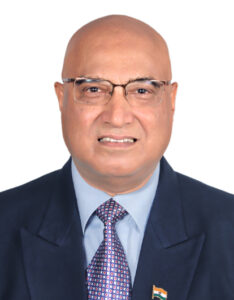 Dr. M M Goel | About the Author Propounder Needonomics, Professor Madan Mohan Goel is a superannuated Professor of Kurukshetra University. He is former Vice-Chancellor, Starex University, Gurugram, Jagannath University Jaipur, RGNIYD (GOI), Pro Vice-Chancellor VKSU Ara, Dean of Colleges & Social Sciences, Chairman, Dept. of Economics & Dept. of Journalism KUK He was the first ICCR Chair Professor in South Korea. Presently he is an Adjunct Professor at the Institute of Advanced Sciences Dartmouth, USA. He is honoured with the London Organization of Skill Development (LOSD) Excellence Award 2023, Professor J.K. Mehta Academic Excellence Award 2023, Rashtrapita Rashtriya Samman 2023 for propounding Needonomics and Gurukul Gyanjyoti Award (2024). His area of research is Economics of HRD & Indian Economy. He has 483 publications and guided 25 PhD and 25 MPhil Scholars. |
If you would like to get connected to Dr M M Goel write to editor@acadnews.com.