







In the landscape of Indian economic thought, diverse philosophies have emerged, each proposing unique pathways to achieve sustainable and equitable development towards Vikshit Bharat in 2047. Among these, the ideas of Dattopant Thengdi, the founder of the Bharatiya Mazdoor Sangh and a prominent thinker in India’s labor movement, align closely with the Needonomics School of Thought, advocated by Professor Madan Mohan Goel. Though these philosophies arose from different contexts, they share common values and principles aimed at building a more self-reliant, needs-based, and morally grounded economy. This article explores the intersection of Thengdi’s economic ideology with Needonomics, illustrating how their converging visions can guide India toward a holistic, people-centered economic model. This reflection also serves as a tribute to Dattopant Thengdi on his 104th birth anniversary on November 10.
Foundation of Dattopant Thengdi’s Economic Philosophy
Dattopant Thengdi (1920–2004) was a visionary leader who advocated for an economic system rooted in India’s cultural and social values. He championed Swadeshi economics, prioritizing self-reliance, dignity of labor, and moral integrity in economic practices. Thengdi opposed both unbridled capitalism and socialism, viewing them as incompatible with India’s socio-cultural fabric. His vision focused on creating an economic model that respects individual dignity while promoting collective welfare, emphasizing simplicity, self-sufficiency, and community-driven growth.
Thengdi’s Swadeshi approach argued for a need-based development model, steering away from consumerism and material excess. By focusing on fulfilling essential needs rather than promoting unchecked consumption, he envisioned a balanced economy that ensures sustainable growth without depleting resources or compromising ethical standards.
Needonomics School of Thought
Professor Madan Mohan Goel’s Needonomics School of Thought shares similar principles with Thengdi’s vision. Drawing inspiration from Verse 9.22 of the Bhagavad Gita, Needonomics emphasizes distinguishing between needs and wants, advocating for an economy driven by necessities rather than excessive consumption and waste. This philosophy challenges the prevailing culture of materialism, promoting simplicity, moral values, and conscious economic decision-making.
Needonomics calls for modest consumption, equitable distribution, and sustainable resource use, shifting from “more is better” to “enough is enough.” This approach addresses not only economic challenges but also promotes a lifestyle aligned with ethical principles and long-term societal well-being.
Key Similarities between Thengdi’s Philosophy and Needonomics
Despite originating from different eras, the economic philosophies of Dattopant Thengdi and the Needonomics School of Thought share several core similarities:
- Focus on Need-Based Living: Both Thengdi and Prof.M.M. Goel emphasize distinguishing between needs and wants. Thengdi’s Swadeshi economics discourages consumerism, advocating a lifestyle grounded in simplicity and essential needs. Likewise, Needonomics promotes a need-based approach to economic decisions, focusing on modest consumption and sustainable living.
- Self-Reliance (Swadeshi): Thengdi’s model underscores self-sufficiency, encouraging India to reduce dependence on foreign goods and foster local industry. Needonomics similarly champions self-reliance, emphasizing economic practices that prioritize indigenous resources and local needs over global consumer trends, thereby enhancing economic resilience and national dignity.
- Moral and Ethical Foundation: Both philosophies stress the importance of moral values in economic practices. Thengdi’s economic ideology was rooted in social responsibility, advocating for practices that benefit society rather than fueling individual greed. Similarly, Needonomics urges individuals and businesses to make ethical choices that align with the greater good.
- Simplicity and Minimalism: Thengdi and Goel both advocate for simplicity in economic life. Thengdi believed in a straightforward, minimalistic lifestyle as a means to combat material excess and preserve cultural values. Needonomics echoes this by promoting a minimalist approach to consumption, emphasizing essentials over extravagance.
- Labor and Human Dignity: With his background in labor leadership, Thengdi emphasized the importance of dignified labor and fair treatment of workers. He believed that economic systems should protect and honor labor as the backbone of society. Needonomics similarly values human dignity, advocating for policies that uplift individuals and promote equitable opportunities.
- Sustainability and Long-Term Vision: Both Thengdi and Professor Goel highlight sustainability as a core principle. Thengdi’s Swadeshi model and Goel’s Needonomics discourage resource exploitation and emphasize responsible environmental stewardship. Both advocate for an economy that meets current needs without compromising the future.
- Community-Oriented Development: Thengdi believed in community-driven progress, where economic policies align with the well-being of local communities. Needonomics reflects this by promoting policies that benefit society as a whole, fostering social cohesion rather than catering to narrow interests.
Relevance of Thengdi’s and Needonomics’ Ideas in Today’s Bharat
In today’s rapidly globalizing, consumer-driven world, the philosophies of Dattopant Thengdi and the Needonomics School of Thought are more relevant than ever. India’s economic progress is often measured through metrics like GDP and consumer spending, yet these metrics overlook the well-being of individuals and communities. By focusing on genuine needs and ethical growth, these philosophies present a model that balances material progress with social responsibility and environmental care.
Moreover, these ideas align with global movements toward sustainability and responsible consumption to be exactly needo-consumption as mindful consumption. As the world grapples with challenges like climate change, resource depletion, and social inequality, the principles of simplicity, morality, and self-reliance championed by Thengdi and Needonomics offer valuable insights for a holistic economic model in India.
Toward a Holistic Economic Model for Bharat to be Viksit
In conclusion, the converging visions of Dattopant Thengdi and the Needonomics School of Thought provide a framework for an economy that is both resilient and equitable. By emphasizing need-based living, ethical practices, and community welfare, these philosophies advocate for a model of development that serves not just economic growth but also social and moral progress.
In an era dominated by consumerism and globalization, Thengdi’s Swadeshi philosophy and Needonomics remind us that sustainable and inclusive development can be achieved only by prioritizing human values over material excess. Together, they offer India a path to becoming a truly developed nation—one that upholds the dignity of every citizen and fosters a prosperous, self-reliant society rooted in enduring values.
References
- M. M. Goel, Needonomics for Teachers and Researchers in Economics Part 3, November 26,2024.
- M. M. Goel, Needonomics for Teachers and Researchers in Economics Part 2, November 12,2024.
- M. M. Goel, Needonomics for Teachers and Researchers in Economics Part 1, October 16,2024.
- M. M. Goel, Lessons of Needonomics for Service Sector in Present Times, ( with audio podcast) October 02,2024
- M. M. Goel, Revitalizing Indian Manufacturing with Needonomics: Leveraging Labor for Viksit Bharat (with audio podcast), September 18,2024
- M. M. Goel, Needonomics: Implications for Agriculture, (with audio podcast) September 07,2024.
- M. M. Goel, Needonomics: Balancing “How” and “Why” in an era of Greedonomics and AI, August 17, 2024
- M. M. Goel, Needonomics and Its Implications for the Indian Systems of Medicine: A Path to Sustainable Health, August 17,2024
- M. M. Goel, Needonomics: Implications for the 16th Finance Commission of India, ( with audio podcast), August 05,2024
- M. M. Goel, Needonomics: Implications for Needo-Governance in a Democratic World, (audio podcast), July 18,2024
- M. M. Goel, Needonomics: The Key to Thriving in a Knowledge-Based Economy,(audio podcast) July 08, 2024.
- M. M. Goel, Needonomics: Implications for Traders and Exporters in a Changing Economic Scenario (with audio podcast) June 19, 2024.
- M. M. Goel, Needonomics: Implications for Distributors in Changing Economic Scenario, (with audio podcast) June 04, 2024
- M. M. Goel, Needonomics: Implications for Producers in Changing Economic Scenario, (with audio podcast) May 14,2024
- M. M. Goel, Needo-Consumption: Implications for Global Consumers, April 22,2024
- M. M. Goel, Needonomics: SWOC ANALYSIS (with audio podcast) April 9, 2024.
- M. M. Goel, Unveiling the Perils of Greedonomics, (with audio podcast) March 11, 2024.
- M. M. Goel, Needonomics: Queen of Social Sciences for Global Economy, (with audio podcast) February 26, 2024.
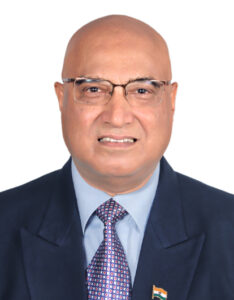 Dr. M M Goel | About the Author Propounder Needonomics, Professor Madan Mohan Goel is a superannuated Professor of Kurukshetra University. He is former Vice-Chancellor, Starex University, Gurugram, Jagannath University Jaipur, RGNIYD (GOI), Pro Vice-Chancellor VKSU Ara, Dean of Colleges & Social Sciences, Chairman, Dept. of Economics & Dept. of Journalism KUK He was the first ICCR Chair Professor in South Korea. Presently he is an Adjunct Professor at the Institute of Advanced Sciences Dartmouth, USA. He is honoured with the London Organization of Skill Development (LOSD) Excellence Award 2023, Professor J.K. Mehta Academic Excellence Award 2023, Rashtrapita Rashtriya Samman 2023 for propounding Needonomics and Gurukul Gyanjyoti Award (2024). His area of research is Economics of HRD & Indian Economy. He has 483 publications and guided 25 PhD and 25 MPhil Scholars. |
If you would like to get connected to Dr M M Goel write to editor@acadnews.com.