







In an era marked by growing inequality and unsustainable practices, the Needonomics framework offers a transformative approach to global development with the goal to emphasize ethical considerations and practical pathways within a global economic framework. The Niti Gun (ethics) insights under the Needonomics Framework provide a compelling tool for fostering shared prosperity through principled economic governance. Global institutions such as the International Monetary Fund (IMF) and the World Bank Group can integrate this ethical lens to drive sustainable, inclusive, and equitable growth.
- Principle-Driven Prosperity
At its core, the Niti Gun emphasizes ethical governance, integrity, and morality as the foundation of economic activities. Prosperity shared across society depends on just and fair systems, achievable by enforcing principles like honesty, transparency, and accountability in economic policies and business practices.
In a world where greed often drives inequality, the Niti Gun reorients priorities toward need-based economics rather than greed-based capitalism. This shift ensures that economic decisions are not only profitable but also just, fostering long-term societal well-being.
- Aligning Prosperity with Sustainability
Needonomics advocates for sustainable growth by focusing on “needs” rather than “wants.” The Niti Gun ensures the safeguarding of resources for future generations by curbing over-exploitation and minimizing waste.
Ethical policies derived from the Niti Gun promote inclusive development while addressing environmental concerns. For example, initiatives like renewable energy adoption and equitable water distribution reflect the principle of meeting current needs without compromising the needs of future generations.
- Reducing Economic Inequality
Economic inequality is a global challenge, and the Niti Gun provides a roadmap for addressing it. By advocating wealth redistribution through fair taxation, need-based welfare schemes, and corruption elimination, this ethical framework ensures a balanced society.
The Niti Gun prioritizes the needs of marginalized communities, guaranteeing equitable access to essential resources. This alignment of public and corporate policies with social welfare goals fosters inclusive growth and narrows the wealth gap.
- Human-Centric Development
The Needonomics framework shifts the focus from profit maximization to human well-being. The Niti Gun ensures that businesses and governments prioritize fundamental aspects such as education, healthcare, and basic needs.
This principle-driven approach nurtures human talent, enhances productivity, and builds human capital, creating a virtuous cycle of shared prosperity. By investing in people, societies can achieve long-term economic and social stability.
- Encouraging Ethical Entrepreneurship
Entrepreneurs play a crucial role in shaping economies. The Niti Gun promotes innovation that addresses real human needs rather than creating artificial demand.
By enforcing ethical practices such as fair wages, non-exploitative pricing, and socially responsible investments, the Niti Gun bridges the gap between economic growth and societal welfare. Ethical entrepreneurship becomes a vehicle for wealth distribution and social upliftment.
- Building Trust in Institutions
Ethical governance and policies build trust among citizens, businesses, and other stakeholders. When decisions are guided by genuine needs and collective welfare, stakeholders are more likely to collaborate and invest in long-term growth.
The Niti Gun deters corruption, fostering a culture of accountability and fairness. By prioritizing ethical conduct, global institutions can strengthen their credibility and effectiveness in addressing pressing global challenges.
- Need-Based Globalization
The Niti Gun offers a blueprint for a more equitable form of globalization. By emphasizing mutual benefit and addressing global needs such as poverty, climate change, and healthcare, it shifts international trade and relations from exploitative practices to fair trade.
This ethical approach ensures that prosperity is shared among nations, creating a more balanced and harmonious global economy.
- Moral Leadership for Prosperity
Leadership grounded in the values of the Niti Gun inspires collective progress. Leaders who uphold justice, fairness, and compassion guide societies toward shared prosperity. Their actions encourage businesses and citizens to align with ethical principles, fostering a culture of integrity and service.
The Niti Gun ensures that leadership is driven by service rather than self-interest. By prioritizing collective welfare over individual gain, moral leadership paves the way for sustainable and inclusive development.
Conclusion
The concept of Niti Gun under the Needonomics framework offers a transformative pathway to ethical, sustainable, and inclusive growth. By adopting these principles, societies and global institutions can work towards transition from consumerism and inequality to a model of shared prosperity. The Niti Gun provides the ethical foundation necessary to address the complex challenges of our time, ensuring a future where growth benefits everyone, not just a privileged few.
References
- M. M. Goel, Vikshit Bharat: Bridging Dattopant Thengdi’s Vision with Needonomics for Inclusive Growth with audio podcast, December 16,2024.
- M. M. Goel, Needonomics for Teachers and Researchers in Economics Part 3, November 26,2024.
- M. M. Goel, Needonomics for Teachers and Researchers in Economics Part 2, November 12,2024.
- M. M. Goel, Needonomics for Teachers and Researchers in Economics Part 1, October 16,2024.
- M. M. Goel, Lessons of Needonomics for Service Sector in Present Times, ( with audio podcast) October 02,2024
- M. M. Goel, Revitalizing Indian Manufacturing with Needonomics: Leveraging Labor for Viksit Bharat (with audio podcast), September 18,2024
- M. M. Goel, Needonomics: Implications for Agriculture, (with audio podcast) September 07,2024.
- M. M. Goel, Needonomics: Balancing “How” and “Why” in an era of Greedonomics and AI, August 17, 2024
- M. M. Goel, Needonomics and Its Implications for the Indian Systems of Medicine: A Path to Sustainable Health, August 17,2024
- M. M. Goel, Needonomics: Implications for the 16th Finance Commission of India, ( with audio podcast), August 05,2024
- M. M. Goel, Needonomics: Implications for Needo-Governance in a Democratic World, (audio podcast), July 18,2024
- M. M. Goel, Needonomics: The Key to Thriving in a Knowledge-Based Economy,(audio podcast) July 08, 2024.
- M. M. Goel, Needonomics: Implications for Traders and Exporters in a Changing Economic Scenario (with audio podcast) June 19, 2024.
- M. M. Goel, Needonomics: Implications for Distributors in Changing Economic Scenario, (with audio podcast) June 04, 2024
- M. M. Goel, Needonomics: Implications for Producers in Changing Economic Scenario, (with audio podcast) May 14,2024
- M. M. Goel, Needo-Consumption: Implications for Global Consumers, April 22,2024
- M. M. Goel, Needonomics: SWOC ANALYSIS (with audio podcast) April 9, 2024.
- M. M. Goel, Unveiling the Perils of Greedonomics, (with audio podcast) March 11, 2024.
- M. M. Goel, Needonomics: Queen of Social Sciences for Global Economy, (with audio podcast) February 26, 2024.
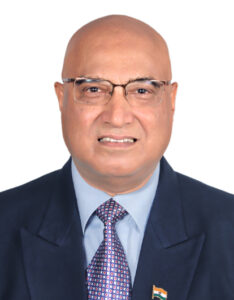 Dr. M M Goel | About the Author Propounder Needonomics, Professor Madan Mohan Goel is a superannuated Professor of Kurukshetra University. He is former Vice-Chancellor, Starex University, Gurugram, Jagannath University Jaipur, RGNIYD (GOI), Pro Vice-Chancellor VKSU Ara, Dean of Colleges & Social Sciences, Chairman, Dept. of Economics & Dept. of Journalism KUK He was the first ICCR Chair Professor in South Korea. Presently he is an Adjunct Professor at the Institute of Advanced Sciences Dartmouth, USA. He is honoured with the London Organization of Skill Development (LOSD) Excellence Award 2023, Professor J.K. Mehta Academic Excellence Award 2023, Rashtrapita Rashtriya Samman 2023 for propounding Needonomics and Gurukul Gyanjyoti Award (2024). His area of research is Economics of HRD & Indian Economy. He has 483 publications and guided 25 PhD and 25 MPhil Scholars. |
If you would like to get connected to Dr M M Goel write to editor@acadnews.com.