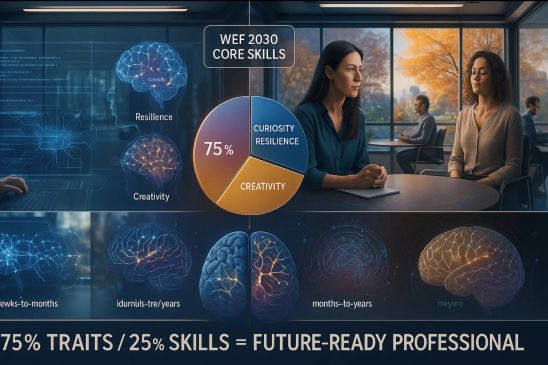
Acquiring new skills and enacting personality change both invoke neurobiological adaptation, yet these processes differ substantially in terms of explicit resources, timescales, and intervention strategies. This paper synthesizes current neuroscientific evidence comparing skill learning—which involves formation and strengthening of specific neural circuits—with personality change, which touches deep-seated patterns of emotion, behavior, and cognition through extended, multifactorial approaches reshaping broader neural networks. We examine the neural mechanisms, resource requirements, temporal dynamics, and practical implications of these two transformational pathways, with particular attention to the IACT Assessment framework that operationalizes these distinctions for individual and institutional development.