






In today’s society, we are constantly grappling with the consequences of unchecked consumerism, materialism, and greed. The prevailing economic systems often promote what can be called “Greedonomics” (economics of greed), driven by the insatiable desire for more. This pursuit of wealth, power, and status has led to widening inequalities, environmental degradation, stress, and moral decline. The antidote to these societal ills, however, lies in a simple yet profound approach: Needonomics (economics of needs).
Essence of Needonomics
Needonomics, a concept derived from the timeless teachings of the Bhagavad Gita, focuses on addressing essential human needs rather than fostering desires. It advocates for a life based on contentment, moderation, and a balance between material and spiritual well-being. In contrast to Greedonomics, which prioritizes accumulation, competition, and consumption, Needonomics emphasizes a need-based approach to life, ensuring that resources are allocated in a way that benefits individuals, communities, and the planet as a whole.
At its core, Needonomics encourages individuals and societies to make conscious choices that reflect their genuine needs, fostering simplicity, sustainability, and ethical behavior. It is a transformative shift in perspective, akin to changing glasses to improve one’s eyesight.
Ills of Society: A Product of Greedonomics
The ills we face today—whether social, economic, or environmental—can be traced back to Greedonomics. This framework of greed-driven economics has contributed to:
- Widening Inequality: Wealth and resources are concentrated in the hands of a few, leaving the majority struggling to meet their basic needs. The gap between the rich and the poor continues to grow, creating social unrest and political instability.
- Environmental Degradation: Our relentless pursuit of growth and consumption has led to the depletion of natural resources, pollution, deforestation, and climate change. The consequences of this environmental destruction are being felt globally, affecting both human and non-human life.
- Mental and Emotional Strain: The pressure to constantly achieve, accumulate, and consume has left many individuals stressed, anxious, and discontent. The pursuit of material wealth has taken precedence over mental and emotional well-being.
- Moral Decline: Greed has eroded the moral fabric of society, leading to corruption, exploitation, and unethical behavior. In the race to acquire more, individuals and institutions often compromise on integrity and values.
Needonomics: A Path to Healing
Needonomics offers a remedy to these deep-seated problems. By focusing on what is necessary rather than what is desirable, this approach can lead to a more harmonious, equitable, and sustainable society. Here’s how Needonomics can serve as a panacea for the prevailing ills:
- Equity and Fair Distribution: Needonomics advocates for the equitable distribution of resources, ensuring that every individual has access to the essentials of life—food, shelter, healthcare, and education. It encourages policies and systems that reduce income disparity and promote social justice.
- Environmental Stewardship: By prioritizing needs over wants, Needonomics promotes sustainable living and responsible consumption. This shift can reduce the strain on natural resources, help mitigate climate change, and foster a healthier relationship with the environment.
- Mental Well-being and Contentment: Needonomics encourages a mindset of contentment and simplicity. By focusing on fulfilling essential needs and reducing the emphasis on materialism, individuals can achieve greater peace of mind, emotional well-being, and a sense of purpose in life.
- Ethical and Moral Revival: Rooted in the teachings of the Bhagavad Gita, Needonomics promotes ethical behavior, integrity, and compassion. It calls for a moral revival in society, where individuals and institutions operate with a sense of responsibility towards others and the greater good.
A Needo-Change for a Needo-Life
Needonomics is not just an economic philosophy—it is a way of life. It requires a needo-change in our mindset, a shift in how we perceive success, happiness, and fulfillment. This change in perspective is similar to adjusting the lenses through which we view the world. Just as changing glasses improves our eyesight, adopting Needonomics improves our understanding of what truly matters in life.
This needo-life is one of balance, where material pursuits are tempered by spiritual and ethical considerations. It calls for a redefinition of prosperity—not in terms of wealth and possessions, but in terms of well-being, harmony, and collective progress.
Way Forward
For Needonomics to become a reality, it requires the collective will of individuals, governments, businesses, and institutions. Policymakers must design systems that promote equitable growth, sustainable development, and the well-being of all citizens. Educational institutions must foster a culture of ethics and contentment, teaching future generations the importance of needs-based living. Individuals must embrace simplicity, moderation, and responsibility in their daily choices.
In a world dominated by Greedonomics, the principles of Needonomics may seem radical. Yet, they offer the most logical and humane path to healing the ills of society. By realigning our priorities and focusing on what we truly need, we can create a world that is more just, peaceful, and sustainable.
Conclusion
Needonomics, with its roots in the wisdom of the Gita, provides a clear and compelling alternative to the destructive forces of Greedonomics. It is a philosophy that transcends economics and touches the very essence of human life. By embracing Needonomics, we can build a society that values equity, sustainability, well-being, and ethics—a society where every individual can lead a fulfilling and meaningful life.
As we continue to confront the challenges of modernity, the need for Needonomics has never been more urgent. It is the panacea for the ills that plague us and the blueprint for a brighter, more balanced future.
References
- M. M. Goel, . Consumption of Food in Needonomics Framework: A Sustainable Path to Health and Equity March 03, 2025
- M. M. Goel, Viksit Bharat @ 2047: Gita-Inspired Needonomics for Overcoming Challenges, Seizing Opportunities & Charting the Roadmap with audio podcast February 17,2025
- M. M. Goel, Ethical Pathways for IMF and World Bank Prosperity Sharing: Niti Gun Insights under the Needonomics Framework, with audio podcast January 15, 2025.
- M. M. Goel, Vikshit Bharat: Bridging Dattopant Thengdi’s Vision with Needonomics for Inclusive Growth with audio podcast, December 16,2024.
- M. M. Goel, Needonomics for Teachers and Researchers in Economics Part 3, November 26,2024.
- M. M. Goel, Needonomics for Teachers and Researchers in Economics Part 2, November 12,2024.
- M. M. Goel, Needonomics for Teachers and Researchers in Economics Part 1, October 16,2024.
- M. M. Goel, Lessons of Needonomics for Service Sector in Present Times, ( with audio podcast) October 02,2024
- M. M. Goel, Revitalizing Indian Manufacturing with Needonomics: Leveraging Labor for Viksit Bharat (with audio podcast), September 18,2024
- M. M. Goel, Needonomics: Implications for Agriculture, (with audio podcast) September 07,2024.
- M. M. Goel, Needonomics: Balancing “How” and “Why” in an era of Greedonomics and AI, August 17, 2024
- M. M. Goel, Needonomics and Its Implications for the Indian Systems of Medicine: A Path to Sustainable Health, August 17,2024
- M. M. Goel, Needonomics: Implications for the 16th Finance Commission of India, ( with audio podcast), August 05,2024
- M. M. Goel, Needonomics: Implications for Needo-Governance in a Democratic World, (audio podcast), July 18,2024
- M. M. Goel, Needonomics: The Key to Thriving in a Knowledge-Based Economy,(audio podcast) July 08, 2024.
- M. M. Goel, Needonomics: Implications for Traders and Exporters in a Changing Economic Scenario (with audio podcast) June 19, 2024.
- M. M. Goel, Needonomics: Implications for Distributors in Changing Economic Scenario, (with audio podcast) June 04, 2024
- M. M. Goel, Needonomics: Implications for Producers in Changing Economic Scenario, (with audio podcast) May 14,2024
- M. M. Goel, Needo-Consumption: Implications for Global Consumers, April 22,2024
- M. M. Goel, Needonomics: SWOC ANALYSIS (with audio podcast) April 9, 2024.
- M. M. Goel, Unveiling the Perils of Greedonomics, (with audio podcast) March 11, 2024.
- M. M. Goel, Needonomics: Queen of Social Sciences for Global Economy, (with audio podcast) February 26, 2024.
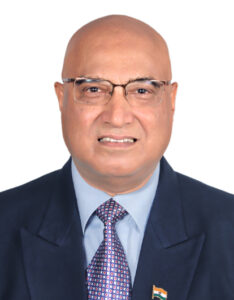 Dr. M M Goel | About the Author Propounder Needonomics, Professor Madan Mohan Goel is a superannuated Professor of Kurukshetra University. He is former Vice-Chancellor, Starex University, Gurugram, Jagannath University Jaipur, RGNIYD (GOI), Pro Vice-Chancellor VKSU Ara, Dean of Colleges & Social Sciences, Chairman, Dept. of Economics & Dept. of Journalism KUK He was the first ICCR Chair Professor in South Korea. Presently he is an Adjunct Professor at the Institute of Advanced Sciences Dartmouth, USA. He is honoured with the London Organization of Skill Development (LOSD) Excellence Award 2023, Professor J.K. Mehta Academic Excellence Award 2023, Rashtrapita Rashtriya Samman 2023 for propounding Needonomics and Gurukul Gyanjyoti Award (2024). His area of research is Economics of HRD & Indian Economy. He has 483 publications and guided 25 PhD and 25 MPhil Scholars. |
If you would like to get connected to Dr M M Goel write to editor@acadnews.com.