








The service sector also called tertiary sector is one of the three sectors of the economy. The other two being the primary sector (which includes agriculture, forestry, mining, and fishing) and the secondary sector (which involves manufacturing and construction). Service sector is the third tier in the three-sector economy. The service sector in India has long been a cornerstone of economic development, driving growth, generating employment, and facilitating foreign exchange through exports. The service sector in India encompasses a wide range of economic activities that provide intangible services rather than physical goods. The service sector in India including Information Technology (IT) and Software Services, Business Process Outsourcing (BPO),Financial Services, Healthcare and Medical Tourism, Education and Training, Telecommunications and Internet Services, Tourism and Hospitality, Entertainment and Media, Legal and Professional Services, Retail and E-commerce.
As the largest contributor to India’s GDP, the performance of this sector is critical in shaping the nation’s economic future. However, to ensure its sustainable growth in the present times, it is essential to apply the principles of Needonomics—a school of thought that advocates for a balance between needs and wants, focusing on essentials for human welfare and societal progress. By adopting Needonomics in the service sector, India can prioritize long-term, inclusive, and sustainable growth.
Current Performance of India’s Service Sector
The service sector’s growth rate in 2022-23 stood at 8.4%, a significant improvement from the 7.8% contraction witnessed in the previous year. It now contributes about 55% of India’s total economy and Gross Value Added (GVA) growth. In addition, services account for 38% of India’s total exports, and the sector continues to attract about two-thirds of India’s Foreign Direct Investment (FDI) inflows, making it an essential pillar of economic stability and international trade.
India’s services sector also showed resilience in the global arena, growing by more than 6% in 2022 and accounting for 4.4% of the world’s commercial services exports. This underscores its vital role in global value chains and India’s aspiration to become a global services hub.
The Indian IT outsourcing service market is expected to grow 6–8% between 2021 and 2024. In September 2023, India retained its 40th rank in the Global Innovation Index (GII), due to successful advancements in services that are technologically dynamic and can be traded internationally.
It has been noted that the contribution of the service sector is not uniform across all states. For example, Chandigarh and Delhi have the highest share of service sector output, with over 85% of their Gross State Value Added (GSVA) coming from services. This variation calls for state-specific strategies to enhance the sector’s performance, ensuring a more balanced growth trajectory across the nation.
Need for Needonomics in the Service Sector
Despite its impressive numbers, the service sector’s growth can sometimes be misaligned with societal needs, focusing excessively on profit-driven activities at the expense of essential public services and human well-being. The Needonomics School of Thought, developed by Professor Madan Mohan Goel, offers valuable lessons to address this challenge by emphasizing the following key principles:
- Prioritization of Essential Services: Needonomics advocates focusing on the essentials—education, healthcare, sanitation, and public transportation—that directly affect the quality of life. A service sector aligned with Needonomics will emphasize the efficient delivery of these essential services, prioritizing the welfare of citizens over excessive commercialization. This approach can reduce the inequality of access to services and ensure that economic growth benefits the broader population.
- Equitable Growth across States: The variation in the service sector’s contribution to state economies highlights the need for region-specific policies. Needonomics calls for balanced development, ensuring that underserved states receive sufficient investments in services such as education, healthcare, and skill development to enhance their economic performance. This would not only create job opportunities but also reduce disparities between states.
- Sustainable Expansion: In the rush to grow the service sector, sustainability is often overlooked. Needonomics emphasizes the importance of long-term sustainability in any form of economic activity. The service sector, particularly industries like tourism, healthcare, and education, must integrate sustainable practices, focusing on environmental conservation and efficient resource use. The aim should be to foster growth that meets present needs without compromising the ability of future generations to meet theirs.
- Alignment with Human Well-being: Needonomics also emphasizes the idea that economic progress should be aligned with overall human well-being. This means fostering growth in sectors that promote mental and physical health, cultural enrichment, and social cohesion. Services such as mental health support, wellness industries, and educational reforms should be expanded to create a more humane and holistic development model.
- Reducing the ‘Disaster of Excess’: The principle of avoiding the ‘disaster of excess’ is a cornerstone of Needonomics. In the context of the service sector, this means curbing unnecessary luxury services that cater to the wants of a few while ignoring the needs of the many. Policymakers should encourage services that provide real value and utility to society, ensuring that resources are not wasted on excessive consumption.
Challenges Faced by the Service Sector in India
The service sector in India a key driver of economic growth and employment, faces several challenges:
Regulatory Complexity: Complex and frequently changing regulations can create hurdles for businesses in the service sector.
Infrastructure Constraints: Inadequate infrastructure, such as transportation and logistics, can hinder the efficient delivery of services.
Skilled Labor Shortages: While India produces a large number of graduates and skilled professionals, there can be a disconnect between the skills possessed by the workforce and the demands of certain service sectors.
Technology Adoption: While India has made significant progress in the IT and software services sector, many other service industries lag behind in adopting technology for efficiency and competitiveness. Digital transformation is essential in today’s global service environment.
Data Privacy and Security: In the digital age, concerns about data privacy and security have become more pronounced. Service providers must navigate complex data protection laws and ensure the safe handling of customer data.
Applying Needonomics to Future Growth
To improve the service sector’s performance through the lens of Needonomics, the following steps can be taken:
- Policy Reforms: Government policies should be shaped to encourage investment in essential services, with a focus on areas like healthcare, education, and infrastructure. Incentives should be provided for businesses that align their services with societal needs rather than excessive consumption.
- Public-Private Partnerships (PPPs): Collaborations between the government and the private sector can be an effective way to deliver essential services to underserved areas. By pooling resources and expertise, PPPs can create scalable models for service delivery that focus on long-term societal benefit rather than short-term profit.
- Technological Integration: The use of digital technologies can revolutionize service delivery, making essential services more accessible and affordable. Telemedicine, e-learning, and e-governance platforms can help overcome geographical and economic barriers, ensuring that citizens in remote areas have access to vital services.
- Skill Development and Employment: The service sector is a major employment generator in India, and Needonomics advocates for equipping the workforce with skills that are in line with societal needs. Focus should be placed on training in healthcare, education, IT services, and other critical sectors to create a skilled workforce that can sustain and enhance service delivery.
Conclusion
The lessons of Needonomics provide a balanced, humane, and sustainable approach to the service sector’s growth in India. By focusing on essential services, ensuring equitable development across states, promoting sustainability, and aligning economic activities with human well-being, India can steer its service sector toward more inclusive and enduring prosperity. As the global landscape evolves, applying the principles of Needonomics will not only strengthen India’s position in the world economy but also ensure that its growth is in harmony with the needs of its people.
References
- M. M. Goel, Revitalizing Indian Manufacturing with Needonomics: Leveraging Labor for Viksit Bharat (with audio podcast), September 18,2024
- M. M. Goel, Needonomics: Implications for Agriculture, (with audio podcast) September 07,2024.
- M. M. Goel, Needonomics: Balancing “How” and “Why” in an era of Greedonomics and AI, August 17, 2024
- M. M. Goel, Needonomics and Its Implications for the Indian Systems of Medicine: A Path to Sustainable Health, August 17,2024
- M. M. Goel, Needonomics: Implications for the 16th Finance Commission of India, ( with audio podcast), August 05,2024
- M. M. Goel, Needonomics: Implications for Needo-Governance in a Democratic World, (audio podcast), July 18,2024
- M. M. Goel, Needonomics: The Key to Thriving in a Knowledge-Based Economy,(audio podcast) July 08, 2024.
- M. M. Goel, Needonomics: Implications for Traders and Exporters in a Changing Economic Scenario (with audio podcast) June 19, 2024.
- M. M. Goel, Needonomics: Implications for Distributors in Changing Economic Scenario, (with audio podcast) June 04, 2024
- M. M. Goel, Needonomics: Implications for Producers in Changing Economic Scenario, (with audio podcast) May 14,2024
- M. M. Goel, Needo-Consumption: Implications for Global Consumers, April 22,2024
- M. M. Goel, Needonomics: SWOC ANALYSIS (with audio podcast) April 9, 2024.
- M. M. Goel, Unveiling the Perils of Greedonomics, (with audio podcast) March 11, 2024.
- M. M. Goel, Needonomics: Queen of Social Sciences for Global Economy, (with audio podcast) February 26, 2024.
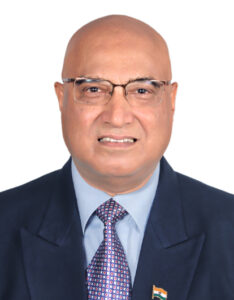 Dr. M M Goel | About the Author Propounder Needonomics, Professor Madan Mohan Goel is a superannuated Professor of Kurukshetra University. He is former Vice-Chancellor, Starex University, Gurugram, Jagannath University Jaipur, RGNIYD (GOI), Pro Vice-Chancellor VKSU Ara, Dean of Colleges & Social Sciences, Chairman, Dept. of Economics & Dept. of Journalism KUK He was the first ICCR Chair Professor in South Korea. Presently he is an Adjunct Professor at the Institute of Advanced Sciences Dartmouth, USA. He is honoured with the London Organization of Skill Development (LOSD) Excellence Award 2023, Professor J.K. Mehta Academic Excellence Award 2023, Rashtrapita Rashtriya Samman 2023 for propounding Needonomics and Gurukul Gyanjyoti Award (2024). His area of research is Economics of HRD & Indian Economy. He has 483 publications and guided 25 PhD and 25 MPhil Scholars. |
If you would like to get connected to Dr M M Goel write to editor@acadnews.com.