







Being a propounder of needonomics, I believe that the prime mover of various evils prevailing in the society is Greedonomics (economics of greed). I contend that many of the afflictions plaguing the world today including terrorism, corruption, discrimination, discontent, deprivation, inequalities, and even hatred, find their roots in the insatiable appetite for more, driven by the relentless pursuit of material gain (greed). It is pertinent to note that the materialism of western economics based on profit and loss promotes greed.
To substantiate the argument that the western economics promotes greed, we can conclude from various observations:
The research studies in behavioral economics have shown that individuals are often motivated by self-interest and the pursuit of financial gain. When economic systems prioritize profit maximization above all else, it can reinforce and amplify these self-interested tendencies, potentially leading to behaviors that prioritize personal gain over the well-being of others as societal concerns.
In many western economies, corporations are legally obligated to maximize shareholder value, often interpreted as maximizing profits and incentivize corporations in practices that prioritize short-term financial gain over long-term sustainability, ethical considerations, well-being of employees, customers, and communities. Instances of corporate greed in unethical business practices aimed at maximizing profit margins, provide evidence of fostering greed within corporate culture.
To achieve happiness and fulfillment, the western societies have been characterized by consumerism encouraging individuals to constantly consume goods and services. Advertising and marketing campaigns often promote material possessions as symbols of success and happiness, fostering a culture where greed is normalized and encouraged. The relentless pursuit of material wealth and possessions can lead to excessive consumption and a never-ending cycle of desire for more, perpetuating feelings of greed among consumers.
We have witnessed significant increases in income inequality in recent decades, with a small percentage of the population holding a disproportionate amount of wealth. This concentration of wealth can fuel feelings of greed and entitlement among the wealthy seeking increase their financial advantages at the cost of others. Meanwhile, those who are less economically privileged may experience feelings of resentment or envy, further exacerbating societal divisions and reinforcing the cycle of greed.
We must note that profit-driven economic systems sometimes lead to ethical dilemmas and negative externalities, where the pursuit of profit results in harm to individuals, communities, or the environment. Examples include exploitative labor practices, environmental degradation, and the prioritization of corporate interests over the welfare of stakeholders. These examples highlight how the profit motive can incentivize behaviors that prioritize financial gain over ethical considerations, ultimately contributing to a culture of greed.
These observations demonstrate that the materialism of western economics contributes to the promotion of greed within society. While economic systems based on profit have undoubtedly driven innovation, growth, and prosperity, it is important to recognize and address the potential negative consequences of prioritizing profit above all else. Efforts to create more ethical, equitable, and sustainable economic systems may require reevaluating the fundamental values and principles that underpin contemporary capitalist societies.
Our pure consciousness is covered by the eternal enemy in the form of greed (lust), which is never satisfied and which burns like fire. It is said in the Manu-smrti that greed cannot be satisfied by any amount of sense of enjoyment, just as fire is never extinguished by a constant supply of fuel. This stands authenticated in Gita 3.39 “avrtam jnanam etena jnanino nitya-vairina kama-rupena kaunteya duspurenanalena ca” Meaning thereby Desire burns like an unquenchable fire, which never brings happiness to anyone. The wise renounce it, knowing it to be the root of misery.” But those who do not understand this secret waste away their life in the futile pursuit of trying to satiate their greed.
In the realm of economics, Greedonomics manifests itself in various forms, perpetuating inequality and injustice at every turn. The pursuit of profit at any cost fuels exploitation and greed-driven policies that prioritize the interests of the few over the well-being of the many. The unchecked greed of corporations and individuals leads to environmental degradation, social disintegration, and economic disparity, exacerbating the woes of humanity and jeopardizing the very foundations of our civilization.
Moreover, the insidious influence of greed extends beyond the realm of economics, infiltrating every aspect of human interaction and society. Terrorism, born out of a twisted ideology fueled by greed for power and control, wreaks havoc and destruction in its quest for domination. Corruption, fueled by the insatiable greed for wealth and influence, corrodes the fabric of society, eroding trust and integrity in governance and institutions. Discrimination, rooted in greed for superiority and privilege, perpetuates injustice and inequality, dividing communities and fostering resentment and strife.
Indeed, the allure of wealth and power has entrapped us in a vicious cycle of endless craving and discontent. The tendrils of greed extend far and wide with its seductive promises of happiness and fulfillment, leaving only emptiness and despair in its wake.
To usher in a new era of harmony and prosperity, we advocate a paradigm shift in our approach to economics and society, prioritizing genuine human needs over the relentless pursuit of material wealth.
To combat Greedonomics, we must cultivate a culture of mindfulness and compassion, recognizing the interconnectedness of all beings and the inherent dignity and worth of every individual. We must strive to create an economic system that serves the common good, promoting equity, sustainability, and social justice. By embracing principles of cooperation and solidarity, we can transcend the narrow confines of greed and usher in a more equitable and inclusive society for future generations.
On the whole, the perils of Greedonomics loom large threatening to undermine the very fabric of our society and endangering the well-being of humanity. By acknowledging the destructive power of greed, we must cultivate a culture of compassion and cooperation to overcome the challenges and ensure sustainable future for all. We must be alert, aware and awake of Greedonomics. We have to accept and adopt the principle of needonomics with mindfulness which can address the negativities of greed. We have to become street SMART (simple, moral, action-oriented, responsive and transparent) global citizens as stakeholders of the economy. We have to fit into the dynamic business environment by adopting needonomics for the changed patterns for needo-happiness.
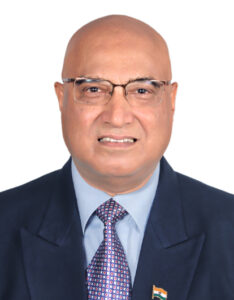 Dr. M M Goel | About the Author Propounder Needonomics, Professor Madan Mohan Goel is a superannuated Professor of Kurukshetra University. He is former Vice-Chancellor, Starex University, Gurugram, Jagannath University Jaipur, RGNIYD (GOI), Pro Vice-Chancellor VKSU Ara, Dean of Colleges & Social Sciences, Chairman, Dept. of Economics & Dept. of Journalism KUK He was the first ICCR Chair Professor in South Korea. Presently he is an Adjunct Professor at the Institute of Advanced Sciences Dartmouth, USA. He is honoured with the London Organization of Skill Development (LOSD) Excellence Award 2023, Professor J.K. Mehta Academic Excellence Award 2023, Rashtrapita Rashtriya Samman 2023 for propounding Needonomics and Gurukul Gyanjyoti Award (2024). His area of research is Economics of HRD & Indian Economy. He has 483 publications and guided 25 PhD and 25 MPhil Scholars. |
If you would like to get connected to Dr M M Goel write to editor@acadnews.com.




People are following greedonomics principles to satisfy their short term benefits without giving a thought for it’s negative consequences in future.
Good article professor…