







India’s vision for Viksit Bharat @ 2047 requires a paradigm shift from conventional Western economic models to a more ethical and sustainable framework rooted in the Bhagavad Gita. The Needonomics School of Thought, inspired by Gita 9:22, offers a solution to the challenges posed by Greedonomics (economics of greed) by advocating for an economy centered on needs rather than greed. This paper explores the foundational principles of Needonomics, emphasizing needo-consumption, needo-saving, needo-investment, needo-growth, and needo-trade, all driven by the NAW (Need, Affordability, Worth) approach in international marketing. The Union Budget 2025-26, while addressing critical economic concerns, lacks a comprehensive strategy for sustainable development. A more holistic approach is required to resolve the Consumption-Investment Paradox—aligning consumption with human needs and ensuring investments contribute to inclusive growth. Needonomics provides a moral and practical framework for overcoming these challenges, ensuring that economic policies focus on youth empowerment, poverty alleviation, women’s participation, and agricultural resilience.
This paper highlights the key strategies for achieving Viksit Bharat, including revitalizing indigenous industries, strengthening infrastructure, fostering a digital economy, promoting green growth, and implementing institutional reforms. By integrating Needonomics into policymaking and governance, India can achieve sustainable development, balancing economic progress with ethical responsibilities. Ultimately, Needonomics presents a transformative vision that ensures inclusive prosperity, self-reliance, and a resilient economy, positioning India as a global model for ethical and sustainable economic development. We need to become street SMART (simple, moral, action-oriented, responsive, and transparent) as consumers, producers, distributors, and traders along with Needonomics in the present economic scenario of materialism and consumerism to achieve anything within REACH towards Viksit Bharat.
To ensure Viksit Bharat towards 2047 at all levels in the economy by the stakeholders, we have to adopt Needonomics School of Thought flowing from Gita ( 9:22) used by LIC of India in its logo ‘Yogakshemam Vahamyaham’ (Your welfare is our responsibility). The simple solution of our problems caused by Greedonomics (economics of greed) in present times lies in Gita-based Needonomics (economics of needs). We must understand Needonomics in totality for needo-health, needo-wealth and needo-happiness with needo-consumption, needo-saving, needo-investment, needo-growth, needo-employability, needo-entrepreneurship, needo-trade for glocalization ( think globally and act locally) needo-altruism as its expanding domain in needo-lifestyle. Given India’s potential, capabilities, and willpower, adopting the Gita-inspired Needonomics will serve as a guiding principle in achieving the vision of Viksit Bharat. Economy can be people friendly and socially beneficial only if undertaken in accordance with NAW approach (Need creation, Affordability ensured and priced Worth of the goods and services) of international marketing. The domain of Needonomics is very wide and covers all aspects of the economy and its people including cared-less and used-less. We have to care the cared-less and use the used-less human resources as a duty and not charity. We can achieve morality, opulence, victory and empowerment to participate in the socio-economic development with common sense approach of Needonomics. We need to become street SMART (simple, moral, action-oriented, responsive, and transparent) as consumers, producers, distributors, and traders along with Needonomics in the present economic scenario of materialism and consumerism to achieve anything within REACH with manifestation which can be magnetized and maximized with attitude of gratitude. Needo-education of Needonomics as a commonsense approach is necessary and sufficient condition for crisis management of any kind at all levels of operation in the economy can genuinely ensure miracles for sustainable development in the world through altruism. For Viksit Bharat towards 2047,we must be careful for cared-less as well as careless and convert used-less as well as useless to be useful citizens.
The Union Budget 2025-26 amounts to ₹5,065,345 crore, which includes ₹3,394,425 crore for revenue expenditure and ₹1,121,090 crore for capital expenditure addresses several critical areas, it falls short of presenting a comprehensive and sustainable economic strategy. Greater emphasis is needed on reducing fiscal deficits, enhancing domestic savings, and ensuring equitable resource distribution. Additionally, integrating mindful economic practices and robust agricultural reforms will be crucial to realizing the vision of a prosperous and resilient Viksit Bharat by 2047. To achieve this, the Consumption-Investment Paradox must be addressed, and India must adopt a holistic approach to development—one that aligns consumption with human needs and ensures investments contributes to building an inclusive, sustainable economy. The Needonomics perspective offers a framework for overcoming this paradox, emphasizing that growth should prioritize the well-being of all citizens.
2 Western Economic Models vs. Needonomics
Despite 75 years of decolonization, Western economic models continue to dominate global development discourse. These models primarily hinge on GDP growth, ignoring several crucial dimensions of human development. In contrast, Viksit Bharat envisions holistic growth, focusing on capacity building, socio-political and economic inclusion, and sustainability.
The Needonomics School of Thought emerges as a compelling alternative. Rooted in the teachings of the Bhagavad Gita, it advocates ethical economic practices that prioritize needs over greed. Needonomics aligns with India’s aspirations by promoting needo-consumption, needo-production, needo-distribution, and needo-trade and exports, guided by the NAW (Need, Affordability, Worth) approach in marketing. This paradigm shift fosters self-reliance and ensures that economic development is sustainable and equitable.
3 Key Strategies for Viksit Bharat @ 2047
3.1. Revitalizing Indigenous Industries
The government’s support for local industries aims to create employment and improve living standards. Strengthening Make in India and startup initiatives will boost self-reliance and innovation, reducing dependency on foreign markets.
3.2. Strengthening Needed Infrastructure
Both rural and urban infrastructure require significant investment to enhance connectivity, productivity, and economic integration. Smart city development, transportation networks, and digital infrastructure will play pivotal roles in India’s transformation.
3.3. Digital Economy and Innovation
A robust digital economy, fueled by fintech, e-commerce, and artificial intelligence, will be instrumental in achieving Viksit Bharat. Strengthening digital infrastructure and enhancing cyber-security measures will facilitate seamless digital transactions and governance.
3.4. Green Growth and Sustainability
India must focus on environmental conservation, renewable energy, and sustainable practices. The push for electric vehicles, solar energy, and responsible industrialization will contribute to achieving climate goals while ensuring economic progress.
3.5. Institutional and Legal Reforms
Effective governance and policy implementation demand institutional and legal reforms. Needo-governance, inspired by Gita, emphasizes transparent, ethical, and accountable administration, ensuring fair and efficient resource allocation.
3.6. Collaboration in Research & Development
Partnering with global research and development organizations will strengthen India’s scientific temperament and promote indigenous technologies in defense, security, healthcare, and other critical sectors.
4 Four Pillars of Viksit Bharat
The success of Viksit Bharat rests on four fundamental pillars:
- Yuva (Youth): Investing in skill development, education, and employment opportunities will empower India’s young population to drive economic and social change.
- Garib (Poor): Inclusive economic policies must ensure upliftment through financial inclusion, affordable healthcare, and access to quality education.
- Mahilayen (Women): Gender equality and women’s empowerment through education, entrepreneurship, and leadership roles will significantly contribute to national progress.
- Annadata (Farmers): Strengthening agricultural policies, modernizing farming techniques, and ensuring fair market access will improve farmers’ economic conditions and food security.
By fostering an economic environment where these stakeholders thrive, India can achieve Viksit Bharat in alignment with Gita-inspired Needonomics.
Conclusion
India stands at a critical juncture where economic aspirations and ethical responsibilities must converge. The vision of Viksit Bharat @ 2047 requires a fundamental shift from conventional economic models to a Gita-inspired Needonomics framework. This approach advocates sustainable consumption, equitable distribution, and inclusive growth, ensuring long-term prosperity. If India can successfully integrate Needonomics into its policies and governance, the dream of a developed nation by 2047 will become a tangible reality.
Needonomics provides the moral and philosophical compass necessary to navigate the complexities of modern development. By embracing this paradigm, India will not only achieve economic success but also establish itself as a model of ethical and sustainable progress for the world.
References
- M. M. Goel, Ethical Pathways for IMF and World Bank Prosperity Sharing: Niti Gun Insights under the Needonomics Framework, with audio podcast January 15, 2025.
- M. M. Goel, Vikshit Bharat: Bridging Dattopant Thengdi’s Vision with Needonomics for Inclusive Growth with audio podcast, December 16,2024.
- M. M. Goel, Needonomics for Teachers and Researchers in Economics Part 3, November 26,2024.
- M. M. Goel, Needonomics for Teachers and Researchers in Economics Part 2, November 12,2024.
- M. M. Goel, Needonomics for Teachers and Researchers in Economics Part 1, October 16,2024.
- M. M. Goel, Lessons of Needonomics for Service Sector in Present Times, ( with audio podcast) October 02,2024
- M. M. Goel, Revitalizing Indian Manufacturing with Needonomics: Leveraging Labor for Viksit Bharat (with audio podcast), September 18,2024
- M. M. Goel, Needonomics: Implications for Agriculture, (with audio podcast) September 07,2024.
- M. M. Goel, Needonomics: Balancing “How” and “Why” in an era of Greedonomics and AI, August 17, 2024
- M. M. Goel, Needonomics and Its Implications for the Indian Systems of Medicine: A Path to Sustainable Health, August 17,2024
- M. M. Goel, Needonomics: Implications for the 16th Finance Commission of India, ( with audio podcast), August 05,2024
- M. M. Goel, Needonomics: Implications for Needo-Governance in a Democratic World, (audio podcast), July 18,2024
- M. M. Goel, Needonomics: The Key to Thriving in a Knowledge-Based Economy,(audio podcast) July 08, 2024.
- M. M. Goel, Needonomics: Implications for Traders and Exporters in a Changing Economic Scenario (with audio podcast) June 19, 2024.
- M. M. Goel, Needonomics: Implications for Distributors in Changing Economic Scenario, (with audio podcast) June 04, 2024
- M. M. Goel, Needonomics: Implications for Producers in Changing Economic Scenario, (with audio podcast) May 14,2024
- M. M. Goel, Needo-Consumption: Implications for Global Consumers, April 22,2024
- M. M. Goel, Needonomics: SWOC ANALYSIS (with audio podcast) April 9, 2024.
- M. M. Goel, Unveiling the Perils of Greedonomics, (with audio podcast) March 11, 2024.
- M. M. Goel, Needonomics: Queen of Social Sciences for Global Economy, (with audio podcast) February 26, 2024.
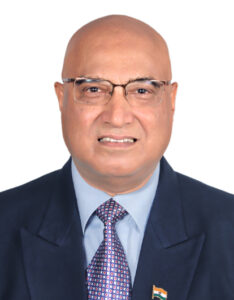 Dr. M M Goel | About the Author Propounder Needonomics, Professor Madan Mohan Goel is a superannuated Professor of Kurukshetra University. He is former Vice-Chancellor, Starex University, Gurugram, Jagannath University Jaipur, RGNIYD (GOI), Pro Vice-Chancellor VKSU Ara, Dean of Colleges & Social Sciences, Chairman, Dept. of Economics & Dept. of Journalism KUK He was the first ICCR Chair Professor in South Korea. Presently he is an Adjunct Professor at the Institute of Advanced Sciences Dartmouth, USA. He is honoured with the London Organization of Skill Development (LOSD) Excellence Award 2023, Professor J.K. Mehta Academic Excellence Award 2023, Rashtrapita Rashtriya Samman 2023 for propounding Needonomics and Gurukul Gyanjyoti Award (2024). His area of research is Economics of HRD & Indian Economy. He has 483 publications and guided 25 PhD and 25 MPhil Scholars. |
If you would like to get connected to Dr M M Goel write to editor@acadnews.com.