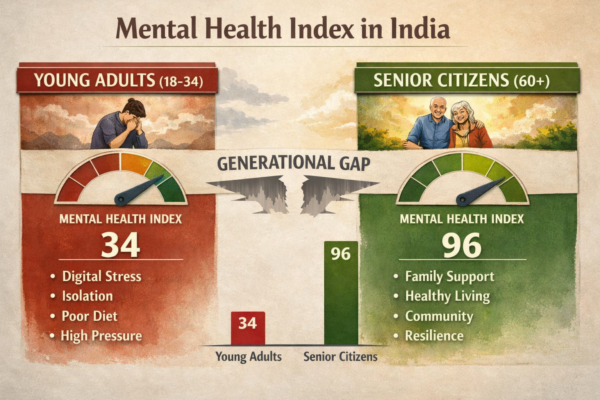






Bridging The Generational Gap in the Mental Health Index in India

Why are so many young adults struggling despite living in a connected world? This powerful article explores the hidden toll of digital stress, poor habits, weak relationships, and achievement pressure while offering practical solutions through counselling, resilience, nutrition, and stronger family bonds.

Read More

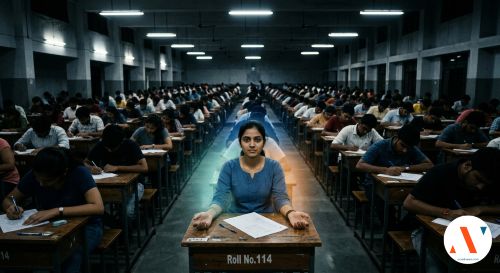
Assessment, Impact and Transformation: Redefining Excellence in Education

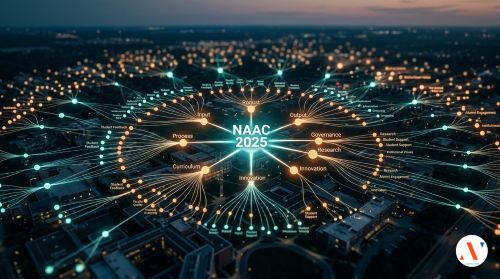
India’s higher education system assessed 13,892 student suicides in 2023 — and called it someone else’s problem. At Academic Network’s Technology Series webinar on 28 March 2026, Prof. Dr. M M Ananth asked the question institutions have avoided: What is assessment truly for? The IACT Framework — Interpersonal, Adaptability, Cognitive, Technical — reveals that 75% of professional effectiveness is determined by persona traits, yet our entire assessment architecture measures only the remaining 25%. With 1,329 registered participants, this was one of the most searching conversations Indian higher education has had about itself. Read the full report

Read More

Mental Wellness and the Future of Holistic Professionalism

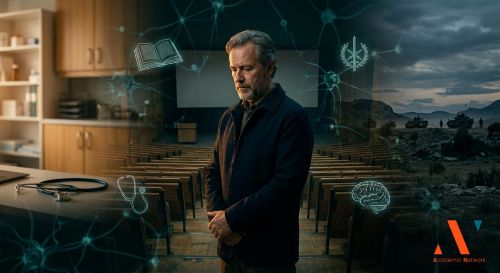
One in seven young Indians carries a diagnosable mental health condition. Twelve billion work days are lost globally every year to mental health issues. And the single most important question in Indian education — are our students okay, as human beings? — has never once been asked in a board meeting.
Until now.
A psychiatrist, a university builder and a war veteran sat down to talk about what we have been measuring, what we have been ignoring, and what it would actually cost to change. The answers were uncomfortable, evidence-based and, in places, quietly devastating.

Read on.

Read More

India Rising: The Unstoppable Trajectory

India quietly became the world’s 3rd AI power (Stanford HAI 2025), the fastest-rising G20 nation in university rankings (54 in QS, 2nd in THE), and the architect of digital infrastructure the world is adopting. Meanwhile, the Sri Sathya Sai Water Project — serving 3.19 million people across 1,500 villages — sits on the UN SDGs platform as a global model. Critique is welcome. Defeatism dressed as commentary is not. Let us not be belittled by the belittling ones.

Read More

The Speed of Light, Quantum Entanglement & The Vedantic Resolution

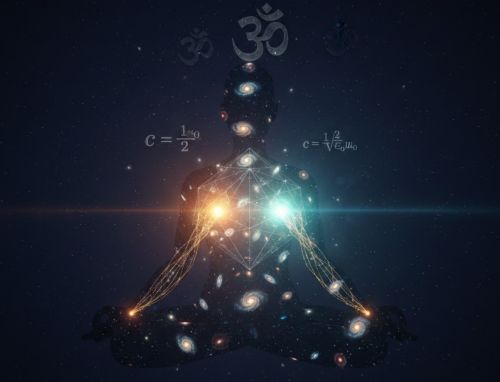
When Einstein called quantum entanglement “spooky action at a distance,” he glimpsed a mystery modern physics still cannot explain. How do two particles at opposite ends of the universe “know” each other’s state instantaneously? In this fascinating conversation, Prof. M.M. Ananth reveals how ancient Vedantic philosophy offers a profound resolution: there is no “between” to cross—because separation itself is the illusion. What if consciousness, not matter, is fundamental?

Read More

What Should Teachers Know About the Impact of Climate Change in Classrooms?

Are you unknowingly hindering your child’s learning? Discover ten common myths parents believe about education—from forcing achievements without aptitude to equating good marks with intelligence. After fifty years in education, these insights reveal why learning can only be facilitated, not caused. Your child’s authentic growth starts here

Read More

Healing at Scale: Democratizing Healthcare

When Padma Shri Dr. V. Mohan said “If you are able to give free insurance to everybody, you can walk into any medical facility and take everything free,” 1,003 healthcare professionals across 135 cities listened. The Technology Series Healthcare webinar—moderated by Prof. M Ananth, FCS (Founder, Academic Network; Former Vice Chancellor) and Dr. M. Gopi Krishna (HOD Pediatrics, Sri Sathya Sai General Hospital)—brought together India’s finest minds including Dr. Mohan (700K+ patients served), Prof. B.S. Satyanarayana (Karnataka Vidya Ratna 2025), and SCTIMST Director Prof. Dr. Sanjay Behari. Prof. Ananth articulated the transformation framework: Cooperation (mindset) → Collaboration (skills) → Co-creation → Co-evolution. The 75/25 principle: sustainable change requires 75% mindset, 25% technical skills. Free access. World-class insights. This is healthcare democratization in action.

Read More