







In today’s rapidly changing economic landscape, traditional models are increasingly challenged by the complexities of global interdependencies, technological advancements, and socio-environmental issues. To address the emerging challenges in any economy of the democratic world, we need leadership ensuring needo-governance in various sectors. To work without worries (www) for needo-governance, we have to be soul-conscious with devotion and not just commitment. The challenges of modern society calls for creating a system of governance that promotes sustainable development. The major features of ‘Needo-governance’ are participation, consensus oriented, effective and efficient, equitable and inclusive and follow the rule of law. To understand, analyze, interpret and adopt needo- governance models (may not be good governance), we need to imbibe the lessons from Gita which is ism neutral, religion free treatise on management, relationship management and welfare economics. One emerging paradigm, known as Needonomics, offers a fresh perspective by prioritizing human needs and sustainability over conventional metrics of economic growth. This article explores the principles of Needonomics and its implications for the needo-governance of the democratic nations of the world including India.
Understanding Needonomics
Needonomics (economics of needs) is an economic framework centered on fulfilling essential human needs rather than focusing on Greedonomics (economics of greed). This model advocates for equitable distribution of resources, environmental sustainability, and the well-being of all citizens. It contrasts sharply with traditional economics, which often emphasizes market efficiency, competition, and the accumulation of wealth.
Core Principles of Needonomics
- Human-Centric Approach: Needonomics places human needs at the forefront, ensuring that policies and practices prioritize health, education, housing, and basic income for all.
- Sustainability: This model emphasizes sustainable development, advocating for the responsible use of natural resources to meet present needs without compromising future generations’ ability to meet their own.
- Equity and Inclusion: Needonomics promotes social equity, aiming to reduce income disparities and provide equal opportunities for all members of society.
- Community and Collaboration: It fosters a sense of community and cooperation, encouraging collaborative efforts over competitive ones to address common challenges.
Implications for Needo-Governance
Policy Reorientation: Governments must shift their focus from GDP growth to indicators that measure the quality of life, such as the Human Development Index (HDI), Gross National Happiness (GNH), and Sustainable Development Goals (SDGs).
Resource Allocation: Public spending should prioritize essential services like healthcare, education, and social security, ensuring that every citizen’s basic needs are met.
Environmental Policies: Needo-governance demands robust environmental regulations and policies that promote renewable energy, reduce carbon emissions, and protect natural ecosystems.
Economic Justice: Implementing progressive taxation, minimum wage laws, and social welfare programs to address economic inequality and ensure a fair distribution of wealth.
Participatory Governance: Encouraging citizen engagement and participatory decision-making processes to ensure that policies reflect the needs and aspirations of the people. Needo-understand Decision-making in right perspectives by avoiding pride and ego. Be ever ready for altruism without discrimination.
Needo-learn from Case Studies and Examples
Several countries and regions have begun to incorporate elements of Needonomics into their governance frameworks. These case studies illustrate diverse approaches to adopting Needonomics:
- Bhutan: Gross National Happiness (GNH):
Bhutan measures its progress through Gross National Happiness, focusing on the well-being of its citizens as needo-happiness rather than economic output. GNH encompasses sustainable development, cultural values, environmental conservation, and good governance. - New Zealand: Wellbeing Budget:
The New Zealand government has introduced a “Wellbeing Budget,” prioritizing mental health, child well-being, and supporting indigenous communities. The budget framework includes specific wellbeing indicators to guide public spending and policy decisions. - Iceland: Prioritizing Public-welbeing:
Iceland’s government has committed to prioritizing the welfare of its citizens and the environment, moving beyond traditional economic metrics. The country focuses on mental health, education, and environmental sustainability as key areas for investment. - Scotland: National Performance Framework:
Scotland’s National Performance Framework (NPF) aims to create a more successful country through sustainable and inclusive growth. The NPF tracks progress against various indicators related to health, education, environment, and community cohesion. - Finland: Basic Income Experiment:
Finland conducted a two-year experiment with basic income, providing a fixed income to a group of citizens regardless of their employment status. The aim was to assess the impact on well-being, economic security, and participation in the labor market. - Costa Rica: Sustainable Development:
Costa Rica is renowned for its commitment to environmental sustainability and social welfare. The country has achieved impressive results in conservation, renewable energy, and healthcare, with policies designed to balance economic growth with ecological preservation. - Japan: Society 5.0:
Japan’s Society 5.0 initiative aims to create a super-smart society that integrates advanced technology to solve social challenges. This initiative emphasizes the use of AI and IoT to improve quality of life, address aging population issues, and enhance environmental sustainability
Embracing Vedic Wisdom: Transforming Governance and Work Culture for Holistic Development
In today’s complex world, traditional governance systems face numerous challenges that require innovative solutions. Drawing inspiration from ancient Vedic principles and the teachings of the Gita and Anu-Gita with timeless insights which can serve as a panacea for modern governance. By advocating for a shift from a holiday culture to a holy-day culture, promoting digital fasting, and emphasizing the importance of decentralization, we can create a more effective and enlightened work culture. Additionally, adopting the SIMPLE model of human resource development—Spiritual Quotient (SQ) development, Intuition development, Mental level development, Love oneself attitude development, and Emotional Quotient (EQ) development—can help us realize our full potential in leadership and governance.
Key Points of Transformation of Governance:
- From Holiday Culture to Holy-Day Culture:
To cultivate a work culture rooted in mindfulness and productivity, there is a need to transform the prevalent holiday culture into a holy-day culture. This shift involves incorporating practices such as fasting, including digital fasting once a week, to foster mental clarity and focus. - Empowerment Through Decentralization:
Decentralization is crucial for empowerment and enlightenment. By distributing authority and decision-making power, we can encourage greater innovation, responsiveness, and accountability at all levels of governance. - Excellence through Giving Our Best
To inspire and motivate others, we must strive to give better than the best in our endeavors. This approach fosters a cooperative rather than competitive environment, where collective success is prioritized. - Bold and Courageous Leadership
To script a new narrative of needo-governance, we must be bold, courageous, and enthusiastic. Adopting the street SMART (SIMPLE, Moral, Action-oriented, Responsive, and Transparent) approach ensures that governance is effective and inclusive.
SIMPLE Model of Human Resource Development (HRD)
The SIMPLE model of HRD, as developed by the writer in the book ‘Economics of Human Resource Development in India’ (2011), consists of six key activities that contribute to holistic human development:
- Spiritual Quotient (SQ) Development: Cultivating spiritual awareness and growth to enhance overall well-being.
- Intuition Development: Encouraging intuitive thinking and decision-making for innovative solutions.
- Mental Level Development: Fostering intellectual growth and mental resilience.
- Love Oneself Attitude Development: Promoting self-love and self-care as foundations for personal and professional success.
- Emotional Quotient (EQ) Development: Enhancing emotional intelligence to improve interpersonal relationships and leadership effectiveness.
Synergy for Holistic Development:
The synergy of these six aspects of HRD encapsulated in the SIMPLE model is essential for realizing our full potential. By integrating these elements, individuals and organizations can achieve holistic development, leading to more effective leadership and governance.
Challenges and Opportunities
While the transition to Needonomics presents numerous benefits, it also poses significant challenges. Resistance from entrenched interests, the complexity of overhauling existing economic systems, and the need for global cooperation are substantial hurdles. However, the potential rewards—sustainable development, reduced inequality, and enhanced well-being—make it a compelling model for the future.
Conclusion
Needonomics represents a paradigm shift in how we understand and manage our economies. By aligning economic policies with the genuine needs of people and the planet, needo-governance can lead to a more equitable, sustainable, and prosperous world. As we navigate the 21st century, embracing this model may be crucial for addressing the myriad challenges facing our global community. Incorporating the principles of Needonomics into governance frameworks can redefine success and create economies that serve the well-being of all citizens. This paradigm shift is not only desirable but essential for a sustainable and equitable future. Incorporating Vedic wisdom and the teachings of the Gita and Anu-Gita into modern governance and work culture can address many systemic ills. By fostering a holy-day culture, promoting decentralization, striving for excellence, and adopting the SIMPLE model of HRD, we can create a more empowered, enlightened, and cooperative society. This holistic approach not only enhances individual potential but also transforms governance at all levels, leading to sustainable and inclusive development for better tomorrow.
References
- M.M. Goel, Needonomics: The Key to Thriving in a Knowledge-Based Economy,(audio podcast) July 08, 2024.
- M.M. Goel, Needonomics: Implications for Traders and Exporters in a Changing Economic Scenario (with audio podcast) June 19, 2024.
- M.M. Goel, Needonomics: Implications for Distributors in Changing Economic Scenario, (with audio podcast) June 04, 2024
- M. M. Goel, Needonomics: Implications for Producers in Changing Economic Scenario, (with audio podcast) May 14,2024
- M. M. Goel, Needo-Consumption: Implications for Global Consumers, April 22,2024
- M. M. Goel, Needonomics: SWOC ANALYSIS (with audio podcast) April 9, 2024.
- M. M. Goel, Unveiling the Perils of Greedonomics, (with audio podcast) March 11, 2024.
- M. M. Goel, Needonomics: Queen of Social Sciences for Global Economy, (with audio podcast) February 26, 2024.
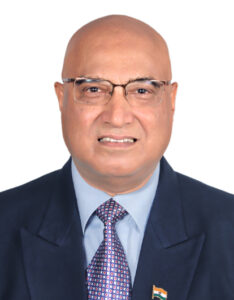 Dr. M M Goel | About the Author Propounder Needonomics, Professor Madan Mohan Goel is a superannuated Professor of Kurukshetra University. He is former Vice-Chancellor, Starex University, Gurugram, Jagannath University Jaipur, RGNIYD (GOI), Pro Vice-Chancellor VKSU Ara, Dean of Colleges & Social Sciences, Chairman, Dept. of Economics & Dept. of Journalism KUK He was the first ICCR Chair Professor in South Korea. Presently he is an Adjunct Professor at the Institute of Advanced Sciences Dartmouth, USA. He is honoured with the London Organization of Skill Development (LOSD) Excellence Award 2023, Professor J.K. Mehta Academic Excellence Award 2023, Rashtrapita Rashtriya Samman 2023 for propounding Needonomics and Gurukul Gyanjyoti Award (2024). His area of research is Economics of HRD & Indian Economy. He has 483 publications and guided 25 PhD and 25 MPhil Scholars. |
If you would like to get connected to Dr M M Goel write to editor@acadnews.com.




This exploration of Needonomics provides a timely and thought-provoking look at its implications for governance in our rapidly evolving world. Prioritizing human needs and sustainability over traditional economic metrics is both refreshing and essential. The push for more equitable and inclusive policies, along with the integration of Vedic wisdom in modern governance, is particularly commendable. Case studies from Bhutan and New Zealand illustrate how these principles can be practically applied, demonstrating that holistic approaches can significantly enhance citizens’ well-being. This insightful piece encourages a rethinking of our economic priorities toward a more sustainable future.