






Needonomics (economics of needs) based on Gita verse 9:22 used in Logo of LIC of India ‘Yogakshemam Vahamyaham’ (Your welfare is our responsibility) emphasizes the allocation of resources based on the genuine needs of people and society. This approach contrasts with traditional economic models that often prioritize growth and profit over equity and sustainability. For the 16th Finance Commission (FC) of India, adopting Needonomics could represent a paradigm shift in how resources are allocated among the states, ensuring that development is both inclusive and sustainable.
Historical Context of Finance Commission
The Finance Commission of India is a constitutional body established to define the financial relations between the central government and the individual state governments. Since its inception, the Finance Commission has aimed to promote fiscal federalism and equitable distribution of financial resources. As per the clause (1) of article 280 of the Constitution, the Finance Commission is to be constituted every fifth year or earlier. However, as the recommendations of the 15th FC cover the six-year period up to 31st March 2026, The 15th FC was pivotal in addressing issues like vertical and horizontal devolution, disaster management funds, and grants for local governments. The 16th Finance Commission constituted on 31.12. 2023 with Shri Arvind Panagariya as its chairman to make recommendations by October, 31, 2025, covering an award period of 5 years commencing 1st April, 2026 to March 31,2031.
Implications for Needo-Governance
Policy Reorientation: Governments must shift their focus from GDP growth to indicators that measure the quality of life, such as the Human Development Index (HDI), Gross National Happiness (GNH), and Sustainable Development Goals (SDGs).
Resource Allocation: Public spending should prioritize essential services like healthcare, education, and social security, ensuring that every citizen’s basic needs are met.
Environmental Policies: Needo-governance demands robust environmental regulations and policies that promote renewable energy, reduce carbon emissions, and protect natural ecosystems.
Economic Justice: Implementing progressive taxation, minimum wage laws, and social welfare programs to address economic inequality and ensure a fair distribution of wealth.
Participatory Governance: Encouraging citizen engagement and participatory decision-making processes to ensure that policies reflect the needs and aspirations of the people. Needo-understand Decision-making in right perspectives by avoiding pride and ego. Be ever ready for altruism without discrimination.
Understanding Horizontal Devolution
Horizontal devolution refers to the distribution of the states’ share of central taxes among the states themselves. This allocation is based on a formula that takes into account various factors like population, area, income distance, and fiscal discipline.
Proposed Criteria for Devolution under 16th Finance Commission
(All units in below table in percentage)
| Criteria | 14thFC 2015-20 | 15thFC 2020-21 | 15thFC 2021-26 | 16thFC 2026-31 |
| Income Distance | 50.0 | 45.0 | 45.0 | 40.0* |
| Area | 15.0 | 15.0 | 15.0 | 15.0 |
| Population (2011) # | 10.0 | 15.0 | 15.0 | 10.0# |
| Demographic Performance | – | 12.5 | 12.5 | 17.5 |
| Forest Cover | 7.5 | – | – | |
| Forest and Ecology | – | 10.0 | 10.0 | 15** |
| Tax and fiscal efforts* | – | 2.5 | 2.5 | 2.5 |
| Total | 100 | 100 | 100 | 100 |
*Keeping in view the demands of backward states, our take is that it should be reduced to 40 percent.
# Keeping in view the lack of data on population for the latest census, our take is that the weightage for be reduced to 10 percent and demographic performance be enhanced to 17.5 percent.
**Keeping in mind the environment and disaster management for the nation, our take is for enhancing it to 15 percent.
Vertical Devolution
The 15th Finance Commission, chaired by N.K. Singh, recommended maintaining the states’ share in the divisible pool at 41%. The reduction by 1% from the 14th Finance Commission’s recommendation accounted for the newly created Union Territories of Jammu & Kashmir and Ladakh, which now receive funds directly from the central pool.
Key Principles of Needonomics
- Equity and Inclusivity: Ensuring that resource allocation addresses the disparities among various regions and communities.
- Sustainability: Prioritizing projects and policies those are environmentally sustainable.
- Basic Needs Fulfillment: Focusing on healthcare, education, and social security to improve quality of life.
- Transparency and Accountability: Enhancing governance by making the allocation process more transparent and accountable.
Data-Driven Analysis
To understand the implications of Needonomics for the 16th Finance Commission, it is essential to analyze some key socio-economic indicators:
- Per Capita Income: Disparities in per capita income across states highlight the need for a more equitable distribution of resources. For instance, in 2022-23, Goa had the highest per capita income at ₹4.94 lakh, while Bihar had the lowest at ₹50,735.
- Health Infrastructure: The COVID-19 pandemic exposed the stark differences in health infrastructure across states. Kerala, with a strong healthcare system, had better outcomes compared to states like Uttar Pradesh and Bihar .
- Education: Literacy rates vary significantly, with Kerala at 96.2% and Bihar at 61.8% . Allocating resources based on need can help bridge these educational gaps.
- Poverty Levels: According to the NITI Aayog’s National Multidimensional Poverty Index, states like Bihar, Jharkhand, and Uttar Pradesh have the highest poverty levels, indicating a higher need for financial support and development programs.
Key Points of Transformation of Governance:
- From Holiday Culture to Holy-Day Culture:
To cultivate a work culture rooted in mindfulness and productivity, there is a need to transform the prevalent holiday culture into a holy-day culture. This shift involves incorporating practices such as fasting, including digital fasting once a week, to foster mental clarity and focus. - Empowerment Through Decentralization:
Decentralization is crucial for empowerment and enlightenment. By distributing authority and decision-making power, we can encourage greater innovation, responsiveness, and accountability at all levels of governance. - Excellence through Giving Our Best
To inspire and motivate others, we must strive to give better than the best in our endeavors. This approach fosters a cooperative rather than competitive environment, where collective success is prioritized. - Bold and Courageous Leadership
To script a new narrative of needo-governance, we must be bold, courageous, and enthusiastic. Adopting the street SMART (SIMPLE, Moral, Action-oriented, Responsive, and Transparent) approach ensures that governance is effective and inclusive.
Implications for the 16th Finance Commission
Revised Allocation Criteria: Moving beyond GDP and population metrics, the 16th Finance Commission could incorporate indicators like poverty levels, health infrastructure, and educational attainment to determine state allocations.
Increased Grants for Social Sectors: Emphasizing the need for better health and education facilities, particularly in underdeveloped regions, through targeted grants.
Sustainability Grants: Encouraging states to adopt green practices by providing additional funds for sustainable development projects.
Disaster Management: Given the increasing frequency of natural disasters, a Needonomics approach would ensure that states prone to such events receive adequate funding for disaster preparedness and management.
Monitoring and Evaluation: Establishing robust mechanisms to monitor the utilization of funds and evaluate the impact of allocated resources, ensuring transparency and accountability.
Needonomics: A Pragmatic Approach to Disaster Risk Management in India
Disasters, whether natural or man-made, pose significant challenges to societies worldwide. In India, the frequency and intensity of such events have necessitated a robust and comprehensive strategy for disaster risk management. The traditional approaches often fall short in addressing the complexities and multifaceted nature of disasters. Therefore, an innovative economic perspective—termed “Needonomics”—offers a viable solution. Needonomics focuses on identifying and fulfilling the essential needs of stakeholders, emphasizing a prognosis approach supported by targeted financial assistance.
Needonomics certainly offers a transformative approach to disaster risk management in India by focusing on the essential needs of stakeholders and adopting a prognosis strategy. By diagnosing disasters in the right context and providing targeted financial support, India can enhance its resilience and capacity to manage and recover from disasters. Implementing Needonomics requires a collaborative effort between government, private sector, and communities, ensuring a comprehensive and sustainable approach to disaster risk management.
Adopt street SMART and SIMPLE models of Needo-governance
By promoting decentralization, striving for excellence, and adopting the street SMART (simple, moral, action-oriented, responsive, and transparent) model of needo-governance at all levels of functioning. SIMPLE (spiritual quotient (SQ) development, intuition development, mental level development, love oneself attitude development, emotional quotient (EQ) development) model of HRD create a more empowered, enlightened, and cooperative society. This holistic approach transforms governance at all levels, leading to sustainable and inclusive development for better tomorrow.
Conclusion
Adopting Needonomics as a guiding principle for the 16th Finance Commission of India offers a transformative approach to resource allocation. By focusing on the genuine needs of states and regions, it is possible to promote equitable and inclusive development. This shift not only addresses current socio-economic disparities but also paves the way for a more resilient and sustainable future for India. Needo-adopt street SMART and SIMPLE models of needo-governance.
References
- Needonomics: Implications for Needo-Governance in a Democratic World, (audio podcast), July 18,2024
- M.M. Goel, Needonomics: The Key to Thriving in a Knowledge-Based Economy,(audio podcast) July 08, 2024.
- M.M. Goel, Needonomics: Implications for Traders and Exporters in a Changing Economic Scenario (with audio podcast) June 19, 2024.
- M.M. Goel, Needonomics: Implications for Distributors in Changing Economic Scenario, (with audio podcast) June 04, 2024
- M. M. Goel, Needonomics: Implications for Producers in Changing Economic Scenario, (with audio podcast) May 14,2024
- M. M. Goel, Needo-Consumption: Implications for Global Consumers, April 22,2024
- M. M. Goel, Needonomics: SWOC ANALYSIS (with audio podcast) April 9, 2024.
- M. M. Goel, Unveiling the Perils of Greedonomics, (with audio podcast) March 11, 2024.
- M. M. Goel, Needonomics: Queen of Social Sciences for Global Economy, (with audio podcast) February 26, 2024.
- Directorate of Economics and Statistics, Government of Goa (2023).
- National Statistical Office, Government of India (2021).
- NITI Aayog, Government of India (2021)
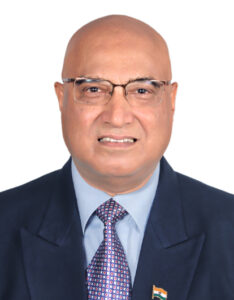 Dr. M M Goel | About the Author Propounder Needonomics, Professor Madan Mohan Goel is a superannuated Professor of Kurukshetra University. He is former Vice-Chancellor, Starex University, Gurugram, Jagannath University Jaipur, RGNIYD (GOI), Pro Vice-Chancellor VKSU Ara, Dean of Colleges & Social Sciences, Chairman, Dept. of Economics & Dept. of Journalism KUK He was the first ICCR Chair Professor in South Korea. Presently he is an Adjunct Professor at the Institute of Advanced Sciences Dartmouth, USA. He is honoured with the London Organization of Skill Development (LOSD) Excellence Award 2023, Professor J.K. Mehta Academic Excellence Award 2023, Rashtrapita Rashtriya Samman 2023 for propounding Needonomics and Gurukul Gyanjyoti Award (2024). His area of research is Economics of HRD & Indian Economy. He has 483 publications and guided 25 PhD and 25 MPhil Scholars. |
If you would like to get connected to Dr M M Goel write to editor@acadnews.com.