







Being a votary of needonomics (economics of needs), I consider it my duty to give the rationale for sustainable health free from diseases of all kinds. In an era where diseases, aging, and overconsumption have become significant causes of mortality and morbidity, achieving sustainable health is paramount. Sustainable health is not just about the absence of disease but encompasses a holistic approach to well-being that ensures needo-happiness, needo-peace, needo-progress, and needo-prosperity. The concept of needo-consumption as a necessary and sufficient condition for sustainable health and highlights the importance of traditional practices and needo-living in promoting a healthy lifestyle. Gita-based Needonomics has emerged as a potent counter-narrative to the prevailing consumer-driven economic models. Rooted in the philosophy of fulfilling essential needs rather than perpetuating a cycle of overconsumption, Needonomics has significant implications for various sectors, including healthcare. Within the Indian context, where the traditional systems of medicine such as Ayurveda, Unani, Siddha, and Homeopathy (collectively referred to as AYUSH) are deeply ingrained, Needonomics offers a compelling framework for enhancing healthcare delivery. This article explores the implications of Needonomics for the health sector under the Indian Systems of Medicine, emphasizing sustainable practices, equitable access, and holistic well-being.
Understanding Needonomics
Needonomics (economics of needs) based on Gita (verse 9.22) prioritizes the fulfillment of basic needs over the pursuit of excessive wants (greed). It advocates for an economic model that emphasizes sustainability, equity, and the optimal use of resources. We need resources, which are certainly limited and must be spent judiciously, confined to needs. To understand needonomics in totality for individuals as consumers, producers, traders & distributors with responsibility, accountability & morality (RAM) is our goal at Global Centre for Needonomics. Needonomics fits into the larger narrative of sustainable development ensuring inter-generation equity through needo-consumption, needo-saving, needo-investment; needo-export & needo-growth by adopting spiritually guided materialism (SGM) strategy for needo-happiness and needo-health. The ABC of Needonomics with accuracy, brevity, and clarity must be understood, analyzed, interpreted, and adopted to address economic and non-economic problems (needo-health) in the economy by the stakeholders. In the healthcare context, this approach can lead to a more efficient allocation of medical resources, ensuring that essential healthcare services are accessible to all, particularly the underserved and marginalized populations.
Indian System of Medicine
India boasts a rich heritage of traditional medicine systems, collectively known as AYUSH. These systems have been practiced for centuries and offer a holistic approach to health, focusing on the balance of mind, body, and spirit. Ayurveda, Unani, Siddha, and Homeopathy provide alternative and complementary treatment options that are often more affordable and accessible than conventional allopathic medicine.
Needonomics in the Indian Health Sector
Promoting Preventive Healthcare
Needonomics emphasizes the importance of preventive healthcare, a principle that aligns perfectly with the Indian System of Medicine. Ayurveda, for instance, places a strong emphasis on maintaining health through lifestyle modifications, dietary regulations, and regular detoxification processes. By promoting preventive healthcare practices, Needonomics can reduce the burden on the healthcare system, lower healthcare costs, and improve overall population health.
Equitable Access to Healthcare
One of the core tenets of Needonomics is equity. In the context of the Indian health sector, this means ensuring that quality healthcare services are accessible to all segments of the population, regardless of socio-economic status. The Indian System of Medicine, with its widespread presence in rural and remote areas, can play a crucial role in achieving this objective. By integrating Needonomics into policy frameworks, the government can enhance the reach and effectiveness of AYUSH services, making healthcare more inclusive.
Sustainable Practices
The principles of sustainability inherent in Needonomics resonate with the practices of the Indian System of Medicine. Ayurveda and other traditional systems emphasize the use of natural resources and eco-friendly practices. For instance, many Ayurvedic medicines are derived from locally sourced herbs and plants, reducing the carbon footprint associated with pharmaceutical manufacturing. Embracing Needonomics can further encourage sustainable practices within the healthcare sector, promoting environmental stewardship.
Integrative Healthcare Models
Integrating the Indian System of Medicine with modern allopathic practices can create a more holistic healthcare model. Needonomics School of Thought supports this integration by advocating for the use of diverse medical systems to address the varied health needs of the population. Such integrative models can offer more comprehensive care, combining the strengths of both traditional and modern medicine to achieve better health outcomes.
Community-Based Health Initiatives
Needonomics encourages community participation in healthcare. The Indian System of Medicine has a long tradition of community-based health initiatives, such as village health camps and local health practitioners (Vaidyas). By leveraging these community networks, the healthcare system can become more responsive to the needs of the people. Community involvement also fosters a sense of ownership and responsibility towards health, aligning with the principles of Needonomics.
Challenges and the Way Forward
While the integration of Needonomics into the Indian health sector holds great promise, several challenges need to be addressed. These include ensuring adequate training and regulation of AYUSH practitioners, standardizing treatment protocols, and integrating traditional medicine into the mainstream healthcare system. Additionally, there is a need for increased investment in research and development to validate the efficacy of traditional treatments.
To overcome these challenges, a multi-faceted approach is required. This includes policy reforms, capacity building, public awareness campaigns, and fostering collaborations between various stakeholders, including government bodies, healthcare providers, and community organizations.
Conclusion
Needonomics offers a transformative framework for reimagining the Indian health sector, particularly within the context of traditional systems of medicine. By prioritizing essential needs, promoting sustainability, and ensuring equitable access, Needonomics can enhance the effectiveness and reach of the Indian Systems of Medicine. As India continues to strive for a more inclusive and sustainable healthcare system, the principles of Needonomics can serve as a guiding light, paving the way for a healthier and more equitable society with needo-health and needo-happiness. In the pursuit of sustainable health, we must remember that true wealth lies not in material possessions but in a balanced and fulfilling life where the body, mind, and soul are in harmony.
References
- M.M.Goel, Needonomics: Implications for the 16th Finance Commission of India, ( with audio podcast), August 05,2024
- M.M.Goel, Needonomics: Implications for Needo-Governance in a Democratic World, (audio podcast), July 18,2024
- M.M. Goel, Needonomics: The Key to Thriving in a Knowledge-Based Economy,(audio podcast) July 08, 2024.
- M.M. Goel, Needonomics: Implications for Traders and Exporters in a Changing Economic Scenario (with audio podcast) June 19, 2024.
- M.M. Goel, Needonomics: Implications for Distributors in Changing Economic Scenario, (with audio podcast) June 04, 2024
- M. M. Goel, Needonomics: Implications for Producers in Changing Economic Scenario, (with audio podcast) May 14,2024
- M. M. Goel, Needo-Consumption: Implications for Global Consumers, April 22,2024
- M. M. Goel, Needonomics: SWOC ANALYSIS (with audio podcast) April 9, 2024.
- M. M. Goel, Unveiling the Perils of Greedonomics, (with audio podcast) March 11, 2024.
- M. M. Goel, Needonomics: Queen of Social Sciences for Global Economy, (with audio podcast) February 26, 2024.
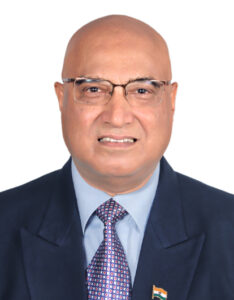 Dr. M M Goel | About the Author Propounder Needonomics, Professor Madan Mohan Goel is a superannuated Professor of Kurukshetra University. He is former Vice-Chancellor, Starex University, Gurugram, Jagannath University Jaipur, RGNIYD (GOI), Pro Vice-Chancellor VKSU Ara, Dean of Colleges & Social Sciences, Chairman, Dept. of Economics & Dept. of Journalism KUK He was the first ICCR Chair Professor in South Korea. Presently he is an Adjunct Professor at the Institute of Advanced Sciences Dartmouth, USA. He is honoured with the London Organization of Skill Development (LOSD) Excellence Award 2023, Professor J.K. Mehta Academic Excellence Award 2023, Rashtrapita Rashtriya Samman 2023 for propounding Needonomics and Gurukul Gyanjyoti Award (2024). His area of research is Economics of HRD & Indian Economy. He has 483 publications and guided 25 PhD and 25 MPhil Scholars. |
If you would like to get connected to Dr M M Goel write to editor@acadnews.com.