







In the fast-evolving landscape of the 21st century, where technological advancements like Artificial Intelligence (AI) are reshaping our lives, the challenge of maintaining ethical, moral, and spiritual balance has never been more critical. It presents an even greater challenge in the tightrope walk between the “how” and the “why”. The pervasive influence of greed prevailing today is manifested in various forms, leading to numerous societal evils that threaten the very fabric of humanity. Greed-driven economics “Greedonomics,” has fueled a range of destructive behaviors and systemic issues, from ego and anger to terrorism, corruption, inequalities, discrimination, discontent, and deprivation. As these evils grow, they perpetuate a cycle of suffering and degradation that can only be broken by a fundamental shift in our values and economic approach. This is where Needonomics, a philosophy rooted in addressing human needs rather than greed, offers a promising solution.
Understanding Greedonomics
Greedonomics (economics of greed) is the economic paradigm that prioritizes personal gain, material wealth, and profit maximization above all else. It thrives on the belief that insatiable desires can and should be fulfilled, often at the expense of others and the environment. This mindset has been the driving force behind many of the evils we see today.
- Ego and Anger: In a greed-driven society, ego is often inflated as individuals and organizations seek to assert dominance and superiority. This inflamed ego leads to anger, both at the individual level and within communities, as people compete ruthlessly for resources and recognition.
- Terrorism and Corruption: Greedonomics creates a fertile ground for terrorism and corruption, as individuals and groups resort to extreme measures to satisfy their unquenchable thirst for power and wealth. Corruption, in particular, becomes endemic when public institutions and leaders prioritize personal enrichment over the common good.
- Inequalities and Discrimination: The relentless pursuit of wealth in Greedonomics exacerbates inequalities, as resources are concentrated in the hands of a few. This economic imbalance fosters discrimination, as marginalized groups are systematically denied access to opportunities and resources.
- Discontent and Deprivation: The constant push for more, driven by greed, leads to widespread discontent. People feel deprived, not because they lack what they need, but because they are conditioned to desire more than they have. This sense of deprivation fuels a cycle of consumerism and waste, further deepening societal ills.
The philosophy of Needonomics (economics of needs) based on verse 9.22 of Gita offers a guiding light in this endeavor, reminding us to focus on the essential “why” of life—why peace is preferable to war, why love should triumph over hate, and why good must overcome evil. As we navigate an increasingly complex world, Needonomics could be the key to retaining our humanity and fostering a more balanced and harmonious society.
Ethical Dilemmas of AI
As AI continues to advance, it presents an even greater challenge in the tightrope walk between the “how” and the “why.” While AI holds the promise of revolutionizing industries, enhancing productivity, and improving lives, it also raises significant ethical questions. What should we do with the power of AI? How do we ensure that it serves humanity’s best interests rather than becoming a tool for greed and exploitation? The answers to these questions lie in the principles of Needonomics.
Needonomics: A Philosophy for Modern Times
Needonomics teaches us to prioritize need over greed, focusing on what we truly require to live fulfilling lives rather than what we desire in excess. It encourages us to consider how much we need (needo-consumption) and to understand the methods we use to meet those needs. For example, how we cook our food is as important as how much we eat, reflecting the broader concept that the means we employ should be as ethical and balanced as the ends we seek.
We must understand and adopt Gita-based Needonomics in totality including needo-consumption, needo-saving, needo-production, needo-investment, needo-distribution, altruism, needo-trade and exports.
Needonomics could be seen as the final challenge humanity faces in balancing the “how” and the “why.” It calls on us to use the power of AI and other technologies not just for what they can achieve, but for what they should achieve—promoting peace, love, and goodness over war, hate, and evil.
We can build a more just, equitable, and peaceful society.
- Ego and Anger Management: Needonomics encourages a sense of humility and contentment by promoting the idea that fulfilling one’s basic needs is sufficient for a good life. This shift in mindset can help manage ego and reduce anger, as people become less obsessed with outdoing others and more focused on their well-being.
- Countering Terrorism and Corruption: By prioritizing needs over greed, Needonomics can help reduce the incentives for terrorism and corruption. When leaders and institutions operate with the collective good in mind, the allure of power and wealth diminishes, making these evils less appealing.
- Reducing Inequalities and Discrimination: Needonomics advocates for a more equitable distribution of resources, ensuring that everyone’s basic needs are met. This approach naturally reduces inequalities and combats discrimination by providing equal opportunities for all, regardless of background or status.
- Alleviating Discontent and Deprivation: In a society guided by Needonomics, people are encouraged to find satisfaction in meeting their needs rather than constantly striving for more. This reduces feelings of deprivation and discontent, fostering a culture of contentment and sustainability.
Need for a Fresh Perspective
The Needonomics School of Thought also emphasizes the importance of maintaining a fresh, young, and innocent mind. By learning from the past but not being bound by it (“death to yesterday”), we can remain full of vigor and passion for life. This perspective is crucial as we confront the ethical and moral challenges of our time. It reminds us that while the past can inform our decisions, it should not dictate them. Instead, we must be guided by the fundamental principles of Needonomics to create a future that is ethical, balanced, and truly human. Spirituality and materialism are complimentary and justify spiritually guided materialism strategy flowing from Gita authenticated in sloka 22 of chapter 09. The potential middle-class consumers with needo-consumption are responsible for uplifting producers with needo-production and vice versa. Gita-based needonomics insulates a sense of morality, equality and respects the rights of all the stakeholders. For playing the role as consumer, producer, distributor and traders, we must convert monkey mind (misuse of AI) to monk mind (use of spiritual intelligence as SI). We need to become street SMART (simple, moral, action-oriented, responsive, and transparent) as consumers, producers, distributors, traders, and adopt needonomics in the present economic scenario of materialism and consumerism.
Conclusion: Retaining Humanity in a Technological World
The evils born out of Greedonomics are pervasive and deeply ingrained in our society. As we stand at the crossroads of technological advancement and ethical decay, Needonomics offers a path forward. By balancing the “how” and the “why,” we can ensure that our actions are aligned with our deepest values and that our use of technology serves to enhance, rather than diminish, our humanity. In an era dominated by Greedonomics, where the pursuit of excess has led to a moral and spiritual vacuum, Needonomics could be the guiding philosophy that helps us restore balance, retain our humanness, and live in harmony with one another. Needo-become street SMART (simple, moral, action-oriented, responsive, and transparent) stakeholders.
References
- M. M. Goel, Needonomics and Its Implications for the Indian Systems of Medicine: A Path to Sustainable Health, August 17,2024
- M. M. Goel, Needonomics: Implications for the 16th Finance Commission of India, ( with audio podcast), August 05,2024
- M. M. Goel, Needonomics: Implications for Needo-Governance in a Democratic World, (audio podcast), July 18,2024
- M. M. Goel, Needonomics: The Key to Thriving in a Knowledge-Based Economy,(audio podcast) July 08, 2024.
- M. M. Goel, Needonomics: Implications for Traders and Exporters in a Changing Economic Scenario (with audio podcast) June 19, 2024.
- M. M. Goel, Needonomics: Implications for Distributors in Changing Economic Scenario, (with audio podcast) June 04, 2024
- M. M. Goel, Needonomics: Implications for Producers in Changing Economic Scenario, (with audio podcast) May 14,2024
- M. M. Goel, Needo-Consumption: Implications for Global Consumers, April 22,2024
- M. M. Goel, Needonomics: SWOC ANALYSIS (with audio podcast) April 9, 2024.
- M. M. Goel, Unveiling the Perils of Greedonomics, (with audio podcast) March 11, 2024.
- M. M. Goel, Needonomics: Queen of Social Sciences for Global Economy, (with audio podcast) February 26, 2024.
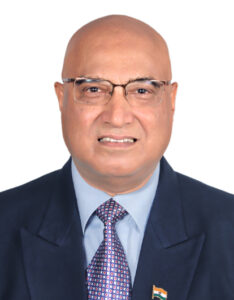 Dr. M M Goel | About the Author Propounder Needonomics, Professor Madan Mohan Goel is a superannuated Professor of Kurukshetra University. He is former Vice-Chancellor, Starex University, Gurugram, Jagannath University Jaipur, RGNIYD (GOI), Pro Vice-Chancellor VKSU Ara, Dean of Colleges & Social Sciences, Chairman, Dept. of Economics & Dept. of Journalism KUK He was the first ICCR Chair Professor in South Korea. Presently he is an Adjunct Professor at the Institute of Advanced Sciences Dartmouth, USA. He is honoured with the London Organization of Skill Development (LOSD) Excellence Award 2023, Professor J.K. Mehta Academic Excellence Award 2023, Rashtrapita Rashtriya Samman 2023 for propounding Needonomics and Gurukul Gyanjyoti Award (2024). His area of research is Economics of HRD & Indian Economy. He has 483 publications and guided 25 PhD and 25 MPhil Scholars. |
If you would like to get connected to Dr M M Goel write to editor@acadnews.com.