A Century of AIU: Indian Higher Education Confronts Its Next 100 Years

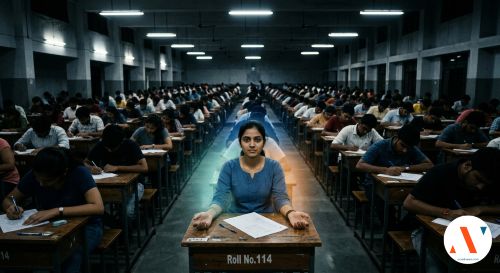
A century ago, AIU was founded on a quiet faith — that the universities of Bharat, working together, could shape the destiny of a nation not yet free. At its 100th AGM in Pune, that faith met a sharper question: can the Indian university redesign itself fast enough for Viksit Bharat 2047?

Read More

Assessment, Impact and Transformation: Redefining Excellence in Education

India’s higher education system assessed 13,892 student suicides in 2023 — and called it someone else’s problem. At Academic Network’s Technology Series webinar on 28 March 2026, Prof. Dr. M M Ananth asked the question institutions have avoided: What is assessment truly for? The IACT Framework — Interpersonal, Adaptability, Cognitive, Technical — reveals that 75% of professional effectiveness is determined by persona traits, yet our entire assessment architecture measures only the remaining 25%. With 1,329 registered participants, this was one of the most searching conversations Indian higher education has had about itself. Read the full report

Read More

Beyond the Lexicon: India’s Constructive Global Leadership

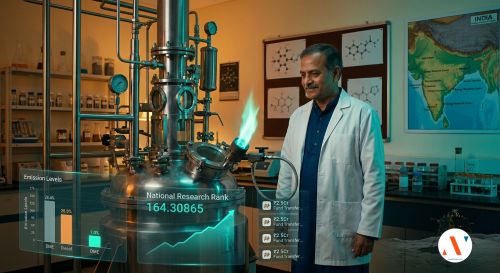
A satirical piece in a leading national newspaper recently mocked India’s LPG dependency as diplomatic dead weight. What it overlooked: scientists at CSIR-NCL Pune have spent two decades quietly building a clean, indigenous alternative — Dimethyl Ether — storable in existing LPG cylinders, burning cleaner, and capable of saving India ₹9,500 crore annually in foreign exchange. That is one story. Behind it sits a decade of evidence: India ranked 3rd globally in research output, $279 billion in digital payments in a single month, and a G20 presidency that delivered 87 documented outcomes. The data responds where rhetoric cannot. Read on.

Read More

Mental Wellness and the Future of Holistic Professionalism

One in seven young Indians carries a diagnosable mental health condition. Twelve billion work days are lost globally every year to mental health issues. And the single most important question in Indian education — are our students okay, as human beings? — has never once been asked in a board meeting.
Until now.
A psychiatrist, a university builder and a war veteran sat down to talk about what we have been measuring, what we have been ignoring, and what it would actually cost to change. The answers were uncomfortable, evidence-based and, in places, quietly devastating.

Read on.

Read More

Building Trustworthy AI Ecosystems for Indian Higher Education

When AI deployments fail in education, it’s rarely the technology—it’s trust. At Dr. Babasaheb Ambedkar Open University’s landmark National Research Workshop on Ethical AI, Prof. Dr. M.M. Ananth unveiled the Four Pillars framework for building trustworthy AI ecosystems: Education, Ethics, Collaboration, and Sustainability. Live polling revealed a striking insight: nearly half of Indian academics identify AI literacy—not infrastructure—as the sector’s most urgent development priority.

Read More

Healing at Scale: Democratizing Healthcare

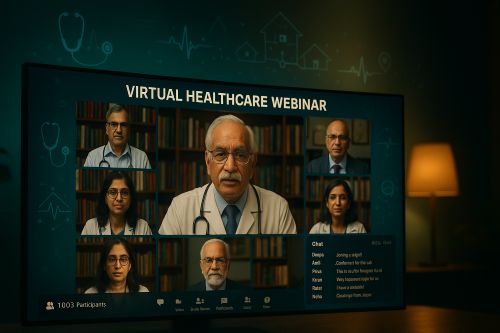
When Padma Shri Dr. V. Mohan said “If you are able to give free insurance to everybody, you can walk into any medical facility and take everything free,” 1,003 healthcare professionals across 135 cities listened. The Technology Series Healthcare webinar—moderated by Prof. M Ananth, FCS (Founder, Academic Network; Former Vice Chancellor) and Dr. M. Gopi Krishna (HOD Pediatrics, Sri Sathya Sai General Hospital)—brought together India’s finest minds including Dr. Mohan (700K+ patients served), Prof. B.S. Satyanarayana (Karnataka Vidya Ratna 2025), and SCTIMST Director Prof. Dr. Sanjay Behari. Prof. Ananth articulated the transformation framework: Cooperation (mindset) → Collaboration (skills) → Co-creation → Co-evolution. The 75/25 principle: sustainable change requires 75% mindset, 25% technical skills. Free access. World-class insights. This is healthcare democratization in action.


Read More

India’s Biggest Education Overhaul in Decades

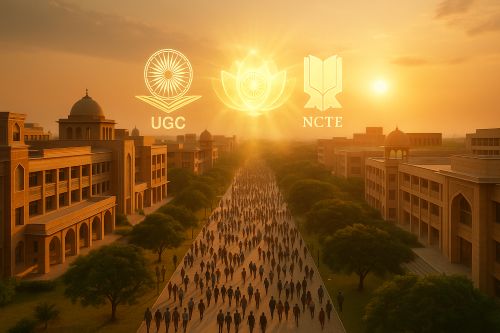
🎓 HISTORIC: India’s biggest higher education overhaul in decades! The Union Cabinet approved the Viksit Bharat Shiksha Adhikshan Bill, creating a single regulator to replace UGC, AICTE & NCTE. This landmark reform aligns with NEP 2020’s vision of streamlined governance—focusing on regulation, accreditation & professional standards. Medical and law colleges remain under separate bodies. With 1,000+ universities and 13,000+ colleges impacted, this promises enhanced accountability and global competitiveness for Indian degrees.

Read More

Make Your Line Longer: India’s Tech Vision for Global Leadership

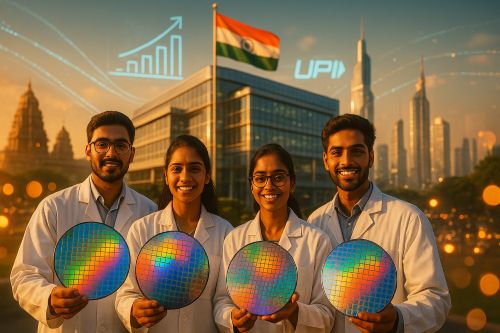
At the Bloomberg New Economy Forum 2025, Union Minister Ashwini Vaishnaw outlined India’s bold technology vision—from 190,000 startups to 2nm chip design capability. With 38,000 GPUs democratizing AI access and UPI offered as open architecture globally, India positions itself as a trusted partner in the digital economy.

Read More