







Bharat Ratna Dr. B.R. Ambedkar is widely celebrated as the architect of India’s Constitution and a champion of social justice. However, his profound contributions to economic thought deserve equal recognition. Beyond his renowned efforts for the upliftment of the Scheduled Castes, Ambedkar was a distinguished economist whose insights hold great relevance in the modern global economic landscape. His economic philosophy aligns seamlessly with the principles of Needonomics—an economic framework that prioritizes needs over wants, ensuring sustainable and equitable growth. Recognizing Ambedkar as a Needonomist highlights his forward-thinking approach to public finance, governance, and economic justice.
Ambedkar’s Economic Acumen and Academic Journey
Ambedkar’s academic journey is a testament to his intellectual rigor and deep understanding of economic principles. He earned a Doctorate of Science from the London School of Economics, a remarkable feat that underscored his expertise. His memoranda and statements submitted to the Government of India reflect his mastery of economics, emphasizing public finance, monetary policy, and fiscal prudence. Despite his invaluable contributions, Ambedkar’s economic insights have not been given due recognition on the world stage. In fact, his ideas hold relevance beyond national borders, meriting global acknowledgment and adoption.
Canons of Public Expenditure: A Foundation for Needonomics
One of Ambedkar’s most significant contributions to economics is his articulation of the canons of public expenditure. These principles serve as a guide for prudent government spending, ensuring efficiency, transparency, and sustainability. In 1949, Ambedkar stated that every government must spend resources garnered from the public not only in accordance with rules and regulations but also by adhering to three key principles: Faithfulness, Economy, and Wisdom (FEW). These principles align seamlessly with the core tenets of Needonomics, advocating for judicious public spending to prevent economic crises and foster societal well-being.
Faithfulness: Upholding Trust and Accountability
The canon of faithfulness emphasizes the government’s duty to honor the trust bestowed upon it by the electorate. Faithfulness, in this context, means a commitment to fulfilling promises and upholding the will of the people. It calls for a governance model that prioritizes the public good over personal or political gains. This principle is particularly relevant today, as global economies struggle with governance deficits, corruption, and inefficient use of public funds. By adhering to this canon, policymakers can ensure that public expenditure aligns with the true needs of the people.
Economy: Intelligent Allocation of Resources
Ambedkar’s notion of economy extends beyond mere thriftiness; it advocates for the intelligent and impactful allocation of resources. Economy in public expenditure does not mean minimizing spending but optimizing it. Every rupee spent must yield maximum benefits, ensuring that public funds are utilized effectively to address pressing societal needs. With rising inflation and declining purchasing power, the principle of economy is critical in mitigating financial stress and ensuring sustainable economic growth.
Wisdom: Prudent Decision-Making in Public Finance
The canon of wisdom underscores the necessity of informed, rational, and ethical decision-making in public expenditure. Governance must be guided by economic expertise, foresight, and common sense rather than political opportunism. Wisdom in economic policy ensures that financial decisions are well-considered, just, and beneficial to society at large. The role of independent professionals and economists outside political circles becomes crucial in this regard, providing an unbiased and scholarly perspective on fiscal matters.
Adapting Ambedkar’s Canons for Contemporary Governance
Ambedkar’s canons of public expenditure provide a flexible framework adaptable to diverse economic contexts. Policymakers must align expenditure decisions with overarching national objectives, available resources, and long-term sustainability. The allocation of funds among competing demands and the manner of utilization must be governed by these principles. The application of these canons is crucial in today’s era of economic uncertainty, where nations face challenges such as fiscal deficits, unemployment, and financial mismanagement.
Ambedkar as a Needonomist: A Global Perspective
Ambedkar’s economic thought resonates with the principles of Needonomics, a school of thought propounded by Professor Madan Mohan Goel. Needonomics advocates for an economic model centered around fulfilling essential needs rather than catering to excessive desires. Ambedkar’s emphasis on faithfulness, economy, and wisdom aligns with this philosophy, offering a sustainable alternative to conventional economic paradigms driven by consumerism and materialism.
The global economic crises we witness today, including financial recessions and debt burdens, could have been mitigated by embracing Ambedkar’s canons of public expenditure. His principles provide a roadmap for economic resilience, advocating for transparency, efficiency, and ethical governance.
Broadening Ambedkar’s Economic Legacy through Needonomics
To further integrate Ambedkar’s economic philosophy with Needonomics, the following actions are essential:
- Incorporating Ambedkar’s economic principles in public policy education: Training policymakers and economists in the FEW canons will enhance decision-making and accountability.
- Promoting research and dialogue on Ambedkar’s economic thought: Establishing research centers and forums dedicated to his economic philosophy will encourage global recognition.
- Implementing pilot projects based on Needonomics: Testing Ambedkar’s principles in local governance models can demonstrate their effectiveness in fostering sustainable development.
- International advocacy for Ambedkar’s economic framework: Positioning Ambedkar as a global Needonomist can influence international economic policies and frameworks.
References
- Goel, M.M (2025,April 08). Needonomics: A Panacea for Society’s Ills April 08,2025
- M. M. Goel, . Consumption of Food in Needonomics Framework: A Sustainable Path to Health and Equity March 03, 2025
- M. M. Goel, Viksit Bharat @ 2047: Gita-Inspired Needonomics for Overcoming Challenges, Seizing Opportunities & Charting the Roadmap with audio podcast February 17,2025
- M. M. Goel, Ethical Pathways for IMF and World Bank Prosperity Sharing: Niti Gun Insights under the Needonomics Framework, with audio podcast January 15, 2025.
- M. M. Goel, Vikshit Bharat: Bridging Dattopant Thengdi’s Vision with Needonomics for Inclusive Growth with audio podcast, December 16,2024.
- M. M. Goel, Needonomics for Teachers and Researchers in Economics Part 3, November 26,2024.
- M. M. Goel, Needonomics for Teachers and Researchers in Economics Part 2, November 12,2024.
- M. M. Goel, Needonomics for Teachers and Researchers in Economics Part 1, October 16,2024.
- M. M. Goel, Lessons of Needonomics for Service Sector in Present Times, ( with audio podcast) October 02,2024
- M. M. Goel, Revitalizing Indian Manufacturing with Needonomics: Leveraging Labor for Viksit Bharat (with audio podcast), September 18,2024
- M. M. Goel, Needonomics: Implications for Agriculture, (with audio podcast) September 07,2024.
- M. M. Goel, Needonomics: Balancing “How” and “Why” in an era of Greedonomics and AI, August 17, 2024
- M. M. Goel, Needonomics and Its Implications for the Indian Systems of Medicine: A Path to Sustainable Health, August 17,2024
- M. M. Goel, Needonomics: Implications for the 16th Finance Commission of India, ( with audio podcast), August 05,2024
- M. M. Goel, Needonomics: Implications for Needo-Governance in a Democratic World, (audio podcast), July 18,2024
- M. M. Goel, Needonomics: The Key to Thriving in a Knowledge-Based Economy,(audio podcast) July 08, 2024.
- M. M. Goel, Needonomics: Implications for Traders and Exporters in a Changing Economic Scenario (with audio podcast) June 19, 2024.
- M. M. Goel, Needonomics: Implications for Distributors in Changing Economic Scenario, (with audio podcast) June 04, 2024
- M. M. Goel, Needonomics: Implications for Producers in Changing Economic Scenario, (with audio podcast) May 14,2024
- M. M. Goel, Needo-Consumption: Implications for Global Consumers, April 22,2024
- M. M. Goel, Needonomics: SWOC ANALYSIS (with audio podcast) April 9, 2024.
- M. M. Goel, Unveiling the Perils of Greedonomics, (with audio podcast) March 11, 2024.
- M. M. Goel, Needonomics: Queen of Social Sciences for Global Economy, (with audio podcast) February 26, 2024.
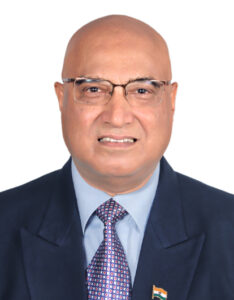 Dr. M M Goel | About the Author Propounder Needonomics, Professor Madan Mohan Goel is a superannuated Professor of Kurukshetra University. He is former Vice-Chancellor, Starex University, Gurugram, Jagannath University Jaipur, RGNIYD (GOI), Pro Vice-Chancellor VKSU Ara, Dean of Colleges & Social Sciences, Chairman, Dept. of Economics & Dept. of Journalism KUK He was the first ICCR Chair Professor in South Korea. Presently he is an Adjunct Professor at the Institute of Advanced Sciences Dartmouth, USA. He is honoured with the London Organization of Skill Development (LOSD) Excellence Award 2023, Professor J.K. Mehta Academic Excellence Award 2023, Rashtrapita Rashtriya Samman 2023 for propounding Needonomics and Gurukul Gyanjyoti Award (2024). His area of research is Economics of HRD & Indian Economy. He has 483 publications and guided 25 PhD and 25 MPhil Scholars. |
If you would like to get connected to Dr M M Goel write to editor@acadnews.com.