








Build the Persona First: Inside AcadNet's National Employability Forum 2026
2,157 participants. A CEO, a vice chancellor, three CHROs and a former World Economic Forum executive on one stage. And, running quietly underneath all three hours of it, a live audience that kept confirming, poll after poll, the exact argument the day's speakers were making.
On 22 August 2026, AcadNet, the international think tank founded and led by Prof. M.M. Ananth, convened the National Employability Forum, a free half-day online conference themed “Employability and Employment: Contemporariness and the Future.” Held over Zoho Webinar from 10:00 AM to 1:00 PM IST, the forum drew 2,157 registered participants from academia, industry and policy circles across India, well beyond its original target of 500. The Association of Indian Universities served as Knowledge Partner, with Dayananda Sagar University and Samskar Learning Academy as Academic Partners and Zoho as Industry Partner. AcadNet describes itself as an international think tank working at the intersection of higher education, industry and public policy, built around a single conviction: that India's graduate employability crisis is solvable, but only if academia, employers and policymakers stop treating it as someone else's problem to fix.
What made the morning unusual wasn't just the lineup. It was the structure. Nine live polls ran through the session, turning a passive 2,157-strong audience into a running dataset. What emerged, thread by thread, was less a series of disconnected opinions and more a live cross-validation of AcadNet's own IACT Meta Intelligence Framework, the same conclusion arrived at independently by primary research, by the World Economic Forum's global skills data, and now, in real time, by the room itself. The framework's own evidence base is unusually broad: it draws on the India Skills Report, the Mercer-Mettl Graduate Skill Index, the WEF Future of Jobs Report, the Periodic Labour Force Survey of the Ministry of Statistics and Programme Implementation, and research from the McKinsey Global Institute, NASSCOM and NITI Aayog's Economic Survey, and was published as a white paper by Cambridge University Press with a foreword by Union Minister Shri Dharmendra Pradhan.
The Voices on Stage
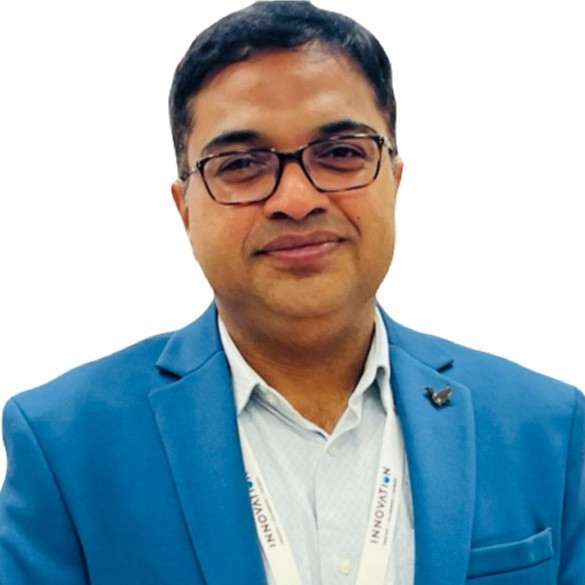
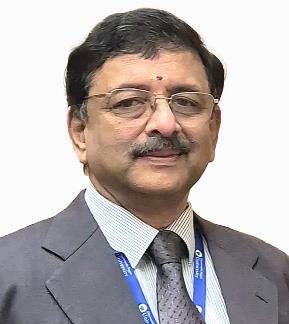
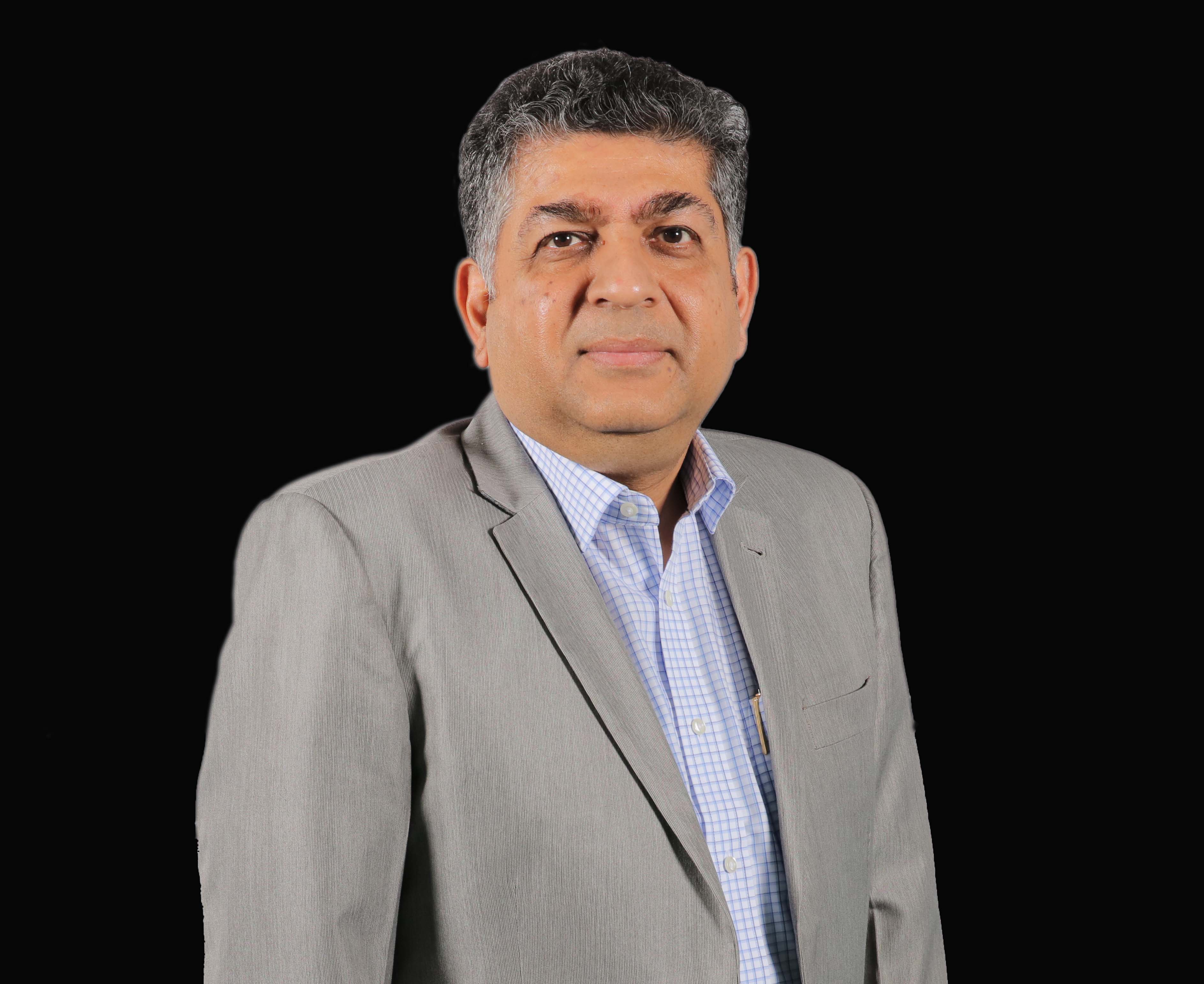
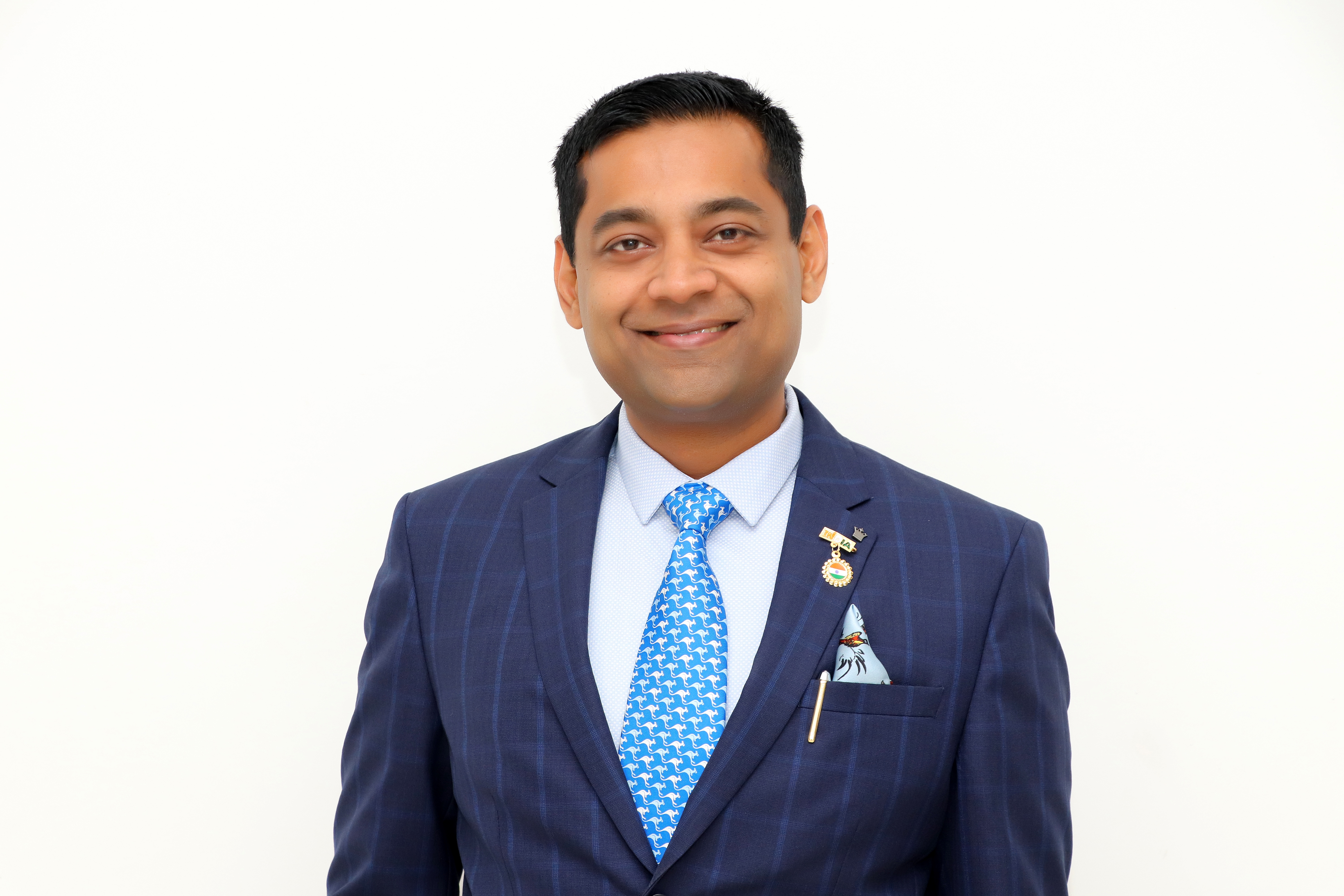
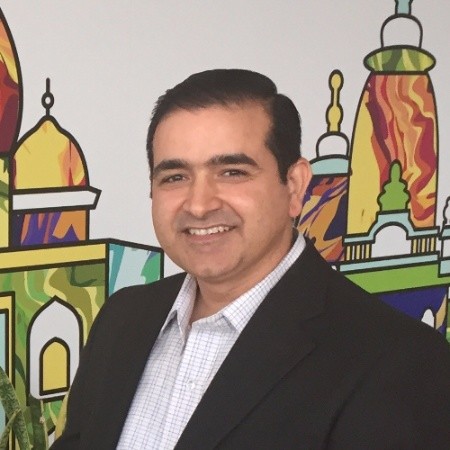
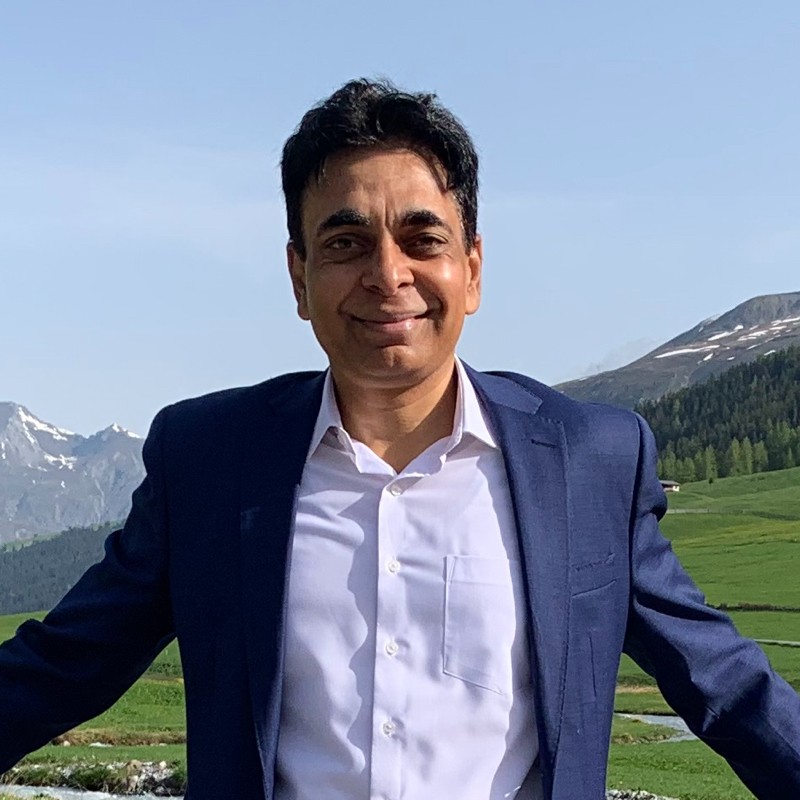
Seven speakers carried the day: a government CEO opening the forum, AcadNet’s own founder chairman delivering the keynote and moderating the panel, and five industry and academic leaders on the panel itself.

Who Was in the Room
Before the substance of the day began, the first poll quietly established something important: this was not a room full of students being lectured at, nor a room full of vice chancellors talking to each other. Asked their primary role, the audience split across five categories, with learners forming close to half the room.
The Numbers That Opened the Room
Prof. Ananth opened on the scale of the system itself: India runs the world's second-largest higher education sector, with 43.3 million students enrolled. Against that base he set two independent readiness indices, the Mercer-Mettl Graduate Skill Index, which finds 42.6 percent of graduates work-ready, and the Wheebox India Skills Report, which puts the figure closer to 56 percent. Either way, the conclusion is the same: roughly one graduate in two leaves university unprepared for the workplace.
He then broke employability down by discipline: roughly 80 percent of computer science and IT graduates find employment, against 72 percent for MBA graduates, 70 percent for engineering, and 62 percent for commerce. On the other side of the table, 82 percent of employers report they cannot find the right talent, and 93 percent of students say they want real-world experience and internships that institutions and employers are not supplying at scale. India faces a projected shortfall of 47 to 48 million skilled workers by 2027. His verdict on the gap was blunt: it is structural, not cyclical, embedded in how curricula are revised through Boards of Studies and Academic Councils that move slower than the market, not something the business cycle will correct.
Immediately, the room was asked to name the single biggest barrier to closing that gap. The result was telling: not a single respondent selected “assessment measures the wrong things,” even though assessment design would become one of the day's most contested themes hours later.
The paradox deepens inside the labour market. Prof. Ananth drew on the Periodic Labour Force Survey 2025: overall unemployment among those aged 15 and above sits at 3.1 percent, but youth unemployment (15–29) runs at 9.9 percent, urban youth unemployment at 13.6 percent, and unemployment among the secondary-and-above educated at 6.5 percent, higher than the national rate. More education, in other words, is not currently protecting young people from joblessness; the problem is a mismatch between what credentials certify and what the market demands. He noted India's IMD global talent ranking had slipped to 63rd in 2025 from 58th the year before. In the panel that followed, he would put graduate unemployment specifically at around 11.2 percent, several times the headline national figure.
And the crisis does not end at the appointment letter. First-year attrition across sectors runs at roughly 40 percent overall, spiking to 32.5 percent in BPO and IT-enabled services and 28–29 percent in e-commerce, with IT services at 25 percent and the overall rate at 16 percent, down from 18 percent in 2023. Some 45 percent of first-year exits trace to cultural mismatch, 45 percent report no mentor or peer guide at all, and 25 percent name supervisor behaviour as the single biggest reason for leaving. Of nine identified attrition drivers, seven map to failures of interpersonal, adaptability or cognitive capability; only compensation and shift structure sit outside the IACT framework entirely.
“People don't quit jobs. They quit managers, cultures and their own unpreparedness.”
Prof. M.M. Ananth, Founder Chairman, AcadNet
The audience's read on whether this is fundamentally a supply problem (graduates genuinely lack the skills) or a signalling problem (skills exist but aren't demonstrated or recognised) added a second layer to the same story.
The Framework: IACT and the 75/25 Principle
The intellectual spine of the forum was AcadNet's IACT Meta Intelligence Framework: Interpersonal, Adaptability, Cognitive and Technical. Published as a Cambridge University Press white paper with a foreword by Union Minister Shri Dharmendra Pradhan, the framework rests on primary research across several thousand professionals and identifies four independent clusters.
Prof. Ananth then produced a second, independent line of evidence: the World Economic Forum's list of core skills needed by 2030. Of the eleven skills the WEF identifies, nine map directly onto the IACT persona clusters, analytical thinking to cognitive, active learning to interpersonal, resilience and flexibility to adaptability, and only two are purely technical.
The third line of evidence arrived live, mid-session, when the audience was asked directly which IACT cluster their own institution or organisation under-invests in most.
The Inaugural Address
Dr Panneerselvam Madanagopal, CEO of MeitY Startup Hub, opened the substantive proceedings with an address that reframed the day's conversation before the keynote even began. Appointed in November 2024, and with more than two decades across innovation management and market development, including seven years at T-Hub, he now oversees a national network of nearly 200,000 startups, part of what makes India the world's third-largest startup ecosystem. His central claim was that India does not have a shortage of jobs so much as a shortage of people ready to do them, and a shortage of people willing to adapt once inside them. India, he said, may have a million problems, but it has a billion minds to solve them, its demographic dividend. Mismanaged, though, that same dividend can “flip on its head and become a demographic disaster.”
“Population with aspiration, educated population, young population without opportunities is a perfect recipe for disaster.”
Dr Panneerselvam Madanagopal, CEO, MeitY Startup Hub
He framed India's predicament as three simultaneous challenges: there are no jobs for some people; there are jobs for which no ready people can be found; and some of those already in jobs are not performing well enough. Employment, he argued, is not the real issue; employability is. And he was candid about a generational shift he has watched directly. Graduates today often know precisely what they want and are markedly less willing than earlier generations to take a role that isn't a perfect fit, choosing prolonged unemployment, sometimes euphemised as “being on a break,” over a stepping-stone opportunity. Twenty-five years ago, he recalled, his generation took whatever small window opened and built credibility through hard work.
His prescription leaned on two ideas. The first was strength-based careers rather than credential-based ones. Indian schooling, he argued, habitually tells students what they are bad at; he himself was pushed toward science he was told he was weak in, while his genuine strength in mathematics went unbuilt. Play to a strength, he said, and you enjoy the work, and enjoyment is where passion and success come from. The second idea was a hard mindset shift: “either you are an entrepreneur, or you will work for an entrepreneur.” With government jobs limited by definition, the national task is to move students from a job-seeker mindset to a job-creator one, with faculty acting as the first point of contact for a student's ideas rather than gatekeepers of a one-way flow of information.
He grounded the push in government money: 17 to 18 ministries now engaged in entrepreneurship and innovation, more than 25,000 crore rupees deployed over the past decade, work with roughly 150 institutions offering grants of five to ten lakh and investment up to a crore, and a new deep-tech program set to fund up to five crore per startup. He pointed to why institutions like IIT Madras succeed at incubation, their professors sit inside every company formed, adding mentorship and value, and urged faculty everywhere to shift from a hierarchy of one-way instruction to genuine co-creation with students. Even those who never found a company, he noted, are increasingly sought as “intrapreneurs,” people who bring ownership and a problem-solving mindset to an employer without taking the financial risk themselves.
“Either you are an entrepreneur, or you will work for an entrepreneur.”
Dr Panneerselvam Madanagopal
His closing point anticipated the keynote's entire second act: information itself is now free, available from MIT, Stanford and Harvard on any laptop, so the value a college now adds isn't content delivery but labs, prototyping, peer collaboration and mentorship, precisely the immersive, persona-building experience IACT is built to formalise.
The Keynote: A Crisis in Five Acts
Prof. Ananth structured his keynote as five acts: the problem statement, the AI-driven disruption, the reckoning over who survives it, the IACT framework as resolution, and the imperative for what changes now.
Act One. Beyond the headline 11.2 percent unemployment figure, employability breaks down sharply by degree: roughly 80 percent of computer science and IT graduates find employment, against 72 percent for MBA graduates, 70 percent for engineering, and 62 percent for commerce. On the employer side, 82 percent report they cannot find the right talent, against a projected shortfall of 47 to 48 million skilled workers by 2027, a date now less than eighteen months away.
Act Two. This is where the keynote's argument became genuinely counterintuitive. Prof. Ananth rejected the popular narrative that AI displaces the least skilled fastest. Instead, he presented a workforce reshaped as a pyramid compressed from the middle outward, across three tiers moving at three different speeds.
The top tier, senior and cross-vertical decision-makers, faces slow but real downsizing; only those fluent across multiple domains and comfortable with how AI systems actually work will survive as organisations lean out. The routine cognitive middle, data entry and processing, junior analysis, report writing, claims handling, first-line customer support, faces the fastest and most systemic displacement, because pattern recognition is exactly what large language models do best. The trade and physically adaptive base is comparatively insulated for perhaps another decade, since India's cost-benefit calculus still favours human labour there. Prof. Ananth put hard numbers to the shift: 39 percent of core job skills changing by 2030 (WEF), 63 percent of employers citing the skills gap as their top barrier, tens of millions of Indian workers exposed to automation, and a striking 600 percent growth in AI and machine-learning job postings in India between 2024 and 2026.
Citing McKinsey and WEF data, he noted 85 million global roles displaced by automation by 2030 against 97 million new roles created, concentrated disproportionately at the two extremes of the pyramid rather than the centre, exactly where the bulk of Indian graduates currently land. Roughly 69 percent of current human tasks, he added, are already automatable with existing technology, and NASSCOM data indicates 30 to 40 percent of junior and mid-level IT roles will be restructured by AI-assisted workflows by 2027.
He was careful about what reskilling can and cannot do here. Within the vulnerable middle tier, he argued, a junior analyst learning Python will not save their role, because the role itself is disappearing. What is required is not a fresh skill bolted onto the same job but a transformation into a genuinely new persona. He named agentic AI directly, noting that tools like Claude now make a highly efficient one-person company possible, work that once needed a team of employees.
Put directly to the room: when an organisation automates a role, is the person usually retrained or replaced outright?
Act Three. If AI compresses the middle and rewards the extremes, Prof. Ananth argued, the deciding factor for who survives isn't what a person knows but who they are. Interpersonal capability drives AI toward outcomes through people, stakeholder trust and team alignment, and cannot be delegated to a model. Adaptability is the mid-zone's primary survival trait, with a skill shelf life of just two to three years. And cognitive capability, curiosity, creativity and solution-centricity, is what points AI somewhere worth going in the first place.
“AI executes. It does not wonder. AI is directionless without human intent.”
Prof. M.M. Ananth
This is where he put the sharpest single question of the day to the audience: does AI make the persona-first, IACT case stronger, or weaker?
Acts Four and Five. Having built the case, Prof. Ananth returned to IACT itself as the resolution, then turned to two structural forces and to policy. On the gig economy, he cited NITI Aayog and the Economic Survey 2025-26 tracking a workforce growing from 7.7 million to a projected 23.5 million, and argued gig work should be a choice, not a necessity born of non-employment. On policy, his assessment of NEP 2020, Skill India, PM Kaushal Vikas Yojana and Digital India was measured but pointed: encouraging in places, 2.5 lakh faculty trained under the Malaviya Mission Teacher Training programme, but undermined by highly uneven state readiness and the near-total absence of standardised employability metrics.
“Measurement is a prerequisite for reform, not overhead.”
Prof. M.M. Ananth
He closed with a neuroscience argument for urgency. Skill acquisition, he explained, uses fast, targeted synaptic strengthening in a specific cortical region, local and reversible, which is why micro-credentials deliver measurable outcomes quickly. Persona formation is different: slow, deep, structural change across the prefrontal cortex, limbic system and default mode network, and curiosity, resilience and empathy are “grown, not installed.” The prefrontal cortex reaches full development only in the early to mid-twenties, so by a student's final year the window for deep persona formation has largely passed. An adult, he noted, can take years to change; an unconditioned young mind can shift in months, or, in the older framing, within a single mandala of fourteen days, given consistent and disciplined effort. His conclusion: the sequence is currently inverted. Persona should be built first, from the first semester, across the whole degree, with technical skill layered on top.
“Build the persona first. The skill will follow.”
Prof. M.M. Ananth, closing the keynote
Zoho: Building the Infrastructure Layer
As Industry Partner, Zoho used its fifteen-minute slot, delivered by Merlin Velankani of the Zoho Creator team, to connect the forum's employability argument to the infrastructure question underneath it: what institutions actually run on. Zoho, 30 years old and spanning 150 countries with more than 19,000 employees, 1 million-plus customers and 60-plus products, framed itself as “made in India for the globe,” and pointed to its own Zoho Schools of Learning, a two-decade-old alternative route that takes students straight after the twelfth grade, trains them, and hires them, as a working model of employability without the conventional degree.
The pitch for Zoho Creator, its AI-native application platform now marking 20 years with 30,000-plus customers and 7 million apps built, was that education, like employability itself, is not one-size-fits-all: institutions' admissions, fee, examination, library and alumni workflows differ, and software should adapt to the institution rather than the reverse. Case studies included RCSI (UK) automating its MIS to eliminate spreadsheet-driven data discrepancies, and SRM University in Chennai, now running as a fully paperless institution across six custom-built applications. Data privacy was underscored as a core differentiator: Zoho does not own, sell or run ads against the data entered into applications built on its platform.
The Panel: Five Voices, One Shared Accountability Problem
The panel, moderated by Prof. Ananth himself, brought together Prof. B.S. Satyanarayana (Vice Chancellor, Dayananda Sagar University), Mr Sameer Wadhwan (People Portfolio LLP, former SVP HR at Samsung), Dr J P Joshi (VP HR, Schneider Electric Global Supply Chain), Dr Ashish Mittal (Group CHRO, Sreenidhi Educational Group) and Mr Purushottam Kaushik (Head of the WEF Centre for the Fourth Industrial Revolution in India, currently transitioning out of the role, participating in a personal capacity). Prof. Ananth set the stakes plainly in his framing: with the second half of 2026 already under way and increasingly capable agentic AI in the market, the window to have this conversation before its consequences arrive is narrow. A professor of AI for three decades, he described the current moment as an alien suddenly landing in a system most of the workforce was unprepared for.
Whose problem is this? Prof. Ananth's opening question, posed in one sentence, produced rare early consensus: the gap belongs to no single stakeholder, and that diffusion of accountability is itself part of the problem. Dr Mittal framed it as shared responsibility and shared accountability across universities, employers, students and the state, and cited AISHE data showing higher education enrolment reaching 4.5 crore, up 34 percent, with employability climbing to 55 percent; the biggest failure, he said, comes when those four stakeholders work in silos. Prof. Satyanarayana was blunter, invoking Andy Grove's “only the paranoid survive” and diagnosing a national mix of “chalta hai” and colonial-era deference; academics carry the largest share of responsibility, he argued, precisely because no one challenges them on outcomes, while industry too often wants a “free lunch,” expecting ready-made talent without co-investing in labs or roadmaps. Mr Kaushik and Dr Joshi both converged on the same word: interface. The problem sits less within either academia or industry than in the weak, poorly maintained connective tissue between the two, a diagnosis that matched almost exactly what the room had already voted for in Poll 2: weak industry-academia partnership as the single largest obstacle, ahead of curriculum lag itself.
Mr Kaushik, who heads the WEF Centre for the Fourth Industrial Revolution in India and is currently transitioning out of the role, framed the Indian version of the problem as one of scale: more than three crore students in higher education, yet over one crore unemployable or unemployed, and an AI curriculum that changes almost daily, from prompt engineering to AI agents to coding to world models, faster than any four-year degree can absorb. Around 60 percent of institutions, he noted, already retest and revalidate the skills of graduates coming out of universities. His challenge to industry was sharp: stop blaming the education system, become an equal stakeholder, because “the biggest loser will be industry itself if it doesn't act.” He was also pointedly optimistic, noting India ranks at or near the top globally on AI talent, with digital public infrastructure, a vast IT services base and the world's third-largest startup ecosystem as leverage.
“We don't have a fundamental shortage of graduates. What we have is graduates who can't translate knowledge into workplace value.”
Mr Sameer Wadhwan, People Portfolio LLP
Mr Wadhwan, drawing on nearly four decades in HR including as SVP HR at Samsung, gave the sharpest employer-side reading of the day. The problem, he argued, is not a shortage of graduates but of graduates who can turn knowledge into demonstrated workplace value, and he broke the shortfall into distinct gaps: a knowledge gap, a skill gap (having knowledge but not knowing how to apply it), an application gap (able in the classroom, lost in the industry), a behaviour gap (collaboration, teamwork, communication, leadership) and an experience gap. Industry, he said, is hiring for “T-shaped” people, depth in one or two domains plus breadth across those durable competencies, while the system keeps producing “I-shaped” specialists. His own filters, as a CHRO, were rarely about technical knowledge, which he presumed the degree covered, but about problem-solving, critical thinking, learning agility, curiosity and communication. Employability, he argued, has to hold not just at 22 but at 32, 42 and 52, a matter of continually renewing half-life competencies.
Adaptability, and who gets left behind. Dr Mittal argued for adaptability as the single most valuable trait to develop, since technical skills can be assessed and cognitive skills trained, but the capacity to continuously relearn cannot be manufactured on demand. He also reframed the AI numbers optimistically, citing the WEF projection of 92 million roles displaced against 170 million created, a net addition of roughly 78 million, and urged institutions to prepare students for the job that will exist in ten years, not the one advertised today. Dr Joshi offered the panel's most concrete case study: Schneider Electric's shift from analog to digital to smart-meter manufacturing, a transition faster than most institutions' syllabus revision cycles, executed entirely through internal reskilling rather than headcount replacement, its R&D mix moving from roughly 60:40 to almost fully smart-meter with no reduction in engineers. His challenge to the room was pointed: institutions have moved from analog to smart meters in the factory, but have they moved from an analog syllabus to a smart-meter syllabus in the classroom?
“Have you moved from an analog syllabus to a smart-meter syllabus?”
Dr J P Joshi, VP HR, Schneider Electric
What placement rates actually measure. The panel's most pointed exchange concerned placement statistics. Dr Mittal argued placement rate measures employment conversion, not employability, and that institutions publishing 90 or 100 percent placement routinely fail to ask whether graduates are in quality roles, retaining them, progressing in salary, or actually using what they learned. He proposed tracking a graduate's journey for four to five years post-employment as the real test of institutional value. Mr Wadhwan added the employer's version: what he trusts is not a placement number but the track record of a given college's “success personas” over two to three years, and extended internships of eight to twelve weeks on live business problems, the kind of exposure that in his own corporate career turned 70 to 80 percent of interns into pre-placement hires.
“The one who has been left out by the placement office gets placed first, more often than institutions would like to admit.”
Prof. M.M. Ananth, drawing on his own experience as a two-time vice chancellor
When the discussion turned to how AI itself might close, or widen, the gap, Prof. Ananth noted that platforms like Skillsoft are now using AI to coach managers on empathy, a machine, in effect, teaching a human to be more human. Mr Kaushik located the durable human advantages precisely where AI is weakest: building trust, ethical reasoning and dealing with genuine ambiguity, since AI, at bottom, is statistics and probability rather than judgement. Mr Wadhwan added the cognitive frontier employers now struggle with most, moving people from data and reporting to the higher-order work of turning insight into wisdom.
“The struggle now is converting insights into wisdom.”
Mr Sameer Wadhwan, People Portfolio LLP
Closing commitments. Asked for one concrete, testable commitment each would make over the next twelve months, Dr Mittal committed to formally shifting institutional measurement from placement to employability, via an AI-enabled index tracking graduates at six and twelve months and then across four to five years; Prof. Satyanarayana to scaling an industry-academia-government framework aimed at self-reliance and technology leadership; Mr Wadhwan proposed a demonstrated-capability “job readiness framework,” explicitly drawing a parallel to NITI Aayog's digital skills passport concept, and bringing practitioners into classrooms and faculty into companies; Dr Joshi committed to deepening campus partnerships and expanding project-based internships to grow homegrown talent for the leadership pipeline. Prof. Ananth added his own: a personal index printed alongside the marks on a mark sheet, an index of who a graduate is, with parents brought into the loop.
From the Floor
Asked what the hardest internal resistance had been in shifting faculty mindset from content delivery to persona building, Prof. Satyanarayana was candid that any change to an entrenched academic system is difficult by default. His institution's answer was to stop depending on individual faculty competence, which varies widely person to person, and instead build collective, cross-faculty assessment rubrics, one instructor strong on the psychological dimension, another on the technical, so that persona could be assessed holistically and bias removed without ever labelling any individual teacher incompetent.
Asked whether a persona-first model ages better than a purely technical one as AI accelerates skill obsolescence, Mr Kaushik was unequivocal, noting that roughly 40 percent of skills are set to be outdated on his organisation's own numbers. He proposed a “persona mark sheet” running alongside the academic transcript, built and continuously updated in partnership with employers rather than issued once by government, tracked from year one rather than bolted on in the final semester, and suggested piloting the idea with a first cohort of roughly 50 universities rather than debating it indefinitely.
Asked how L&D spend on freshers at Schneider Electric compares with five years ago, Dr Joshi confirmed it has grown continuously and will keep rising in line with the company's 3X growth vision, underscoring that reskilling investment is now a structural, permanently rising line item rather than a one-off response to AI.
A closing exchange from the floor sharpened the day's central frustration. Prof. Gangappa called for continuous, structured dialogue that connects curriculum design directly to industry needs, rather than the episodic industry-academia summits India has run for decades. Prof. Ananth agreed, noting that Boards of Studies and Academic Councils are supposed to have industry at the table, but the deeper ambition, industry genuinely in the classroom and the classroom genuinely in industry, remains unrealised. His own framing of the national failure was that India knows a great deal but does not translate that knowledge into transformation on the ground. He then revealed AcadNet is testing the IACT lens on curriculum itself: even a narrow technical topic like a MOSFET semiconductor device can be taught through the framework, with a faculty team assigning objective persona scores against how learners engage with it. Pedagogy, he added, is the wrong word for adults; the right one is andragogy, facilitation and immersive, self-directed learning rather than one-way instruction.
Prof. Satyanarayana closed the panel by insisting a university is fundamentally in the business of knowledge creation, comprehension and dissemination, not mere advocacy, and that its research must become something industry is genuinely excited to partner on. He described investments spanning enterprise-class AI, AR, VR and XR, robotics and mechatronics, and multidisciplinary assignments every semester, and pointed to South Korea's 2017 principle, vocation first, education next, as a model, alongside NEP's Academic Bank of Credits, for interleaving vocational and knowledge credit. Prof. Ananth's parting note was the sharpest of the session: the intent is right, but the faculty who must translate it are, in his blunt phrase, largely not yet ready, and so, like everyone else in the room, they will have to learn fast on the job.
What the Data Says When You Look Closer
The nine headline poll results tell one story. Cross-referencing how the same people answered across different polls tells a sharper one. Because each respondent's answers are linked, the raw data reveals patterns no single poll shows, including the fact that several panelists quietly voted in the very polls they were on stage to discuss.
The panelists voted with the room. The live polls were open to everyone, and several panelists answered them. Their private ballots line up almost exactly with the case they made in public.
This is the rare moment where the people arguing a thesis from the stage can be checked, as a group, against their own anonymous-feeling clicks. Every panelist who answered the persona-first poll marked it stronger. And adaptability, the trait the panel returned to again and again in open discussion, is the same cluster most of them flagged as under-invested when voting privately. What they argued aloud and what they clicked quietly point the same way.
The confidence paradox. The most revealing cross-tab pairs Poll 7 (confidence that skills stay relevant over five years) with Poll 8 (does AI make the persona case stronger). The two move together in a way pure optimism wouldn't predict.
Read that carefully. The people most confident their skills will survive the next five years are not the ones betting on technical mastery. They are the ones who believe persona is what endures. Confidence in the AI era, on this data, is a persona-first bet.
Students feel the interpersonal gap most, and trust placement numbers least. Filtering Poll 5 to the student respondents alone, interpersonal was the runaway answer for the most under-invested cluster, chosen twice as often as any other. And on Poll 6, student voters were markedly more sceptical of their own institutions' placement statistics than the room as a whole: a clear majority of them chose “partly” or “mostly a marketing number” over “yes.”
The signalling camp distrusts the signal. There is an internal logic to how people voted. Respondents who diagnosed India's gap as a signalling problem in Poll 3, skills exist but aren't demonstrated or recognised, were also the ones most likely to reject placement rate as a meaningful signal in Poll 6. Seven of ten signalling-problem voters expressed doubt about placement data. Those who called the gap “both, roughly equally” were, by contrast, more willing to trust it. People who think the problem is bad signalling don't trust the loudest signal institutions send.
The Story That Emerges
Strip away the individual exchanges and a single throughline holds the day together. Three separate methods, arrived at independently, converged on the same conclusion.
That is not one framework asserting its own validity. It is a framework being independently reconstructed three times over: once in a Cambridge University Press white paper, once in Geneva, and once, on 22 August 2026, by the very audience it was built to serve.
And there is a fourth reconstruction hiding inside the third. When the panelists' own anonymous votes are pulled out of the data, they match the argument they made in public: every one who answered said AI makes the persona case stronger, and the trait they named on stage is the one they ticked in private. The people paid to diagnose the problem, and the room assembled to hear them, and the two independent research bodies behind the framework, all landed in the same place. A conclusion that survives that many independent tests is no longer a claim. It is a finding.
“Build the persona first. The skill will follow. And now, three independent readings agree on where that persona is being under-built.”
AcadNews Editorial
The Institutions Behind the Forum
The National Employability Forum was built in partnership with the institutions shaping India's employability landscape: the Association of Indian Universities as Knowledge Partner, Dayananda Sagar University and Samskar Learning Academy as Academic Partners, and Zoho as Industry Partner.



The National Employability Forum was hosted by AcadNet, an international think tank working at the intersection of higher education, industry and public policy, in knowledge partnership with the Association of Indian Universities, with Dayananda Sagar University and Samskar Learning Academy as Academic Partners and Zoho as Industry Partner.
Our thanks to the AcadNet back-end team who made the forum possible: Ms M. Saishweta for anchoring the proceedings, and Mr Sai Haresh Anand for technical backing and overall support.
events@acadnet.net