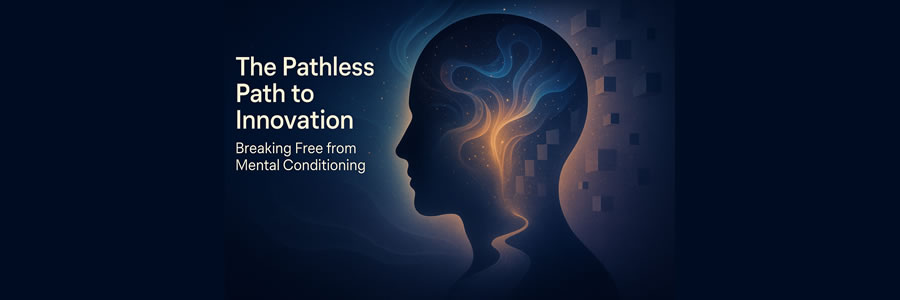
The phrase “thinking outside the box” has become ubiquitous in modern discourse, echoing through boardrooms, classrooms, and creative workshops worldwide. Yet beneath this familiar expression lies a profound question that deserves deeper examination: What exactly is this metaphorical box, and why do we find ourselves constructing it in the first place?
Understanding the Box of Mental Conditioning
The “box” we speak of is not an external constraint imposed by others, but rather a collection of mental conditionings we create for ourselves. These invisible boundaries are woven from our past experiences, cultural influences, educational frameworks, and repeated thought patterns. Over time, they crystallize into rigid structures that dictate how we perceive problems, approach challenges, and envision possibilities.
These self-imposed limitations manifest in countless ways: the assumption that certain problems have only predetermined solutions, the belief that creativity belongs to a select few, or the conviction that innovation requires following established formulas. Each conditioning acts like a wall in our mental landscape, narrowing our field of vision and constraining our imaginative capacity.
The Paradox of Box Construction
Here lies a fascinating paradox: Why do we construct these mental boxes only to struggle later to escape them? The answer reveals something fundamental about human psychology. We create these structures because they initially serve us—they provide shortcuts for decision-making, reduce cognitive load, and offer a sense of security in an uncertain world. Our conditioned responses help us navigate familiar territory with efficiency.
However, what begins as a helpful framework gradually transforms into a prison. The very patterns that once facilitated quick thinking eventually stifle creative exploration. We become so comfortable within these familiar boundaries that we forget they are self-imposed, mistaking our conditioning for reality itself.
The Power of Present-Moment Awareness
The most effective way to transcend these limitations is not to battle against our conditioned patterns after they’ve formed, but rather to prevent their rigid formation through present-moment awareness. When we remain fully present, we encounter each situation with fresh eyes, unfiltered by the weight of past assumptions or future anxieties.
“Transcending the formation is Trans-formation”
This state of presence allows us to observe our thoughts without becoming enslaved by them. We begin to notice when old patterns attempt to assert themselves, and we gain the freedom to choose whether to engage with them or let them pass. In this space of conscious awareness, creativity and curiosity naturally flourish.
Cultivating Mental Fluidity
True innovation emerges when the mind becomes fluid—able to apply frameworks when useful and release them when they become constraining. This mental agility requires developing what we might call “cognitive flexibility”—the capacity to shift perspectives, question assumptions, and remain open to unexpected possibilities.
Such fluidity doesn’t mean abandoning all structure or discipline. Rather, it means holding our mental models lightly, recognizing them as tools rather than truths. A fluid mind can embrace contradictions, explore paradoxes, and synthesize seemingly unrelated concepts into novel solutions.
The Global Citizens of Tomorrow
Individuals who master this art of mental fluidity become the architects of our collective future. They possess the rare ability to see beyond conventional wisdom, to identify opportunities where others see obstacles, and to bridge divides that appear insurmountable to more rigid thinkers.
When these creative minds are guided by authentic human values—truth, righteousness, peace, love, and non-violence—they become powerful forces for positive change.
They design technologies that serve humanity rather than exploit it, create art that elevates consciousness rather than degrades it, and solve problems that benefit the many rather than the few.
Nurturing the Unconditioned Mind
For educators, leaders, and anyone committed to fostering innovation, the implications are clear. Rather than filling minds with predetermined answers, we must cultivate environments that encourage questioning, exploration, and wonder. We must resist the temptation to impose rigid frameworks and instead provide guidance that preserves natural curiosity while building necessary skills.
The goal is not to eliminate all mental structures—which would be neither possible nor desirable—but to maintain awareness of their provisional nature. We want learners who can think systematically when needed but remain free from systematic thinking when it becomes a hindrance.
Conclusion: The Pathless Path to Innovation
True thinking outside the box, then, is not about escaping from something we’ve built, but about recognizing that the box was always optional. It’s about maintaining the beginner’s mind that sees each moment as an opportunity for discovery, each challenge as an invitation to explore uncharted territory.
In our rapidly changing world, this capacity for fresh thinking becomes not just advantageous but essential. The solutions to our most pressing global challenges—from climate change to social inequality to technological ethics—will likely emerge from minds that refuse to be constrained by “the way things have always been done.”
The future belongs to those who can dance gracefully between structure and freedom, those who build frameworks while remaining unbound by them, and those who think not outside the box, but as if the box never existed at all.