







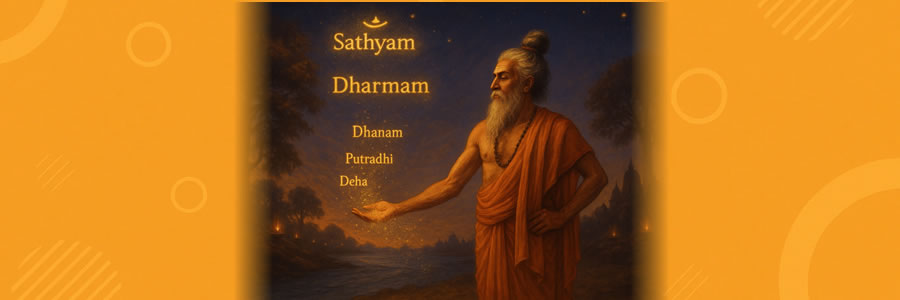
Asthiram Yauvanam Dhanam
Asthiram Dhara Putradhi
Sathyam Keerthi, Twayam Sthiram
Dharmam Keerthi, Twayam Sthiram
This ancient Sanskrit verse from the Sanathan tradition, as quoted by Sri Sathya Sai Baba, encapsulates one of humanity’s most profound realizations: the fundamental impermanence of everything we consider “ours.” It speaks to a universal human experience—the gradual awakening to the temporary nature of our attachments and the delusion of ownership that governs much of our lives.
The Great Delusion
Everything in this world seemingly belongs to us. Our relationships, possessions, achievements, and even our own bodies create a comforting illusion of permanence and control. We build our identities around these attachments, drawing security from the belief that certain things and people are truly “ours.” This sense of ownership extends beyond material possessions to encompass our loved ones, our status, our youth, and our very existence.
The Mechanics of Attachment
The truth underlying our attachments is more pragmatic than we often care to admit. Things and people remain connected to us primarily as long as there exists a mutual benefit. We provide something they need—security, companionship, resources, or emotional fulfillment—and in return, they offer us similar benefits. This creates a temporary equilibrium that we mistake for permanent ownership.
A person stays close to us because our presence enriches their life in some way. They may value our friendship, depend on our support, or simply enjoy our company. Similarly, we maintain these connections because they fulfill our own needs for belonging, purpose, or validation. This mutual dependency creates the illusion that these relationships are unshakeable, that these people truly “belong” to us.
The Moment of Truth
The delusion persists until circumstances shift. Perhaps we can no longer provide what someone needs from us, or they discover better opportunities elsewhere. Maybe our own situation changes, making it impossible to maintain certain relationships or possessions. When this happens, the temporary nature of our attachments becomes painfully clear.
The person who once seemed devoted may drift away. The wealth we accumulated can disappear. The youth we took for granted inevitably fades. Even our own bodies, which we consider most fundamentally “ours,” age and weaken beyond our control. These moments of loss serve as stark reminders of the conditional nature of everything we hold dear.
What Truly Endures
This is not merely about truth and righteous conduct themselves, but about their inherent magnificence and radiance. The glory that emanates from living truthfully and acting righteously transcends all temporary attachments. It creates something that outlasts the fluctuations of fortune, the changes in relationships, and even the dissolution of our physical existence.
Living with Open Hands
Understanding this impermanence doesn’t call for emotional detachment or nihilism. Rather, it invites us to hold things lightly—to enjoy and care for what comes into our lives while acknowledging its temporary nature. This perspective can lead to greater appreciation for what we have while it lasts, less anxiety about inevitable loss, and more genuine relationships based on mutual respect rather than possessive attachment.
When we recognize that our connections are conditional rather than permanent, we can approach them with greater honesty and gratitude. We can love without clinging, achieve without grasping, and build without the delusion of permanent ownership.
The Path Forward
The wisdom embedded in this ancient verse suggests a fundamental reorientation of our values and priorities. Instead of investing our entire sense of self in relationships, possessions, and circumstances that are bound to change, we might root our lives in principles that endure.
The glory of truth calls us to live with integrity, to speak and act in alignment with reality rather than our wishful projections. The glory of dharma invites us to conduct ourselves righteously, to act in ways that honor our highest understanding of what is right and good.
These glories don’t depend on external circumstances or the approval of others. They shine forth from the very nature of truth and dharma themselves, creating a source of meaning and identity that remains constant through all the inevitable changes of life.
Conclusion
The recognition of impermanence is not a cause for despair but for liberation. When we stop clinging to the illusion of ownership, we free ourselves to experience life more fully and authentically. We can love without fear, achieve without attachment, and face loss without devastation.
The ancient wisdom from Sanathan, as shared by Sri Sathya Sai Baba, reminds us that while everything we consider “ours” will eventually pass away, the glory that comes from living truthfully and righteously creates something timeless. In aligning ourselves with these eternal principles, we discover a form of security and meaning that transcends the temporary nature of all our worldly attachments.
This is perhaps the deepest teaching: that in letting go of the illusion of ownership, we find what truly belongs to us—not as possessions to be grasped, but as principles to be embodied and glories to be lived.