







Needonomics (economics of needs) based on Gita is an intriguing concept that emphasizes the importance of understanding and fulfilling human needs in economic systems and says no to Greedonomics (economics of greed). In a changing economic scenario, distributors play a critical role in ensuring that these needs are met efficiently and effectively. Distributing not only the final products but also the factors of production (land, labor, capital, and entrepreneurship) according to their contribution to the production process is a key aspect of economic efficiency and fairness. We have understood the implications of needonomics for distributors in such a context to delve into the perspective:
Efficient Allocation of Resources:
Distributing factors of production based on their contribution ensures that resources are allocated efficiently. For example, land with fertile soil or prime location might contribute more to agricultural or real estate production respectively. Labor with specialized skills or high productivity may be allocated to industries where their contribution is maximized. Capital, whether financial or physical, is directed towards areas where it can generate the highest returns.
Maximizing Productivity
By aligning factors of production with their most productive uses, overall productivity is enhanced. For instance, assigning skilled labor to tasks that require specific expertise or allocating capital to technologies that improve efficiency can lead to higher output levels per unit of input. This not only benefits producers in terms of increased profitability but also consumers through lower prices or better quality products.
Fair Distribution of Income
Distributing factors of production based on their contribution helps in achieving a fair distribution of income. Factors that contribute more to the production process typically receive higher rewards. For example, skilled laborers or entrepreneurs who take significant risks may earn higher wages or profits compared to less skilled workers or passive investors. This incentivizes individuals to enhance their productivity and contribution to the economy.
Encouraging Innovation and Entrepreneurship
Recognizing and rewarding the contribution of entrepreneurship encourages innovation and risk-taking. Entrepreneurs play a vital role in identifying market opportunities, organizing resources, and driving economic growth. By providing incentives for entrepreneurial activity through the potential for profits, the economy benefits from new products, services, and processes that improve living standards and competitiveness.
Optimizing Resource Utilization
Efficiently distributing factors of production ensures that resources are utilized optimally, minimizing waste and inefficiency. For example, land with specific characteristics is utilized for purposes that maximize its productivity, whether it’s for agriculture, industrial development, or conservation. Labor is allocated to tasks that match their skills and abilities, reducing underemployment or mismatch in the workforce. Similarly, capital is invested in projects that offer the highest returns, mitigating capital misallocation.
Promoting Economic Stability
A well-functioning system of distributing factors of production contributes to economic stability by reducing distortions and imbalances in the economy. When resources are allocated efficiently and rewards are aligned with contribution, the economy is less susceptible to speculative bubbles, excessive risk-taking, or resource misallocation that can lead to economic downturns.
Distributing factors of production according to their contribution to the production process promotes economic efficiency, fairness, productivity, innovation, resource optimization, and stability. By ensuring that resources are allocated to their most productive uses and rewarding contributions accordingly, economies can achieve sustainable growth and prosperity.
Distribution of goods and services is also crucial perspective in the domain of needonomics as under:
Focus on Essential Goods and Services
In times of economic uncertainty or change, consumers prioritize spending on needed items over discretionary ones. Distributors need to align their offerings with these shifting consumer priorities by focusing on distributing needo- goods and services such as food, healthcare products, and household essentials. This may require reevaluating product portfolios and supply chains to ensure consistent availability of these items.
Efficient Supply Chain Management
As economic conditions fluctuate, distributors must optimize their supply chain processes to maintain cost-effectiveness and agility. This may involve streamlining inventory management, enhancing logistics efficiency, and developing strategic partnerships with suppliers and manufacturers. By minimizing operational costs and maximizing responsiveness, distributors can adapt more readily to changing market demands based on needo-consumption.
Digital Transformation
Embracing digital technologies is crucial for distributors to thrive in a changing economic landscape. Digital platforms and e-commerce channels offer opportunities to reach consumers directly, bypassing traditional retail channels. Investing in robust e-commerce infrastructure, implementing data analytics for demand forecasting, and leveraging automation for order fulfillment can enhance competitiveness and consumer satisfaction.
Customer-Centric Approach
Understanding consumer needs and preferences is paramount in needonomics. Distributors should gather insights through market research, customer feedback, and data analytics to tailor their offerings and services accordingly. Providing personalized experiences, such as flexible payment options, convenient delivery methods, and responsive customer support, can enhance customer loyalty and drive repeat business.
Sustainability and Social Responsibility
In today’s economic landscape, consumers increasingly value sustainability and social responsibility. Distributors can differentiate themselves by integrating ethical practices into their business operations, such as sourcing products from sustainable suppliers, reducing carbon footprint in logistics, and supporting local communities. Demonstrating a commitment to environmental and social causes can resonate with consumers and strengthen brand reputation.
Agility and Adaptability
Economic dynamics can change rapidly, necessitating agility and adaptability from distributors. Being proactive in monitoring market trends, anticipating shifts in consumer behavior towards needo-consumption , and quickly adjusting strategies and operations accordingly is essential for staying competitive. This may involve adopting agile methodologies, fostering a culture of innovation, and empowering employees to make informed decisions.
It is pertinent to mention that India before the British Rule was the distributing nation as authenticated by Will Durant in “The Story of Civilization” aligns with historical evidence that India was a major trading nation with extensive international trade connections long before British colonial rule. This is supported by various historical sources and records that highlight India’s significant economic and cultural influence across the world prior to the arrival of the British.
In essence, embracing the principles of needonomics requires distributors to prioritize the fulfillment of essential human needs, optimize operational efficiency, leverage digital technologies, adopt a customer-centric approach, embrace sustainability, and remain agile in response to changing economic conditions. By aligning their strategies and practices with these principles, distributors can navigate economic uncertainties successfully and thrive in evolving market environments.
References
- M. M. Goel, Needonomics: Implications for Producers in Changing Economic Scenario, (with audio podcast) May 14,2024
- M. M. Goel, Needo-Consumption: Implications for Global Consumers, April 22,2024
- M. M. Goel, Needonomics: SWOC ANALYSIS (with audio podcast) April 9, 2024.
- M. M. Goel, Unveiling the Perils of Greedonomics, (with audio podcast) March 11, 2024.
- M. M. Goel, Needonomics: Queen of Social Sciences for Global Economy, (with audio podcast) February 26, 2024.
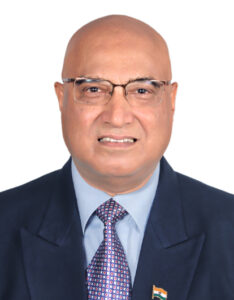 Dr. M M Goel | About the Author Propounder Needonomics, Professor Madan Mohan Goel is a superannuated Professor of Kurukshetra University. He is former Vice-Chancellor, Starex University, Gurugram, Jagannath University Jaipur, RGNIYD (GOI), Pro Vice-Chancellor VKSU Ara, Dean of Colleges & Social Sciences, Chairman, Dept. of Economics & Dept. of Journalism KUK He was the first ICCR Chair Professor in South Korea. Presently he is an Adjunct Professor at the Institute of Advanced Sciences Dartmouth, USA. He is honoured with the London Organization of Skill Development (LOSD) Excellence Award 2023, Professor J.K. Mehta Academic Excellence Award 2023, Rashtrapita Rashtriya Samman 2023 for propounding Needonomics and Gurukul Gyanjyoti Award (2024). His area of research is Economics of HRD & Indian Economy. He has 483 publications and guided 25 PhD and 25 MPhil Scholars. |
If you would like to get connected to Dr M M Goel write to editor@acadnews.com.




Amazing theory.Looks right,just do not know about execution line.At my personal level I believe wealth can only be created when exchange of money has created value for each party.And they both acknowledge it.For Example a person in trauma gets the comforting words leading to improved mental health and he /she pays for it by self or by a related person,then value has economic impact by way of person using his mental faculties to enhance or contribute to himself or others.However if he chooses not to pay then?