Design Health Thinking Framework for Innovations in Surgery

Why it matters?

Design Health thinking in surgery is of utmost importance as it focuses on holistically identifying and defining the problem which alone leads to a sustainable solution. The design health thinking approach helps the surgeon decide when to do research, when to do innovations which is an improvement on the status quo, when to do inventions which makes the innovation disruptive, and when to work around the problem through a Jugaad innovation, which is a smart fix amid the cost and time constraints that deny a comprehensive ideal resolution.

Design Thinking Framework For Innovations in Surgery

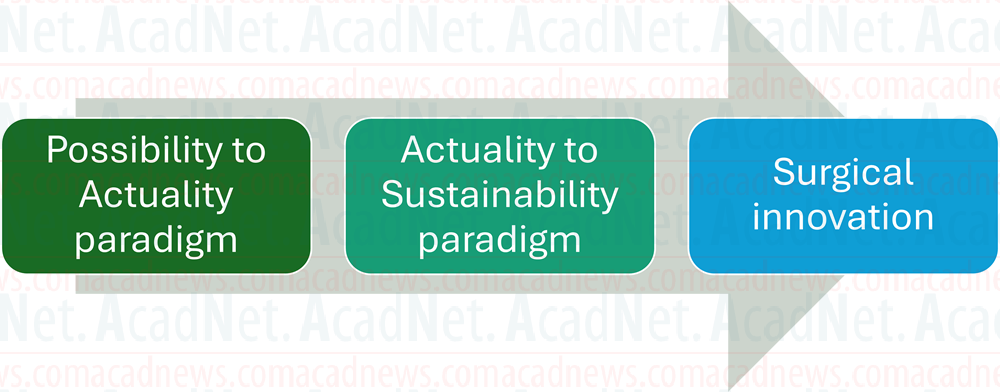
Possibility to Actuality Paradigm

The possibility to actuality paradigm encompasses the stages of surgical innovation.

Defining the problem context

The first stage is defining the problem context before turning our attention to design the solution.  What is the problem all about? Is it related to a surgical technique? Is it related to a decisive step within a larger surgical process?  Is it related to the generic aspect of the disease in terms of surgical diagnosis?  Or is it related to a surgical device intervention aimed at patient rehabilitation?

Defining the problem statement

The exact problem statement needs to be defined within the larger governing context. The surgical problem statement of any of the contexts defined above is invariably one of the two; either a generic challenge related to conventional methods in vogue or a diagnostic step in clinical practice. Let’s study them in greater depth: 

Generic challenge related to conventional methods in vogue

I have found in the guiding light of my surgical experience that this problem often identifies itself in the course of the surgical procedure, largely due to the temporal relationships involved. To cite a case in point is a carotid body tumor surgery where a casual discussion paved the way for disruptive innovation. For any surgery, I adopt a procedure founded on innate logic rather than textbook learning. I have not delved deep into the reasons for my preference given the ease of my dissection by virtue of what comes naturally to me. In this particular case, the cardiothoracic surgeon asked me why I prefer to dissect the internal carotid artery first, when the textbooks clearly recommend dissecting the external carotid artery first, given that it is where the feeder vessel comes from. It is also easier to dissect and less prone to adverse consequences. My rejoinder was that it is more logical to attend to the internal carotid artery first as it has no branches extending to the neck, and it is better to deal with its complexity of life-threatening possibilities (like torrential bleeding or patient’s death from stroke) while the surgeon is fresh than when fatigued after having dealt with the external carotid artery first. More importantly, a cardiovascular surgeon is needed while attacking the internal carotid artery which is main blood vessel connecting the heart to the brain, and being a scarce resource, his or her wait times and work times need to be optimally decided. Based on this experience, I wrote an article titled:  The “INT-EX Technique”: Internal to External Approach in Carotid Body Tumour Surgery in an indexed, peer-reviewed journal and is globally accepted as a standard procedure.

Taking the same Carotid body tumour example further, I would like to cite a case of my residency days where I was studying the carotid body tumour in the context of the 1974 Shamblin’s classification based on the complexity as grade I (small tumor with minimal attachment to carotid vessels), grade II (large tumor with some arterial attachment) and grade III (large tumor encasing the carotid vessels). The conclusions were based on intraoperative findings and post-operative pathology reports. I argued in the international forum that this classification being post-operative does not help pre-empt the condition to achieve life-saving outcomes rooted in prevention. My study focus was on the possibility of generically pre-empting and planning for the treatment based on the degree of encasement which could be either of the three: type I 0 to 180 degree, type II 180 to 270, and type III 270 and above. 

My generic conclusions were thus: Type I did not call for a cardiovascular surgeon and the head and neck surgeon could manage the surgery end to end. Type II mandated to have the cardiovascular surgeon waiting in the coffee lounge and for Type III, the head and neck surgeon would be waiting in the coffee lounge while the cardiovascular surgeon would be in the operating room to do the critical bypass shunt before the surgery can be done.

This generic handbook showed its practical value in the living waters of surgery. For a referral case of carotid body tumor concerning a poor lady patient in a small nursing facility with no ICU that was located in a remote district, I was able to look at the scans and recommended that the surgery did not call for a cardiovascular surgeon as it was a case of type I. Accordingly, I did the surgery and the patient had a good outcome. Based on these findings, I published another article:  Carotid Body Tumors: Objective Criteria to Predict the Shamblin Group on MR Imaging which was accepted by the American Journal of Neuroradiology. So, what was essentially a student hypothesis generation led to an interventional change with measurable practical application in clinical settings.  

Generic challenge related to a diagnostic step

This problem can be attacked though the power of observation rooted in holistic thinking. The problem here is the missing gap owing to compartmentalised thinking with no cross talk between different disciplines. To cite a case in point, whenever I used to dissect certain parts of a spinal accessory nerve, I found a classical pattern of anatomical cross-linkage which I intuitively called the X pointer as I saw two nerves crossed into each other as a standard pattern. The article I wrote based on it was published in a reputed journal as: The X-pointer: A forgotten anatomical relationship of spinal accessory nerve and its role for trainee surgeons.  

Generic challenge related to a medical device

My invention ‘Aum Voice Prosthesis’, a one-dollar speaking device for throat cancer patients considered among the 100 global social innovations across the globe, was essentially born out of an intraoperative challenge resolution but eventually translated into a medical device innovation.  The proctoscope conventionally used for dissecting the anus was used by me for the pharynges in the Aum innovation. The ENT surgeon used a probe which I found very useful for my OT needs.  

To cite another point, constraint is a key incentive for innovation. In the course of my robotic surgeries, a financial  constraint bothered me as the instrument to do the neck dissection was cost-prohibitive and I had to resort to innovation as a need. The outcome was an indigenous retractor called Ravi Retractor which was essentially the brainchild of my anaesthetist who was doing the rounds across all disciplines like gynaecology, and gastroenterology while I was fixated on my speciality which is head & neck. The gynaecology retractor can be used in head and neck surgery 

All these problem resolutions attacked the problem on lateral ways, paving the way for disruptive innovation which eventually makes it possible to touch lives at the patient level.    

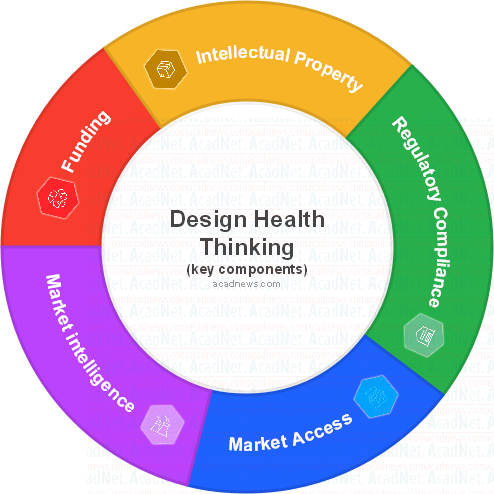
It is crucial to  emphasize upon five key critical pre-requisites of innovation, which alone will help define sustainable innovation pathways.


Funding: Innovators must be made aware of what are the funding options available, with the pros and cons of each route – whether grants, private investments or philanthropic support. It is important to understand that funding is not just about seeking money for money’s sake. Depending on the nature of your innovation, you need to pick the most appropriate option. More importantly, the future of innovation will tilt more and more in favour of the conscious capitalism principles, not in favour of the vulture capitalism diktat, and students need to know about this paradigm shift in their academic voyage itself.

Intellectual Property: Innovators need to know what are the key IP types, what are the ways in which it is created, which products are IP-able, and which are not. They need to know about the CopyLeft principle; the cardinal truth about ideas is that an idea does not come from you, it comes to you, reaches out to you. CopyLefting our ideas can help us evolve and serve the community in the true spirit of innovation.

Regulatory compliance: Many innovators realise very late in the curve that what is IP-able is not regulatory compliant, and the other way round. This critical realization should not come at the very end, but right at the beginning which will save much stress at a later stage. 

Market access: Many a times, innovators have a wonderful product but don’t have an access route in sight. The potential access route can be either government agencies, distributorship, or national or international markets. Students must be taught how to competently address the 3-D challenge – developing a good Drug or device, finding the right Distribution channel, and creating a buoyant Demand. The middle D is the biggest challenge, and students can seek to crack its code merits with the help of actionable insights taught in the course.  

Market Intelligence: this is yet another crucial element. For instance an innovator may be trying to sell his product in Karnataka when the most ripe market may be Mizoram or Tripura. Market intelligence helps one approach the right markets at the right time.  

Design Health Thinking drives home the moot point that science is incomplete if it only remains a hope for the future without serving the present and the needy. The soul of any innovation is the collaboration and cross-talk between big data experts, life science specialists, mathematicians, software and hardware experts, and electronics enthusiasts all on a single platform to build products and services rooted in disruptive innovation. Talking of medical professionals, design health thinking helps them find solutions to sticky problems from the medical space in collaboration with likeminded thinkers from diverse fields who bring in fresh perspectives of immediate relevance. 

Action items for the reader

This chapter will get you started with design health thinking, enabling you to move from possibility to actuality. Consequently, it will help you nurture an innovation ecosystem within your oncology practice. 

Pitfalls to avoid

  • Never build the solution before you identify and define a problem holistically
  • Don’t ignore the empathy factor in healthcare interventions – it is crucial to design an empathy-centric design in innovation which touches human lives through desirable and sustainable outcomes.

Make collaboration your focal point rather than competition – this merits a cross talk between methods and practices of disparate disciplines and cultivating the art and science of looking for solutions in the unlikeliest of avenues, domains and spheres.

Further reading:

  1. Roberts JP, Fisher TR, Trowbridge MJ, Bent C. A design thinking framework for healthcare management and innovation. Healthc (Amst). 2016 Mar;4(1):11-4. doi: 10.1016/j.hjdsi.2015.12.002. Epub 2016 Jan 14. PMID: 27001093.
  2. Snow F. Creativity and Innovation: An Essential Competency for the Nurse Leader. Nurs Adm Q. 2019 Oct/Dec;43(4):306-312. doi: 10.1097/NAQ.0000000000000367. PMID: 31479050.
  3. Gilmartin MJ. Creativity: the fuel of innovation. Nurs Adm Q. 1999 Winter;23(2):1-8. doi: 10.1097/00006216-199901000-00003. PMID: 10205475.

Prof. (Dr.) Vishal U Rao

About the Author

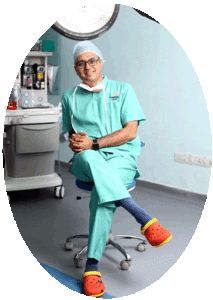
Prof. (Dr.) U.S. Vishal Rao, a distinguished oncologist and innovator, has transformed the landscape of cancer care with his creation of the affordable ‘Aum Voice Prosthesis,’ priced at a mere Rs 50, offering a lifeline to throat cancer patients who previously faced the daunting expense of imported voice prostheses or the prospect of voicelessness. As the esteemed Chief of Head and Neck Surgical Oncology and Robotic Surgery at HealthCare Global Cancer Centre in Bangalore, India, Dr. Rao’s expertise is unmatched, honed through comprehensive medical education and oncology training across prestigious institutions in India and the USA.

A visiting scholar at the University of Pittsburgh School of Medicine, Dr. Vishal Rao is deeply engaged in vital cancer prevention and tobacco control projects, reflecting his commitment to holistic patient care. Prior to his groundbreaking work on the Aum Voice Prosthesis, Dr. Rao selflessly assisted patients by providing imported voice prostheses through charitable fundraising efforts. His prolific career is underscored by over 13 patents spanning medical devices, drugs, techniques, and theories, alongside prestigious accolades including an Honorary FRCS and the Judy Wilkenfeld award for Global excellence in tobacco control. Recognized with the Kempegowda Award, Dr. Rao’s contributions extend beyond innovation to encompass a wealth of national and international publications, as well as active involvement in committees dedicated to tobacco and cancer control within the Karnataka government.

Dr Rao in his professional capacity is:

  • Dean – Centre of Academics & Research for HCG Group .  
  • Member – Consultative Group to Principal Scientific Advisor – Govt of India 
  • Member of Vision group on Biotechnology – Govt of Karnataka
  • Member of High Power Committee on Tobacco Control & Cancer Control  – Govt of Karnataka

If you would like to get connected to Dr Rao write to editor@acadnews.com.