







One in seven young Indians carries a diagnosable mental health condition. Twelve billion work days are lost globally every year. And the single most important question in Indian education — are our students okay, as human beings? — has never once been asked in a board meeting. Until now.
Mental Wellness and
the Future of Holistic Professionalism
A landmark Technology Series session convening psychiatrists, institution builders and combat veterans in a candid reckoning with India’s most underdiscussed professional crisis — the mental well-being of its workforce and student population.
Academic Network’s Technology Series convened one of its most consequential webinar sessions to date, bringing together clinical psychiatry, higher education leadership and military resilience science to address a challenge that has long been treated as peripheral — but which data increasingly shows is foundational: the mental wellness of India’s professionals and students.
The session, titled Mental Wellness and the Future of Holistic Professionalism, drew over a thousand registrants across sectors and geographies, reflecting the urgency with which the topic is now being received by faculty, administrators, healthcare practitioners and industry leaders alike.
Mental Wellness as the Foundation — Not the Footnote
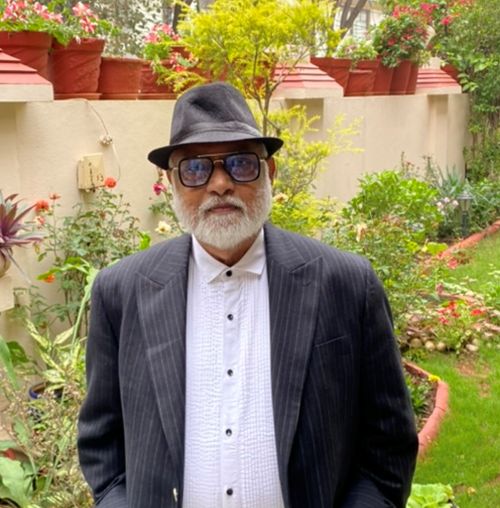
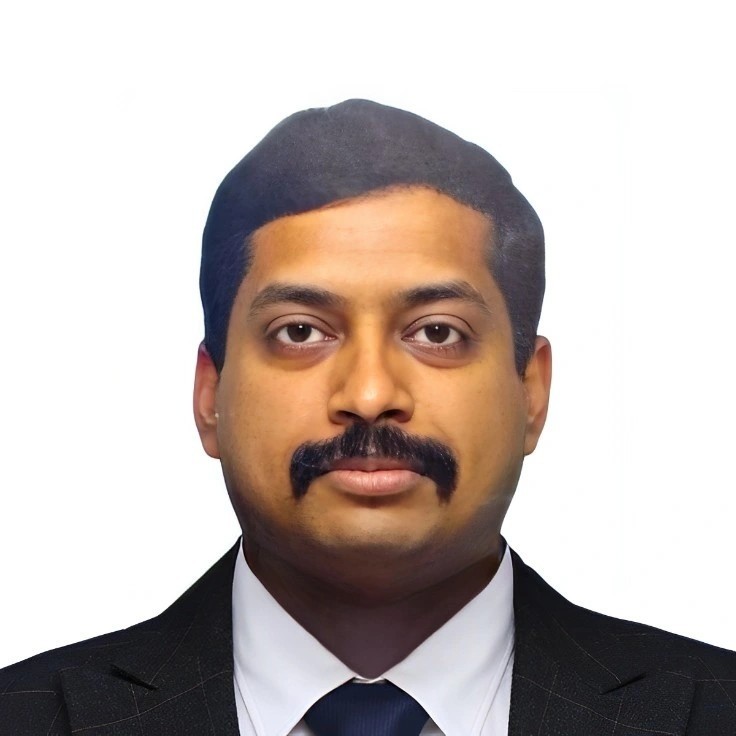
The keynote address was delivered by Dr. Amresh Srivastava, MD, DPM, FRCPC, FRCPsych, FAPA — Professor Emeritus at Western University and Adjunct Scientist at the Lawson Health Research Institute, Canada, and Founder and Director of the Mansik Shakti Foundation, India. An Ashoka Fellow with over 120 peer-reviewed publications and 500-plus international lectures, Dr. Srivastava is widely regarded as one of the foremost voices on student mental health, suicide prevention and digital psychiatry.
Dr. Srivastava opened with a fundamental distinction that framed the entire session: mental health and mental wellness are not the same thing. A person may have no diagnosable condition and yet operate with severely compromised mental wellness. Conversely, individuals living with clinical conditions can, with the right inner architecture, function with remarkable strength and purpose.
Mental wellness is the magic power for living. It is a consortium of attributes — faith, resilience, the ability to cope, the ability to feel satisfied. These are not abstract virtues. They have neurobiological correlates, measurable changes in neurochemistry and brain imaging.
Drawing on decades of clinical research, Dr. Srivastava outlined the twelve dimensions of mental wellness, anchored in four major subgroups: emotional wellness, cognitive wellness, social wellness and spiritual wellness. He emphasised that neuroplasticity — the brain’s capacity to form new connections through repeated positive experience — makes resilience not merely a personality trait but a trainable, measurable and enhanceable quality.
A study across 1,700 students in four Indian institutions found that even among those with no diagnosed mental disorder, approximately 35% showed significant reduction in resilience levels — making them demonstrably vulnerable when faced with adversity. Waiting for a crisis before addressing resilience is not a strategy.
He concluded his keynote with a practical framework for wellness enhancement, centred on five disciplines: decide and determine (treat wellness as non-negotiable), develop dialogue and discourse, accept oneself, minimise risk factors and enhance protective factors — including sleep, nutrition, exercise and psycho-spiritual engagement.
The Silence That Cost 12 Billion Days
Moderated with characteristic rigour by Prof. Dr. M.M. Ananth — himself a twice Vice Chancellor and founder of Academic Network — the panel discussion opened with a confession as much as a provocation: in decades of building institutions, designing curricula, signing MOUs and celebrating placement records, he had not once heard a board meeting ask, “Are our students okay — not academically, not professionally, but as human beings?”
We measured everything except the one thing that determines whether all of it sustains or collapses under pressure.
That framing set the tone for a discussion that refused comfortable consensus. Three distinct professional lenses — clinical psychiatry, institutional leadership and operational military command — converged on one uncomfortable conclusion: resilience is being neglected not for lack of knowledge, but because its absence carries no immediate, visible institutional cost.
In the military, mental health and resilience are not a programme — they are a survival strategy. The reason the military engineers resilience before the crisis is because the consequence of not doing so is an actual body count.
Col. Dr. Rajan offered one of the session’s sharpest analytical frames: the asymmetry of consequences across ecosystems. In the military, breakdown has immediate, irreversible outcomes. In corporate India and academia, the cost is diffuse and deferred — absorbed into HR records, redistributed workloads and untracked attrition. Without a visible body count, the institutional imperative to invest in proactive resilience-building remains weak.
It does not cost more than ₹50 per student per month to create an excellent facility for access to care, treatment and counselling. Funds are not the barrier. Conviction is the barrier.
Prof. Satyanarayana brought the institutional builder’s perspective: trust is the non-negotiable precondition for any wellness intervention to function. Institutions that have successfully created environments of open communication — where failure is not shameful and seeking support is normalised — have done so by making this a leadership priority. He cited the Happiness Project (Ta-te), a ₹50-per-session peer counselling network now connecting over 40,000 anonymous online psychologists to individuals in need, as an example of mission-aligned innovation in this space.
The joy of learning can only happen when there is trust — and to create that trust, we have to address the pressure and tension we place on people. You cannot innovate in fear.
Dr. Srivastava added a structural observation: every institution simultaneously carries three cohorts — the 15–18% with diagnosable conditions, the additional 10–12% who are high-risk and vulnerable, and the majority in need of proactive wellness development. None of these three distinct requirements are met by a counselling cell that exists primarily on paper.
The IACT Assessment from AcadNet aligns directly with the session’s core insight: the majority of professional effectiveness is rooted in inherent persona traits — not acquired technical competencies.
What the Data Revealed
Six live polls conducted during the session offered a real-time snapshot of the audience’s institutional reality and personal resilience landscape — across 1,039 registrants from students and faculty to corporate leaders and policy makers.
Five Commitments the Field Must Now Make
What This Session Means — and What to Do with It
The session was not merely a presentation of statistics. It was a civilisational reckoning — one that placed mental wellness where it has always belonged: at the centre of everything institutions build, everything professionals attempt and everything educators aspire to transmit. Three voices from radically different worlds arrived at a single, convergent truth: the inner architecture of a person determines the outer quality of their work, their relationships and their resilience under pressure. That architecture can be measured. It can be developed. And it cannot be ignored any longer.
Academic Network will develop a white paper consolidating the session’s insights, clinical data and institutional recommendations — with invitations to the participating community to contribute. A dedicated symposium on mental wellness and institutional architecture is also being planned, bringing together the session’s faculty for a deeper, structured deliberation.
Participants who completed the post-session AI-curated assessment — certified at a threshold of 70% — have already begun their documented engagement with the framework. The session certificate represents not attendance, but earned comprehension.
The Technology Series team extends its sincere appreciation to Mr. S.S. Haresh Anand, Mr. M.S. Shweta and Dr. PKM in particular and all the other team members for their dedicated backend support in making this session possible.
Join the Technology Series community — engage in discussions before, during and after every webinar, receive timely updates and access special resources.
Session Resources & Certificate Discover IACT AssessmentStay connected via our Technology Series WhatsApp Group
Join Technology Series WhatsApp Group