






Popcorn Brain Syndrome
Understanding the Modern Mind’s Struggle with Focus
🎯 What is Popcorn Brain?
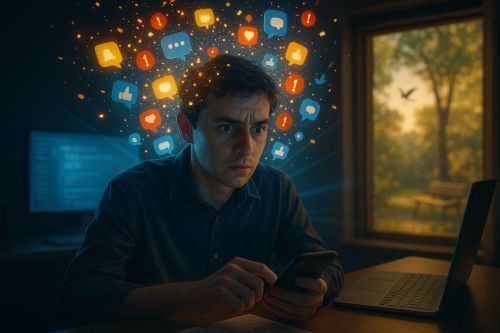
Have you ever sat down to read an important email, only to find yourself checking Instagram, then Twitter, then back to your inbox — all within two minutes? If this sounds familiar, you might be experiencing what researchers call “Popcorn Brain.”
Coined in 2011 by David M. Levy, a computer scientist at the University of Washington, Popcorn Brain describes how our minds become so accustomed to the rapid-fire stimulation of digital devices that slower, real-world activities feel unbearably dull. Just like popcorn kernels pop rapidly and unpredictably, our thoughts jump from one thing to another — notification to notification, tab to tab, scroll to scroll.
⚠️ The Alarming Numbers
👥 Real-World Examples: Does This Sound Like You?
🎓 The College Student
Priya, 21, Engineering Student: “I sit down to study for exams, and within 5 minutes, I’ve checked WhatsApp, scrolled through reels, and googled something completely unrelated. A 2-hour study session becomes 4 hours with barely any actual studying. My brain just won’t stay still.”
💼 The Working Professional
Rahul, 34, Marketing Manager: “I’m drafting an important presentation, but I can’t stop refreshing my email. Even when I know nothing urgent is coming, my hand reaches for the phone. Meetings feel endless because I’m mentally checking my notifications instead of listening.”
👨👩👧 The Parent
Meera, 42, Teacher and Mother: “My 12-year-old can’t sit through a family dinner without reaching for her phone. Board games are ‘too boring,’ reading is ‘too long.’ She throws tantrums when screen time ends. I see the same patterns developing in myself too.”
🎨 The Creative Professional
Arjun, 28, Graphic Designer: “I used to spend hours in creative flow. Now I can barely sketch for 10 minutes without feeling restless. The irony? I check my phone looking for inspiration, but I just end up more distracted. My best ideas came when I was bored — but I’ve forgotten how to be bored.”
🔍 What Causes Popcorn Brain?
1. The Dopamine Loop
Every notification, like, and comment triggers a small release of dopamine — the “feel-good” chemical. Social media platforms are designed to create unpredictable rewards (like slot machines), making us check repeatedly. Our brains become addicted to these quick hits.
2. Constant Connectivity
Smartphones create 24/7 access to entertainment and communication. The average person checks their phone every 10 minutes. This continuous stimulation trains our brain to expect constant input, making silence uncomfortable.
3. Short-Form Content
TikToks, Reels, and Shorts deliver entertainment in 15-60 second bursts. Algorithms learn your preferences instantly. This conditions your brain to expect rapid-fire content, making longer content feel painfully slow.
4. Multitasking Myth
We believe we’re efficient multitaskers, but research shows the brain can only focus on one cognitive task at a time. Constant switching creates “attention fatigue” — the more you switch, the harder focusing becomes.
5. Fear of Missing Out (FOMO)
Social media creates constant awareness of what others are doing. The fear of missing important updates, news, or social events drives compulsive checking behavior, even when we know nothing important awaits.
6. Pandemic Effect
COVID-19 lockdowns dramatically increased screen time as work, education, and socializing moved online. Many developed digital dependencies that persist even after restrictions ended.
🚨 Warning Signs: Do You Have Popcorn Brain?
Quick Self-Test: Put your phone in another room for 30 minutes. Track how many times you feel the urge to check it. If it’s more than 5 times, you may have popcorn brain tendencies.
💪 Practical Measures to Combat Popcorn Brain
1. Create Tech-Free Zones
Designate specific areas in your home where electronic devices are not allowed. The bedroom and dining table are excellent starting points.
2. Practice the Pomodoro Technique
Work in focused 25-minute blocks followed by 5-minute breaks. After four blocks, take a longer 15-30 minute break.
3. Schedule “Boredom Time”
Intentionally spend 15-30 minutes daily without any digital stimulation. Sit quietly, walk without earphones, or simply stare out the window.
4. Practice Mindful Breathing
When you feel the urge to check your phone, pause. Take three deep breaths. Notice your surroundings. Then decide if you really need to check.
5. Single-Tasking Practice
Commit to completing one task before starting another. Close unnecessary browser tabs. Put your phone in another room while working.
📋 Your 30-Day Implementation Plan
🌱 Week 1: Awareness
- Track your screen time using built-in phone features
- Count how many times you check your phone daily
- Notice when you feel the urge to reach for your device
- Identify your biggest triggers (boredom, anxiety, habit)
🌿 Week 2: Small Changes
- Turn off all non-essential notifications
- Establish one tech-free zone (start with the dining table)
- Practice 5 minutes of mindful breathing daily
- Put phone in another room during meals
🌳 Week 3: Building Habits
- Start using the Pomodoro Technique for work/study
- Add 15 minutes of “boredom time” to your day
- Read a physical book for 20 minutes before bed (no screens)
- Practice single-tasking for at least one hour daily
🌲 Week 4: Sustaining Progress
- Implement a full “digital sunset” (no screens 1 hour before bed)
- Schedule one fully screen-free day (or half-day) weekly
- Engage in one hobby that requires sustained attention (crafts, music, gardening)
- Review your progress and adjust strategies as needed
⚡ Quick Daily Habits for Recovery
Morning
Wait 30 minutes before checking your phone after waking up
Midday
Take a 10-minute walk without any devices
Evening
Have a screen-free dinner with family or friends
Night
Read a book instead of scrolling before sleep
ℹ️ Important to Remember
Popcorn Brain is not a clinical diagnosis recognized by the American Psychological Association. It’s a descriptive term for a real phenomenon many people experience. However, if your inability to focus is severely impacting your work, relationships, or wellbeing, consult a mental health professional. Symptoms that mimic popcorn brain could sometimes indicate conditions like ADHD or anxiety disorders that benefit from professional support.
🌟 The Good News
Your brain is remarkably adaptable. The same neuroplasticity that made it vulnerable to digital overstimulation can help it recover. With consistent practice, you can rebuild your attention span, rediscover the joy of deep focus, and reconnect with the slower, richer experiences of life.
Start small. Be patient. Your brain will thank you.
AcadNews.com | Empowering Minds Through Knowledge
Sources: Mayo Clinic Press, Psychology Today, University of California Research, World Health Organization