





Happiness Curriculum

The topic “Happiness Curriculum” has been a talking point on several platforms on education in the recent past. It appears to create an impression that the element of ‘happiness’ is a missing link in the design and administration of the curriculum, and as though a fresh and new effort is being made to induct happiness into the curriculum. 

In reality, one of the major objectives of the curriculum has been to facilitate the learner to realize the joy of existence and to pursue the tools that would bring one the happiness of seeking this joy. 

Efforts also made by several national and international agencies to list some measurable tools for defining happiness, though they realize that these tools cannot be applied in differing cultural, geographical, and socio-economic contexts. 

Any effort to measure happiness on a universal normalizing tool has its inherent challenges. 

However, no one denies the need for empowering a curriculum that would result in understanding and experiencing happiness in the living process and styles.

The origin of this word ‘Happiness’ is linked to its Norse origin ‘Hap” which meant ‘luck’ or ‘chance.’ In the French manifestation it referred to ‘good fortune’ and in its German avatar it again meant ‘chance.’ 

Over long years of its existence and use, ‘happiness is it referred to several contexts providing – satisfaction, joy, merriment, a status of well-being, delight, high spirits, and the like. 

Closely examined all these appear to be certain facets of happiness, while the real meaning of ‘happiness’ appears to subsume all the above.

Happiness possibly refers to something which describes a higher state of emotional and intellectual existence. 

For thousands of years, leaders from several walks of life – spirituality, religion, philosophy, psychology, and sociology have attempted to look at this word or its related experiences in their own perspective. Each of their endeavour brings home a new insight to our understanding of ‘happiness.’

Socrates, one of the greatest philosophers and the thought leader history has ever seen, speaks in a candid manner 

“The secret of happiness, you see, is not found in seeking more, but in developing the capacity to enjoy less” 

This argument is born out of an intense introspection of the process of life and a close observation of the result of the consumerist behaviour of humans.

Plato explains in his own inimitable style that 

“Happiness comes from doing good and helping others.” He goes a step beyond to say, “Caring about the happiness of others we find our own.”   

This helps to dissolve the ego that arises out of “I,” “me” and “mine.” It helps in expanding the journey of the self to a transcendental world where the individual finds the self, reflected in others and the universe.

The Indian mind has deliberated the term happiness on the touchstone of spirituality, philosophy, and psychology. 

Ramana Maharishi, one of the greatest proponents of self-realization, says “Happiness is your nature. It is not wrong to desire it. What is wrong is seeking it outside when it is inside.” 

The contention that happiness is the true nature of human existence makes it clear that there is no point in seeking it outside. Possibly, one must unravel the true nature of the self that resides within. The most important exercise of human life, therefore, appears to be self-realization, to find one’s true nature – the state of happiness. 

Says the Vietnamese Buddhist Monk Thich Nhat Hanh “Happiness is available: Please help yourself to it.”

The argument of Donald Walters (1988) on the addictive nature of humans to seek happiness is worth contemplating: 

“Man, always wants more, not less, happiness than he already has. He errs, however, when he thinks he can increase his happiness by adding to his possessions rather than expanding his awareness.

Any effort to increase his happiness without at the same time expanding his sensitivity to the world around him, and his sense of identity with it, will be self-defeating. Whenever a person acts selfishly, he deadens the capacity to perceive his essential unity with all life. He becomes, as a result, petty and mean. The expansion of happiness necessarily entails the expansion of awareness, not the expansion of property. For happiness is not a thing and cannot be found in mere things. It is a quality of consciousness: something that one is aware with, rather than of.”

All the above arguments and discourses indeed point to the need for carefully designing and articulating a thought process among the growing children so that they can make right choices and become responsible for the course of their own destiny. The collective choices all the learners would make while empowering their own learning curve will define the collective happiness and the destiny of the country. 

This idea is in congruence with the statement of Kothari commission in its report on education “The destiny of a nation is shaped in her classrooms.”

Given this responsibility, the curriculum designed for any country should bear in it the fundamental elements and inputs that would target achieving this goal – to make a nation of competent, confident, and contributing citizens who are happy and will make the nation a happy place to live in. 

The question therefore arises: “What should go into the design of a curriculum that nurtures happiness?”

Happiness is flavoured with a sense of freshness, an expression of fulfilment, completion, or gratification and to the extent that could be realized, experienced by the reach of the individual. It indeed means that the level of happiness for the same thing could vary from one individual to another both by the quality and quantity of awareness or experience of the individual. 

It is like music that is perceived by different people by their personal engagement with it based on their knowledge, understanding and the ability of their experience.

Happiness, is indeed, attaining this state where one is free from delusion and can accept everything as his own. One finds the reflection of the macrocosm in each microcosm and vice versa. 

This absence of duality is indeed the realization of happiness – which transcends that which flows from sensory inputs or those which are products of specific human experiences.

The statement that “Every child is a genius” may appear quite superfluous when considered in a social context, where each one is compared with the other. 

But individually, every human being is a gift of the creator and hence is blessed with certain unique capacity of perception, creation, innovation and thereby reap the resultant happiness. 

The objective of education and the instruments that deliver knowledge to expand this universe of happiness must keep this glorious and liberal objective in mind, for, any curriculum that is designed with a global, social, or national outlook would not be able to meet these ends in toto. 

This could happen only when the learner is vested with the freedom of choice for his learning. The learner would be able to exercise this freedom of choice only when one is aware of one’s uniqueness.

The first step to a meaningful learning is to grant the learner ‘the freedom of learning’- the power to unravel the mystery of the universe through one’s own understanding – to be a part of the Nature through a natural process. 

In this exercise, the learner is always in communion with abundance that surrounds him. He is never struck by poverty or misery in existence. Every exploration, every adventure, every challenge is experience of the freshness of life and becomes worth living.

CARL JUNG, details the five elements of Happiness as under:

  1. Good physical and mental health.
  2. Good personal and intimate relationships, such as those of marriage, the family, and friendships.
  3. The faculty for perceiving beauty in art and nature.
  4. Reasonable standards of living and satisfactory work.
  5. A philosophic or religious point of view capable of coping successfully with the vicissitudes of life.

These appear to be the basic objectives on which the structure of a “Happiness curriculum” needs to be edified.

The National Curricular Framework focuses on the following objectives as the basics of the Happiness curriculum:

  • To develop self-awareness and mindfulness amongst learners
  • To inculcate skill of critical thinking & inquiry in the learners
  • To enable learners to communicate effectively and express themselves freely and creatively.
  • To enable learners to understand their expectations in relationships, develop empathy, and ensure healthy relationships with family, peers & teachers.
  • To enable learners to apply life skills to deal with stressful & conflicting situations around them
  • To develop social awareness & human values in learners to engage in meaningful contribution in society
  • To develop holistic approach to education in a universal context

Implementation and administration of the ‘Happiness Curriculum’ calls for a concerted, integrated and a comprehensive approach to empowering learning. 

It transgresses all boundaries that limit knowledge into specified areas as disciplines or learning as an activity that is directed over recapitulation of data, information or knowledge that would be evaluated on preconceived benchmarks that standardize learners. 

Happiness curriculum is indeed an exercise of empowering a learner to “Be” than to “Become.”

It would be good to understand the meaning and significance of the saying of Lord Buddha that “There is no path to Happiness; Happiness is the path.”


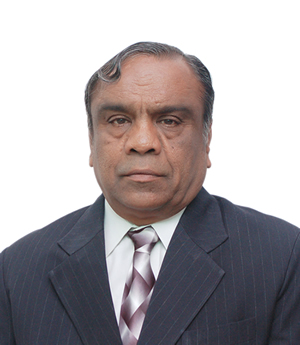
Dr G Balasubramnian
G. Balasubramanian was born at Tirunelveli, Tamilnadu on 17th February, 1946. He had his initial schooling at Madurai and graduated in Chemistry from Presidency college, Chennai. He obtained a  Post-graduation in Analytical & Inorganic Chemistry from Madras University, Post-graduation in Hindi from Sri Venkateswara University and Post-graduation in Education from Annamalai University.

He obtained a Diploma in German from University of Madras, a Certificate in Project Technology from Trent College of Education, Nottingham U.K and a Certificate in Computer Education from Leeds University, U.K

Starting his career as a Post-graduate Teacher in Chemistry in a public school, he took over as a Principal of Hindu Senior secondary School, Triplicane, Chennai. He joined the Central Board of Secondary Education as a Joint Secretary in 1984 and has worked in several capacities in Academics, Examination, Confidential and Administration branches of CBSE.

Elevated to the Post of Director (Academic) in 1997, he held the additional charge of the Chief Vigilance Officer of the Board. He retired from the services of the Board on 28th Feb, 2006.

He was associated with several Boards of education and leading organizations like Quality Council of India, NABET, National Institute of Open Schooling, Global Indian international Schools in Singapore, Malaysia and Japan. He is the current chairperson of the international council for school leadership. He was the Chief Editor of the magazines – ‘The Progressive School’ and ‘The Progressive Teacher’ published by S. Chand group of companies. He is currently Advisor to the following companies – “Knowledge Tribe” and “Teacher Tribe” at Bengaluru.

His interests include philosophy, psychology, poetry and Literature. He has widely traveled to many countries and participated in several national and international conferences and presented papers on a wide variety of academic interests. Post retirement he has conducted over 7000 training programs for teachers and Principals covering over 85000 teachers.

His publications are:

  1. Mindscaping Education
  2. Case Studies in classrooms
  3. Quality Spectrum – A school’s Bandwidth
  4. Safety in schools – Issues and concerns
  5. Academic Leadership – ebook
  6. Schooling the kid – learning form K to 12
  7. Creativity in classrooms – eBook
  8. Unlearning Learning – eBook
  9. A Happy Journey (Poetry)
  10. Apologies to an Existence (Poetry)

His latest book “Walk with Viswa”- a journey to Leadership along the Farmlands is due for publication.

Awards won:

  1. Vocational Excellence Award from Rotary Club, Chennai
  2. Seva Rathna in Education from The Centenarian Trust, Chennai
  3. Lifetime Achievement Award from VIMHANS (Vidyasagar Institute of Mental Health and Neuro Sciences) Delhi

He has been a member of the High-Power committee constituted by the Government of Tamilnadu for School Education and has also been the chairperson of the Curriculum Reforms Committee and the Examination Reforms Committee for School Education in the Government of Tamilnadu.

If you would like to get connected to Dr G Balasubramanian write to editor@acadnews.com.