Cyber safety must be a daily habit in schools, WeMeet panel tells principals
Not a one-time awareness session. A daily habit. That was the message to nearly 200 principals at Teacher360’s WeMeet dialogue on 25 November 2026.
AcadNews Editorial · AN
~200
principals joined the online dialogue
4 of 5
session in the school safety series
5
voices: one host and four panelists
6 months
to get a school programme under way
THE SESSION IN ONE MINUTE
Cyber safety belongs in every classroom, every day, with every teacher. Not only in the computer lab.
Digital is infrastructure. Artificial Intelligence (AI) is a separate layer. Humans stay the decision makers.
Delay devices in early childhood. In Classes 1 to 6, no AI for learners.
A good policy can predict, prevent and correct. It also tells a child exactly whom to go to.
School, parent and child have to move together.
01 · THE SESSION
Who spoke, and where it fits
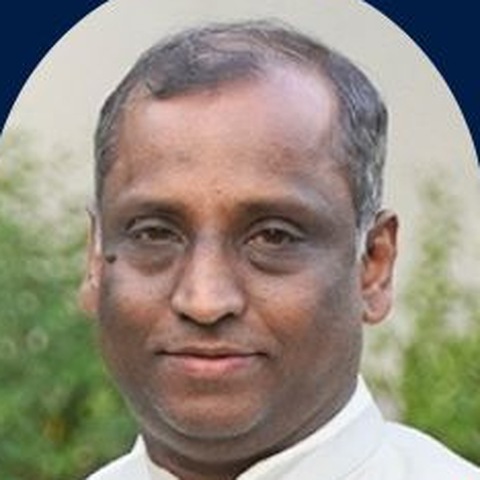
The online session was Series 4 of Safety in Schools: Issues and Concerns, this time on cyber safety and digital learning. The host was Mr G. Balasubramanian, former Director of Academics at the Central Board of Secondary Education (CBSE) and author of School Safety, published by the Quality Council of India. It ran online via Zoom from 4.30 pm to 5.30 pm IST.
THE FIVE-PART SCHOOL SAFETY SERIES
EARLIER
Infrastructure and geography
EARLIER
Traffic and transport
EARLIER
Physical and mental safety
SERIES 4 · THIS SESSION
Cyber safety and digital learning
SERIES 5 · 9 DEC 2026
Safety as a personal responsibility
WHAT EACH SPEAKER STRESSED
Mr G. Balasubramanian
Host. Mentor, Teacher360. Former Director of Academics, CBSE
Games shape children’s thinking and values. Schools need clear cyber rules, and humans must stay in charge of technology.
Prof. Dr M.M. Ananth
Founder, AcadNet (Academic Network). Former Founding Vice Chancellor, Adani University
Digital is infrastructure. AI is not the same thing. Keep humans as decision makers and build policy that predicts, prevents and corrects.
Mr Mukesh Kumar
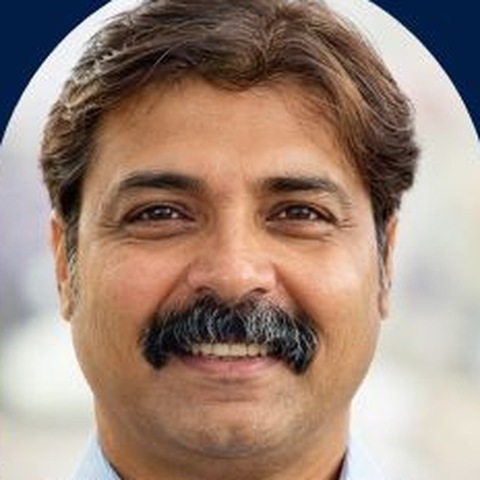
Vice Principal, Delhi Public School, R.K. Puram
Delay devices in early childhood, restrict games, and teach children to give AI clear, specific prompts.
Ms Dhanalakshmi Murali
Academic Head, National Hill View Public School, RR Nagar, Bengaluru
Excess screen time is hurting sleep, attention and behaviour. Respond with restorative discipline and AI ethics in everyday lessons.
Dr Chandrashekar DP
CEO, Jain Group of Institutions, Hyderabad
Know the law and the CBSE guidelines, make reporting safe for children, and keep AI human first, AI assisted.
02 · CHILDREN, GAMES AND SCREENS
What schools are seeing
The discussion began with early childhood. Mr Mukesh Kumar, who has spent 36 years in schools, said parents are now a driving force behind children’s tech addiction. Some hand devices to infants of nine to eleven months so they can get on with their own work. Parents who work in the technology industry, he noted, often keep their own children’s device use to a minimum.
FIVE WARNING SIGNS THE PANEL NAMED
Sleep
Late-night scrolling and heavy use of AI apps leave learners short of sleep and unreceptive the next day.
MS DHANALAKSHMI MURALI
Attention
The dopamine boost from games shows up in attention and in how children listen to elders.
MS DHANALAKSHMI MURALI
Behaviour
Impulsivity, aggression and intent for violence are rising.
MR G. BALASUBRAMANIAN
Patience
Tolerance and patience are falling. Children want to win at everything.
A PARTICIPATING EDUCATOR
Basic skills
Calculation, communication and motor skills can lag if screens arrive too early.
MR MUKESH KUMAR
Ms Dhanalakshmi Murali called the combined effect a shake to the school’s cognitive infrastructure.
WHY VIDEO GAMES ARE NOT YESTERDAY’S GAMES
Speed
Scale
Space
Mr Balasubramanian said brain scientists link game-playing to pattern-making in the brain, which in turn shapes values. He noted that more than 100 countries regulate even toys for pre-primary and primary children, while India has nothing similar.
MR G. BALASUBRAMANIAN
MR KUMAR’S FOUR RULES FOR PARENTS
1
Delay
Hold back devices in the early years.
2
Time-bound
Fix how long a child can use a device.
3
Restrict
Only apps that build analytical and logical skills.
4
Ban until 16
No destructive games at least until age 16.
CASE IN POINT · A SCHOOL GAMING CLUB WITH RULES
Delhi Public School, R.K. Puram
POLICYThree pages long
WHO CAN JOINNo child below Grade 9
SIGN-UPMembers sign a list of dos and don’ts
GAMESStrategy games only
IT POLICYShared at the start of each year, printed in the school almanac, posted on the website
AS DESCRIBED BY MR MUKESH KUMAR, VICE PRINCIPAL
He also urged schools to run separate sessions for parents, teachers and learners, because the aim of each is different.
THE GOOD NEWS
One cyber club session. One protected family.
Dr Chandrashekar DP described a Class 7 girl who attended a cyber club session on OTP (one-time password) fraud at his school. She went home, protected her grandmother’s phone, and then educated the whole family.
AS TOLD BY DR CHANDRASHEKAR DP
He added a reminder for the grown-ups. Adults are caught up in doom-scrolling too. If both sides are holding knives, he said, nobody will use them wisely. At least one party must act as the adult.
03 · AI IN THE CLASSROOM
AI as a tool in human hands
Mr Balasubramanian admitted he had been restless since morning. An interview with AI researcher Stuart Russell, who warned about superintelligence, had left him wondering whether the world needs something like nuclear disarmament for AI. He then asked Prof. Ananth to clear up a common confusion: that all digital learning is AI-based learning. It is not.
PROF. ANANTH’S DISTINCTION · THREE LAYERS, NOT ONE
ON TOP
The human
The decision maker. Always.
THE MIDDLE LAYER
AI
A separate layer that amplifies human thinking.
THE BASE
Digital
Only an infrastructure, the way books once were.
Like a knife, he said, AI can be a boon or a bane depending on who holds it.
He pointed to Industry 5.0, which puts four things ahead of technology for its own sake:
Human centricitySustainabilityResilienceAdaptability
PROF. ANANTH’S PHRASE
“Human in the loop”
DR CHANDRASHEKAR’S AI GUIDELINE FOR SCHOOLS
Human first, AI assisted
WHEN EVERYONE COPIES FROM CHATGPT
The teacher graded the prompts instead.
The host described a project where nearly 90 percent of the answers were the same, copied from ChatGPT. The teacher did not reject the work. Learners were asked to hand in their prompts, and those were graded.
Prof. Ananth said this tests the ability to ask questions, which feeds curiosity, creativity and problem solving.
Mr Kumar gave learners a practical rule. AI is data with logic in front of it. So what comes out depends on how clearly you ask.
THE VAGUE ASK
Give me 500 physics questions.
Result: a jumble.
THE CLEAR ASK · A JEE ASPIRANT
✓Who you are
✓The chapter
✓The number of questions
✓The level
JEE is the Joint Entrance Examination.
“So the responsibility lies with me, not with AI.”
MR G. BALASUBRAMANIAN, SUMMING UP
IN BETA TESTING
An assessment tool built to resist copying
The teacher gives a topic and names the skills to assess, such as critical thinking, problem solving and interpersonal communication. The tool designs tasks that make learners talk to people, not only to machines.
THE FIRM VIEW ON EARLY YEARS
Classes 1 to 6: foundations without AI
TEACHERS
May use AI
LEARNERS
Should not
FOR SCHOOLS · WORK WITH ACADNET
Want AI-foolproof assessments and assignments?
Schools that would like to create assessments or assignments that are AI-foolproof can connect with AcadNet (Academic Network). Write to:
Asked for the two things every school should do, Dr Chandrashekar began with the legal ground. Owning a policy is not the same as knowing how to use it. He compared it to knowing where the brake and accelerator are without being able to drive.
THE DATES EVERY SCHOOL LEADER SHOULD KNOW
2020
A WhatsApp group bullying episode
The CBSE Cyber Safety Handbook grew out of it, Dr Chandrashekar recalled.
2023
Digital Personal Data Protection (DPDP) Act
The law schools should know.
NOVEMBER 2025
DPDP rules notified
The rules that put the Act to work.
JUNE 2026
CBSE circular on Cyber Jagrukta Divas
Cyber clubs mandatory in every school. A cyber safety pledge signed by parents. A cyber hygiene course open to all.
WHY CHILDREN STAY SILENT
“She feared her phone would be confiscated.”
A girl in one school was bullied for a week to ten days before she told the counsellor. Asked why she had not spoken earlier, that was her answer. Silence proved stronger than speaking up.
The lesson: a policy must spell out whom a child can go to, and what will happen next.
AS TOLD BY DR CHANDRASHEKAR DP
PROF. ANANTH’S THREE-PART TEST FOR ANY POLICY
1
Predict
What can go wrong?
2
Prevent
How do we stop it?
3
Correct
How do we put it right afterwards?
He added a technical layer. Routers can be firewalled. If unwanted sites still reach phones on mobile data, the service provider can be asked to act. The weakest link, in his view, is parenting, when children get phones before they are ready.
THE HOST’S VIEW
Call them rules
Schools have rules for laboratories and for entry. Cyber norms should carry the same weight.
MR G. BALASUBRAMANIAN
THE CLASSROOM VIEW
Call them guidelines
Schools cannot monitor children after hours, and many are victims of innocence or ignorance.
MS DHANALAKSHMI MURALI
Her school has a zero tolerance policy on bullying, but handles it through a restorative approach that helps the child understand the consequences instead of simply punishing. Her bigger answer: weave AI ethics into daily teaching, and bring parents along.
AI ETHICS INSIDE ORDINARY LESSONS
ENGLISH
Spot phishing links in a letter-writing class
PHYSICS
Learn how deepfake apps work
SOCIAL STUDIES
Study the law
05 · THE WAY FORWARD
Schools, parents and teachers must move together
Asked for one initiative to strengthen cyber safety, Prof. Ananth answered in three words.
PROF. ANANTH’S THREE-WORD PLAN
STEP 1
Awareness
STEP 2
Immersion
STEP 3
Implementation
RUN IT AT FOUR LEVELS
Learners
Faculty
School leadership
Parents
Write each level’s responsibilities into a working document and follow up. A school can have the programme under way within six months.
Mr Kumar agreed that awareness comes first, because a person who does not know the risks can fall into them by accident. The board can issue directives, he said, but the responsibility lies with the school. The principal should empower every teacher to talk about cyber safety daily. Not only the computer science teacher. Not in a single session.
DR CHANDRASHEKAR’S THREE-WAY PARTNERSHIP
Not every digital native is a digital citizen.
Children born from 2020 are digital natives, he noted. That alone does not make them responsible online. Children may be well protected at school, but what happens at home and outside is a silo. Parents must open up about the challenges they face.
On teacher readiness, Ms Dhanalakshmi Murali said her school trains staff from time to time, but change is so fast that updates on AI tools and cyber safety challenges must be continuous. Mr Balasubramanian cautioned that training often arrives as one more programme and not as a focused effort.
THE QUESTION THAT SPLIT THE ROOM
Is a child who is very good at hacking digitally competent, or a digital criminal?
A panelist: acceptable only when the skills are used ethically. Not when someone breaks into an account or deletes a server.
A participant: hacking into someone else’s account is wrong regardless.
ACADNET · THE IACT META-INTELLIGENCE FRAMEWORK
Cyber safety is a character habit before it is a computer skill.
75%
25%
75% interpersonal, adaptability and cognitive traits. Durable.
25% technical skills.
WHERE EFFECTIVENESS COMES FROM · ACADEMIC NETWORK’S RESEARCH-VALIDATED FINDING
Notice which skills kept coming up: asking good questions, judgement, patience, communication, ethics. None of them is a technical skill. That fits the IACT (Interpersonal, Adaptability, Cognitive, Technical) Meta-Intelligence Framework, Academic Network’s research-validated finding that about 75 percent of effectiveness rests on durable interpersonal, adaptability and cognitive traits, and 25 percent on technical skills.
READ THE FRAMEWORK
See how IACT measures who a learner is, not only what they know.
A live poll asked participants to name the biggest cyber threats facing schoolchildren. It was still taking responses when the session ended, so these are the threats named, not a ranking.
Cyber bullyingUnsupervised use of mobile phonesBlackmailingOnline gamesOnline paymentsUnethical hackingSocial media addiction · added by the host
A SERIES THAT GREW TENFOLD
First WeMeet
about 20
This session
nearly 200 registrations
Participants joined from across the country, Mr Balasubramanian said. Comments and recommendations will be compiled and shared on the Teacher360 website.
NEXT · FIFTH AND FINAL SESSION
9 December 2026
Developing safety as a personal responsibility.
Teacher360 will share the registration link. Updates are posted at teacher360.in.