






Human in the Loop, Always: How Prof. M. M. Ananth Framed the Future of AI in Indian Healthcare
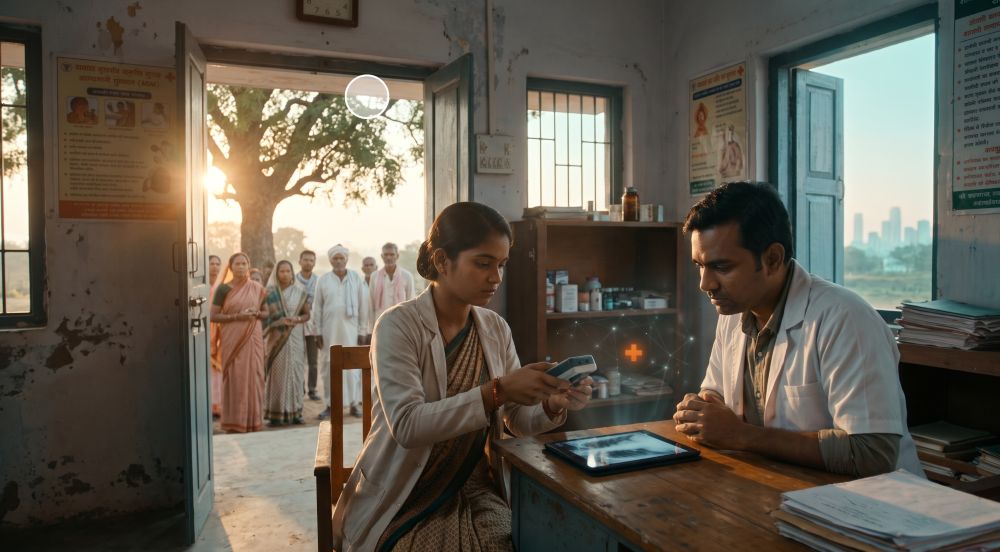
At an online panel hosted by the Association of Commonwealth Scholars and Fellows (ACSF) India, the Founder of AcadNet brought hard numbers, a four-part model for collaboration and a concrete proposal to one question: can AI make quality healthcare affordable and accessible where it is needed most?
Sunday mornings are a hard sell for any online event. This one filled up anyway. On 15 November 2026, ACSF India put five senior voices from medicine, technology, policy and health economics on one Zoom screen and asked them a blunt question about artificial intelligence in healthcare: who does it actually reach?
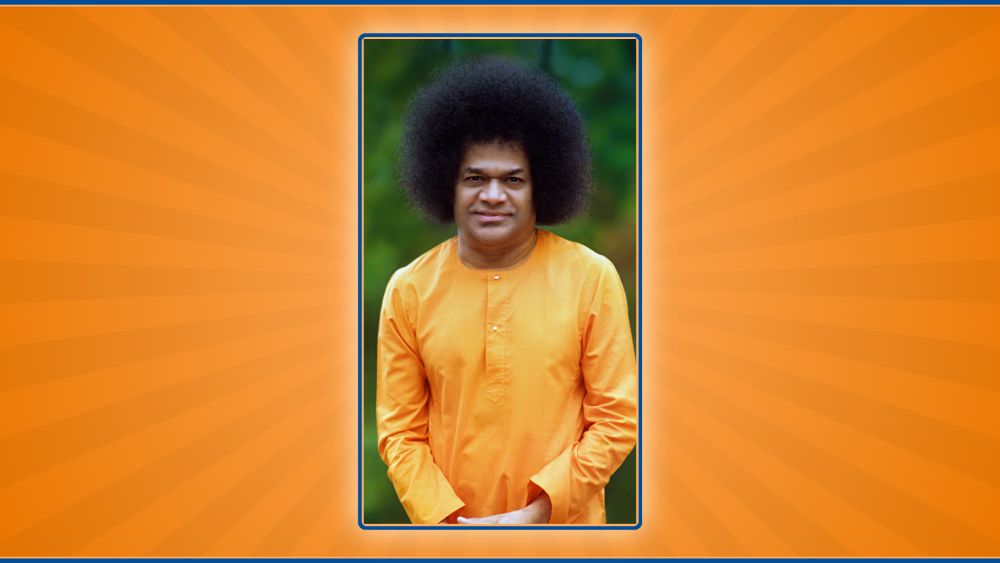
One of those voices was Prof. (Dr.) M. M. Ananth, Founder of AcadNet (Academic Network) and Founding Vice Chancellor of Adani University. A Cambridge-trained materials scientist and a Commonwealth and DAAD (German Academic Exchange Service) Fellow, he brought a wide lens to the table: evidence on how far AI has really travelled, a sober warning about generative AI, and a plan to turn the conversation into something India can use.
Five voices, one stubborn question
The session, titled Artificial Intelligence in Healthcare: Making Quality Healthcare Affordable and Accessible in Marginalised Regions, was moderated by Prof. Adarsh Kumar, Director of the UP Forensic Science Laboratory. Prof. (Dr.) Sanjay Kataria, President of ACSF India, opened it by calling healthcare a basic human need, not a privilege, and by saying AI should be an enabling tool for professionals, never a replacement for them. He added that the real measure of success is how many more lives are touched, not how advanced the technology looks.
Every seat gave its two minutes
Prof. Adarsh Kumar opened by cutting through the hype. AI is not going to cure every disease by next Sunday, he said, and it is not going to replace doctors altogether. The question has moved from what AI can do in the lab to what actually works at the bedside, in a country where high-volume tertiary centres sit beside resource-constrained clinics. The real challenge, he said, is clinical validation, workflow integration, data privacy and medico-legal accountability when an AI tool joins the decision. Each panellist then took two minutes on where AI in healthcare stands today.
Prof. Singh went first. AI, he said, has moved out of pilot projects into large-scale clinical deployment, across diagnosis, medical imaging, drug discovery, disease prediction, telemedicine and clinical documentation. In the United States, roughly 1,500 AI-enabled medical devices had been authorised by last December, about three-fourths of them in radiology.
In India, he said, ABDM (Ayushman Bharat Digital Mission) has recorded about 95 crore ABHA (Ayushman Bharat Health Account) IDs, along with some 120 crore linked health records across more than 5 lakh health facilities and 11 lakh professionals. eSanjeevani has crossed 44.9 crore teleconsultations. TB screening and Madhu Netra AI show where AI has already made a path.
Calling himself the least medical person on the panel, he said he could offer the data while practitioners supply the insight. The bigger challenge now, he added, is clinical evidence and clinical validation.
Read the numbers carefully
Asked for two minutes on the current state of AI in healthcare, Prof. Ananth built on the figures Prof. Singh had just shared and took the longer view. Eleven months earlier, he said, he had hosted an online panel called Healing at Scale: Democratizing Healthcare. There, Dr. Mohan, a Padma Shri awardee and Humboldt Fellow, showed how AI was already working inside his own institution. That left Prof. Ananth convinced that adoption is moving faster than the records suggest.
He then sorted the evidence under headings. On strategy and governance, India looks better than its reputation. Only 4 of the 50 countries in Europe have a health-specific AI strategy, while India launched SAHI (Strategy for Artificial Intelligence in Healthcare for India) and BODH (Benchmarking Open Data Platform for Health AI) in February 2026. The ICMR (Indian Council of Medical Research) has issued its own guidelines too.
On clinical impact, he was more cautious. What an AI system delivers depends on what it learned from, so the sanctity and sanity of the data speak volumes. Only 2.4 per cent of devices with clinical studies relied on randomised trial data, and application-oriented research is a small slice of the total, about 3.3 per cent globally. India, he said, is yet to make a mark there.
India fares better on volume: in a 2023 bibliometric analysis it ranked second in the world, behind the United States. Generative AI papers are fewer, with 2,761 in one corpus and 383 of them from India. Real impact, in his reading, sits in medical imaging, diagnostics, screening and public health. Clinical documentation, telemedicine and remote monitoring come next, and drug discovery is speeding up with better tools and hardware. India is moving slowly, he added, and rightly so: with a human in the loop, each decision costs a life if it goes wrong.
The hospital floor and the health economist
Dr. Amritraj spoke from the hospital space. His centre has set up an innovation centre in a government hospital and launched what he called the country’s first AI clinic in a government hospital. With all the buzz, he said, a new kind of quackery is entering the ecosystem in the name of AI: unvalidated, unregulated and ethically doubtful.
Medical-grade AI is different. It has to be trained on clinically validated, regulated data, with doctors as co-creators of the model. Clinical decision support, he said, is the one thing healthcare needs from AI. Opinion is not validation. Clinical validation is an institutional process, and too many startups claim it but cannot answer when asked for a CTRI (Clinical Trials Registry of India) number or the sample data.
He also raised data safety while data is at rest, in transit and in execution, and noted that under the DPDP (Digital Personal Data Protection) Act, health data belongs to patients.
Speaking as a health economist, Dr. Kaur said the field is outrunning the evidence and the reimbursement rules built for it. The foundational question, she said, is what data the learning model uses. India still leans on global or Southeast Asian reference data and lacks its own reference cases, and its costing data is limited. Feed that into an AI model, and the output can sit far from the evidence that financing decisions need.
She asked for the marginal return on the money being invested and, after screening, how many people actually get treated. Playing devil’s advocate, she said, the answer has to bring the human perspective back into the loop.
Taking diagnosis to the patient
The moderator’s first question went to Prof. Singh: which AI tools can bypass high-end diagnostic infrastructure in marginalised regions?
Affordable, portable, smartphone-enabled devices, he said, especially in imaging. He named Qure.ai’s qXR, which reads chest X-rays for early TB and lung disease screening without a radiologist, and Madhu Netra AI for diabetic retinopathy. He added AI-enabled ECG devices and digital stethoscopes for preliminary cardiac checks, and Butterfly iQ, a handheld ultrasound with AI guidance for trained frontline workers. AI-assisted decision support through telemedicine can connect health workers with specialists, with IoT (internet of things) and sensing devices in the mix.
Three conditions are essential, he said: affordability, validation on Indian populations, and reliable referral. An AI screen must never be mistaken for a definitive diagnosis. It is assistive, and its job is to cut the geographic, economic and infrastructural barriers, not to replace expensive infrastructure or medical professionals.
Asked how AI can work as a population-level screening and triage tool, he made four points. Screen the population early. Stratify people into critical, moderate and low risk so that consultations and referrals go to those who need them first. Let ASHA (Accredited Social Health Activist) workers and primary health centres screen communities with smartphone-based AI apps and portable devices, so outbreaks can be sensed early. And allocate resources intelligently by linking screening with telemedicine, hospital information systems, beds and referral networks.
His central argument was a shift from a hospital-centric, treatment-oriented model to a population-centric, prevention-oriented one. He also reminded the room that every digital thing is not AI.
The ecosystem matters more than the tool
The moderator asked a practical question: do AI models work reliably offline, or in areas with weak connectivity? Prof. Ananth answered with candour. Moving a large medical image to the cloud is a real limitation in India. But tools with web-based interfaces are emerging, and he pointed to a precision-medicine tool for diabetes, shared by Dr. Mohan, that classifies type 2 diabetes into distinct pathophysiological endotypes and predicts associated complications.
The bigger point, in his view, was not any single tool. Healthcare AI is an ecosystem of infrastructure, policy, devices and medicine, and for the first time policymakers, device makers and doctors are all talking to each other. Earlier, ICMR did its thing, doctors did theirs, and everyone worked in silos. He sees the same shift in the move from Industry 4.0 to Industry 5.0.
Accountability, validation and repurposing
Then the moderator turned to Dr. Amritraj, who had been sharply critical earlier: would frontline workers treat AI as decision support or as a standalone diagnosis?
A black-and-white line, he said: a tool is either validated or it is not. A medical licence is given to an individual who stays accountable for the decision, so the doctor decides. The moment a screen is connected to the internet, he said, it becomes software as a medical device and must be regulated. If I am driving the car, he said, I am accountable. He recalled a news report from about three months earlier in which a patient altered a psychiatrist’s prescription through AI, got the medicine and died, and the court then went after the doctor.
The moderator backed this with a familiar example. Reports and OPD (outpatient department) papers often end with a line saying the finding is not for medico-legal purposes, as if that absolves everyone. It does not.
Validation, Dr. Amritraj explained, follows a path: a protocol, a statement of which patients were included and why, the sample size, a principal investigator, the research committee, then the ethics committee approved by CDSCO (Central Drugs Standard Control Organisation), and finally a test licence. Without that, it is only a proof of concept. Medical-grade voice samples, he added, cannot be gathered at a metro station or a university.
He also urged hospitals to help Indian startups grow by giving them doctors, data and a window to test. As an example of technology repurposing, he described a TB screening tool built for community use that his hospital placed in its own X-ray room. Among about 800 X-rays, it picked up patients who had no idea they had TB, an accidental finding. He described AI for an India that works on mobile signals, not only smartphones, and said clinical-grade AI must stay simple and let doctors say what they want said, because accountability is theirs. He noted that the NMC (National Medical Commission) offers a free six-month AI certificate course for doctors, and said hospitals that validate a solution should also buy it.
Confident nonsense, and what to do about it
After Dr. Amritraj spoke sharply about unvalidated AI tools entering Indian hospitals, Prof. Ananth added two sentences that became the most repeated idea of the day. AI itself is old, he said, with roots in the 1956 era. Classic AI predicts. Generative AI creates. And the creative ability is exactly where hallucination comes from.
He recalled using AI for new product development at Cambridge some thirty years ago, when hardly anyone used the term. What has changed is the generative capability, which is why final accountability and decision making must stay with a person. The moderator summed it up in a phrase the panel kept returning to: augmentation, not replacement.
His answer to how a sector this fragmented should move was a framework he called the four Cs.
Who pays, and what it returns
The moderator asked Dr. Kaur which public-private partnership or startup models can lower the cost of deploying AI in low-resource regions.
Affordability and accessibility go hand in hand, she said, and validation by authorities such as WHO and ICMR, plus regulators, is the safety check. What she values in AI is that it stretches scarce specialists through task shifting. ASHA workers using AI eye-screening devices, she said, agreed with ophthalmologists 91 per cent of the time. Handheld X-rays can help screen for TB, which India still has to eliminate. She stressed screening, not diagnosing, and warned that data poverty leaves populations and care settings underrepresented in digital data.
Her example on insurance was PM-JAY (Pradhan Mantri Jan Arogya Yojana), which processes about 50,000 claims a day. Only 15 to 20 per cent are auto-adjudicated, she said, so around 80 per cent of the burden is still manual. Machine learning, language processing, OCR (optical character recognition) and large language models can help, but with a human in the loop. A wrongly rejected claim raises out-of-pocket costs, and payment delays push private hospitals out of the scheme. AI-based pre-submission checks can flag missing documents and mismatched packages. A senior insurer colleague told her that a human sits at the end of every rejection: AI may approve fast, but it does not deny alone. Performance data, she said, should be a publicly auditable scorecard.
AI will not make healthcare free, she said. It is an added cost, so the test is whether it earns its marginal cost. She suggested flat yearly pricing and volume-based, tender-style bulk purchasing. Start narrow with two or three use cases chosen on volume and evidence, such as TB screening, eye screening and claims processing. Run pilots in shadow mode, where AI works alongside people without deciding anything. Build India’s own reference cases. Pay for treated cases rather than screens, pool purchasing across states to bring prices down, and consider extending PM-JAY from inpatient to outpatient care.
Her closing point was return on investment. A faster TB regimen saves lives, and those lives return to the workforce, generate income and pay taxes. The question for government, she said, is whether the patient benefits and the money delivers value.
Predictive, preventive, corrective
Following Dr. Kaur’s session on pricing and public-private models, Prof. Ananth offered a way to think about where to put the money. Healthcare AI, he said, works at three levels: predictive, preventive and corrective. As you move from predictive to corrective, you move from data-rich to data-scarce, and from low cost to high cost.
His conclusion was an investment argument. Put more resources where returns arrive early, at the predictive stage, rather than waiting for the corrective one. That also means a healthier nation as the system moves forward.
An honest answer on a gap that remains
In the policy round, the moderator asked how patient data rights can be protected when sensitive health data is collected from rural communities who may not fully understand data-sharing agreements. Prof. Ananth gave a plain answer. India is still getting there. As far as he knows, there is no healthcare-specific data framework, and the DPDP (Digital Personal Data Protection) Act is what the country has.
Dr. Amritraj added that the Act’s rules are yet to be fully in force, that patient consent will be needed even when hospital data is used for research, and that the world is moving towards a trusted execution environment in which even an administrator cannot view the data.
On training, Prof. Singh said capacity building and trust building have to go together. The frontline in India is made up of ASHA workers, ANMs (auxiliary nurse midwives), community health officers and primary healthcare staff. He proposed structured, practical training in five areas: AI and digital health literacy, including its limits; hands-on use of AI tools in a regulated environment; data literacy and safe record keeping; ethics and responsible use; and AI-assisted clinical decision making, which means interpreting AI risk alerts, following referral protocols and not treating AI like a chatbot such as ChatGPT.
Dr. Kaur had to leave at noon to catch a flight, so the last policy question, on how AI could change the economics of Indian health, went unanswered and the planned fourth segment was dropped. The moderator asked each remaining panellist for a one-minute close.
Industry 5.0, a fluid mind and a white paper
Prof. Ananth’s closing remarks widened the frame. Industry 4.0 was about the internet of things and other technical aspects, he said. Industry 5.0 is primarily human-centric, and that does not mean humans are left out. It means people stay in charge of decisions while machines carry the routine work.
He also pushed back on a word he hears often at panels, the fixed mindset. A mind should never set, he argued. It should stay fluid enough to re-adapt and re-learn, and keep progressing with technology rather than without it.
He warned that those who do not use their faculties of judgement now will miss the bus. Then he made a proposal. AcadNet has spent the past twelve months working on this theme and holds substantive data of its own. Why not write a quick white paper, specific to India, and publish it in three to four months?
Three more final words
He called for a well-organised marriage between technologists and medical professionals. Technology people, he said, do not always understand the medical and legal sides, such as where wellness ends and medical grade begins. GIMS, he noted, has already started a collaborative approach in which the people who build the models sit with doctors and learn their language. When that marriage works, the technology can reach the last mile.
AI will enter every aspect of life, he said, and the only job is to carry a regulated umbrella. Healthcare must make sure that umbrella is safe and validated, and also help Indian AI startups grow by giving them the right clinical problem, validating their solutions and promising to adopt them once validated. Otherwise Western startups will take over, as they have with medical devices. Uttar Pradesh has a policy allowing direct purchase up to Rs 50 lakh. Regulators, he said, should not only say what is wrong but show the right way and the processes that can help.
AI is not here to replace clinical judgment, he said, any more than a calculator replaced a mathematician. It is a high-speed pattern-matching assistant that handles repetitive cognitive load, catches what tired human eyes miss and gives clinicians more time to look at patients instead of screens. In the end, he said, the human eye and the human touch remain essential.
What participants asked, and how Prof. Ananth answered
Ten ideas to carry out of the room
Why human in the loop is an IACT question
This section is AcadNews Editorial’s own reading and not a panel statement. The panel’s strongest message was that tools, however good, are the easier half. Knowledge and technical skills can be updated or even automated. How a clinician, a founder or a policymaker uses them depends on who that person is.
That is the logic behind IACT (Interpersonal, Adaptability, Cognitive and Technical intelligence clusters), the framework Prof. Ananth’s AcadNet has built. In its research-validated finding, about 75 per cent of professional effectiveness comes from durable Interpersonal, Adaptability and Cognitive traits, and about 25 per cent from perishable Technical skills. An AI perspective sharpens the point. Models will keep absorbing the technical layer. The judgement to question a confident answer, the adaptability to re-learn, and the trust between a health worker and a patient remain human work, and IACT is built to measure them.
From a Sunday panel to a working paper
Dr. Kailash Petkar, Secretary of ACSF India, closed the session by thanking participants and the Commonwealth Scholarship Commission UK for its financial support. He described point-of-care diagnostic tools reaching communities in the Sundarbans, with trained field workers screening door to door, as proof that validated tools plus capacity building can work. ACSF said its next activity is its annual day in December, planned in physical mode in Delhi.