Needonomics: Queen of Social Sciences for Global Economy
Global economy grappling with environmental challenges calls for a better goal than ‘growth’ to thrive within planetary limits. The solution…



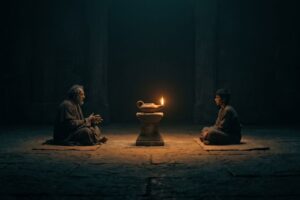

Global economy grappling with environmental challenges calls for a better goal than ‘growth’ to thrive within planetary limits. The solution…
Dance is not an art by itself. It is a unique expression, through the body, synthesizing all arts. In reality,…
Here is what a preschool teacher beautifully articulated about the ‘learning bodies’ in the classroom, “Perhaps one of the most…

Materials, in any form, have become an integral part of our day-to-day lives starting from our clothes to building construction…
The 4Cs—cooperation, collaboration, co-creation, and co-evolution—serve as essential foundations for achieving sustainability and enhancing well-being in an interconnected world. Cooperation…
Dance is… Dialogue with our bodies For thousands of years communities have used dance for healing. We dance because dancing…
A new born baby cries and moves its tiny arms and legs. Thus begins its tiny “steps” in the journey…
In their 2010 report, the World Trade Organization classified the goods that embody natural resources or require resources for their…
An Elaborative Guide on How Incubation Systems and Mentorship Fuel Start-up Evolution Introduction In the dynamic landscape of entrepreneurship, the…
The use of dance therapy in India encompasses various traditional and folk dance forms. Chhau, a dance technique from Orissa, focuses on body balance and mind coordination, providing a meditative calmness and potential benefits for children with hyperactivity. Folk dances, being communal practices, offer therapeutic effects through engaging rhythmic movements that involve the entire body. Traditional dances like Bihu, Bhangra, Gair, Geendad, Karagam, and Bengali folk dances promote physical health, strength, and mental support. Modern Indian dances, pioneered by Rabindranath Tagore and Udayshankar, deviated from classical forms to embrace expressive and healing movement. Today, dancers in India explore the therapeutic benefits of indigenous art forms.

The human mind is incredibly powerful and has limitless potential. Mind can perceive, evaluate, and synthesize enormous volumes of environmental…