





Change has always been a part of all growth and development processes for several centuries. None the less, the speed of change is what is haunting the minds of the current generation. Alongside, the innumerable number of inventions, the convergence and divergence of technologies is also creating a wide spectrum of opportunities and challenges. Though the education systems might not have responded to them adequately, the informal impact of these new arrivals both on learning and lifestyle modifications cannot be neglected, ignored, or scoffed at. It is in this context the question raised by the individual assumes significance. It is important for us to keep the following in mind:
Staying Healthy With Fundamentals of Education:
The larger objectives of education are human growth and development. The survival, co-habitation and peaceful living are the basic requirements of any community or a nation, whatever technology, whatever tools and processes they use for achieving, enhancing, and ensuring these purposes. These essentials are woven on a web of values, learned cultures, evolved belief systems, and intended goodness, an understanding of the underlying truth and beauty of all things within and exterior to living. Education cannot afford to show either a blind eye or a deaf ear to these purposes. Hence, the inclusion of technologies cannot, rather should not, either provide a threat or disturb its balance in a social organization.
Twin Dimensions Of Education
In early days, the learning dynamics was detailed into two directional forces ‘para’ vidya and ‘Apara’ vidya – the one leading to enriching knowledge of external and the other leading to enriching the internal aspects of our existence. Over the recent decades, the focus has shifted towards the ‘knowledge of the external’ rather than the ‘internal.’ While one cannot underplay the importance of exploring and experimenting with what is seen, heard and experienced, the importance of understanding the inner self and its conscious co-existence with the external needs to become a continuous learning exercise and experiment. With the speed of change, the ability to cope and balance them, the ability to synergize them for a greater purpose of life appears to have been challenged. Education cannot afford to devalue or give a step motherly treatment to educating the inner self at the cost of technologies. Nor do the technologies have any such intentions. It is we who handle them, need to become wiser.
The Danger of chasing the speed
While it is important to become inclusive with all technologies and their auxiliaries, it is equally important to ensure that education should not chase technologies as an ‘Eldorado” or ‘Elixir de Life.” They are not and they shall never be. Technologies are playing the role of ‘alchemy,’ creating a wide variety of things on their by-lanes, in their processes of research for converting the baser things into gold. They are indeed good curative remedies for solving some existential problems in curriculum, pedagogy, and assessment. They help to better learning and do not cause learning. They facilitate understanding, pursuing, and celebrating different perspectives of concepts. They open the doors to new perspectives. While technologies could chase education, either because they have a place and value, or for purposes of market dynamics, education should not chase technologies, however allowing them to be more inclusive and get subsumed into their breathing exercise.
The conflict between human intelligence and machine intelligence
Human Intelligence handholding artificial intelligence is a new dimension in human development. They feel neither a conflict nor an animosity between them. They consider their co-existence as a part of their evolution and as no threat to the survival of humans. However, no one knows. The marriage between the two should exist with mutual respect and their ability to hold on to the “Lakshman Rekha” they draw for each other. The watchdogs of social dynamics, culture, heritage, and philosophy will widely keep their eyes and ears open to the results of their functional dynamics. Nevertheless, the impact of their co-existence is likely to bring both new milestones and miseries to the learning community. While several ‘comfort zones’ in educational institutions will become uncomfortable, the call to continuously modernise and stay relevant will put extraordinary pressure on the systems.
The Emerging Intelligence Nexus
The intelligent nexus between cause and effect, the effort, the produce, and the like would result in both diverse and exclusive convergence of knowledge resulting in the emergence of new subjects of studies, newer skills, newer methods of problem solving, with better time-consciousness, space management, operational strategies, and management perceptions. The impactful intrusion of scientific thinking and methods, the innovative diverse technologies that emerge will raise continuous questions relating to dogmas, practices and perceptions with rationalisation raising several questions on belief systems. No wonder, these would become bedrocks of conflicts on social platforms, the levels of acceptance of this nexus would force acceptability and resultant transformation.
Education Should Respond And Not React
The emergence of modern technologies has been an ongoing process. I have seen how technologies have been knocking at the doors of thought leaders for their quick and heroic entry from time to time, many of them willing to take the role of clowns or comedians as they could not get a place for the hero in the educational theatrics. But every technology is not an educational technology. The relevance of a technology to a joyful learning process must be evaluated both on logical and ethical platforms, ensuring that they do not corrupt the larger basics of education. Though technologies have acted as powerful culture catalysts, inclusion of technologies for window shopping in education to gravitate numbers, glory, fame or leadership doesn’t serve any purpose, for the simple reason the shelf-life of every technology is increasingly getting minimal. Education, therefore, should learn to respond meaningfully and purposefully to technologies rather than considering them as fast food for a quick bite during a learning drill.
Education And Teachers Need To Evolve
There is absolutely no need for the teaching community to succumb to any fear for using technologies. It is not a question of ‘now’ or ‘never.’ It is indeed a process of ‘learn’ and ‘weather.’ The possibility of the learners being ahead on the ‘learning curve’ as against their teachers is increasingly inevitable, the simple reason being the opportunity for informal learning is becoming explosive and the learners have time for it. Further, the curiosity levels of the learners are far better than those of their elders. Hence, teachers and educational institutions need to evolve in a progressive and organized manner with technologies, integrating them into processes and thought structures. The informal learning of technologies is increasingly important and inevitable for the teaching community. But mere knowledge of a technology without its purposeful, appropriate, relevant, and concurrent use, it remains another piece of stacked knowledge losing its value with time.
Technologies are here to stay so long humans exist. We do not have to be stressed about either their existence, their use, their kingdom, or their dominance. All that we need to understand is that we are never servants of technology, but either friends or masters of technologies.
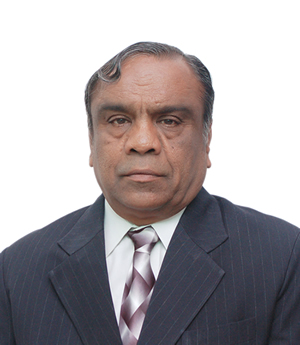
![]() Dr G Balasubramnian | G. Balasubramanian was born at Tirunelveli, Tamilnadu on 17th February, 1946. He had his initial schooling at Madurai and graduated in Chemistry from Presidency college, Chennai. He obtained a Post-graduation in Analytical & Inorganic Chemistry from Madras University, Post-graduation in Hindi from Sri Venkateswara University and Post-graduation in Education from Annamalai University. |
He obtained a Diploma in German from University of Madras, a Certificate in Project Technology from Trent College of Education, Nottingham U.K and a Certificate in Computer Education from Leeds University, U.K
Starting his career as a Post-graduate Teacher in Chemistry in a public school, he took over as a Principal of Hindu Senior secondary School, Triplicane, Chennai. He joined the Central Board of Secondary Education as a Joint Secretary in 1984 and has worked in several capacities in Academics, Examination, Confidential and Administration branches of CBSE.
Elevated to the Post of Director (Academic) in 1997, he held the additional charge of the Chief Vigilance Officer of the Board. He retired from the services of the Board on 28th Feb, 2006.
He was associated with several Boards of education and leading organizations like Quality Council of India, NABET, National Institute of Open Schooling, Global Indian international Schools in Singapore, Malaysia and Japan. He is the current chairperson of the international council for school leadership. He was the Chief Editor of the magazines – ‘The Progressive School’ and ‘The Progressive Teacher’ published by S. Chand group of companies. He is currently Advisor to the following companies – “Knowledge Tribe” and “Teacher Tribe” at Bengaluru.
His interests include philosophy, psychology, poetry and Literature. He has widely traveled to many countries and participated in several national and international conferences and presented papers on a wide variety of academic interests. Post retirement he has conducted over 7000 training programs for teachers and Principals covering over 85000 teachers.
His publications are:
- Mindscaping Education
- Case Studies in classrooms
- Quality Spectrum – A school’s Bandwidth
- Safety in schools – Issues and concerns
- Academic Leadership – ebook
- Schooling the kid – learning form K to 12
- Creativity in classrooms – eBook
- Unlearning Learning – eBook
- A Happy Journey (Poetry)
- Apologies to an Existence (Poetry)
His latest book “Walk with Viswa”- a journey to Leadership along the Farmlands is due for publication.
Awards won:
- Vocational Excellence Award from Rotary Club, Chennai
- Seva Rathna in Education from The Centenarian Trust, Chennai
- Lifetime Achievement Award from VIMHANS (Vidyasagar Institute of Mental Health and Neuro Sciences) Delhi
He has been a member of the High-Power committee constituted by the Government of Tamilnadu for School Education and has also been the chairperson of the Curriculum Reforms Committee and the Examination Reforms Committee for School Education in the Government of Tamilnadu.
If you would like to get connected to Dr G Balasubramanian write to editor@acadnews.com.