



Man is a social animal said the famous Greek Philosopher Aristotle. History is evidence to the fact that the evolution of humans has been impacted by two significant things – Nature and Need for interdependence. Fear and fight have been the two major gateways through which humans have successfully navigated their survival and growth needs. Every single experience in each of these pathways have provided them continuous learning, reflection, critical thinking, and creativity.
Nature played a predominant role in shaping human thoughts and human emotions. “Come forth into the light of things, let nature be your teacher” said the famous poet, William Wordsworth.
In all the interactions with nature as well as with other partners in the ecosystem, the fear for existence, the compelling urge for security, the unlimited curiosity to explore and know forced the humans to face innumerable emotional strains; the humans continued to face them and handle several of the emotions over a period. In doing so, the major objective of all his learning occurred with courage, conviction, confidence, competition, and consistency.
“When dealing with people, remember you are not dealing with creatures of logic, but with creatures of emotion” says Dale Carnegie.
Emotions have played in a significant and powerful role in defining and narrating the evolution of the human profile. Emotions influence our health, performance, well-being, motivation, sense of fulfilment, and decision-making skills. It is important to understand and manage them. As such each of the human reactions with the ecosystem in which one lives provided a unique stimulus and the need to respond or react to the stimuli profiled one’s growth history. With several hormones flowing through the human body like Dopamine, Oxytocin, Serotonin and Endorphins, which played a key role, the ability to use, manage and handle these emotions helped the individual to learn safe and secure patterns of living. They provided the skills to react, work faster, work energetically, stay calm, see the joyful and better side of life and to live together in harmony and peace.
The ability to manage these emotions got captured as ‘emotional intelligence’ of the human beings. Alongside, one’s ability to use these emotions for interaction with other fellow beings resulted in ‘social intelligence’ which helped one to navigate life smoothly and safely.
The resultant idea of ‘socio-emotional intelligence’ is indeed an effective tool for human development both as an individual as well as a contributive member of a community articulating and actively engaging with a culture. “We define emotional intelligence as the subset of social intelligence that involves the ability to monitor one’s own and other’s feelings and emotions to discriminate among them and to use this information to guide one’s thinking and actions.” says Peter Salovey and John D. Mayer.
The focus of all educational systems has always been on developing ‘socio-emotional intelligence’ as a vital need for a futuristic community that stays in harmony. It is considered as the most vital nutrient for any learning process and hence the curricular objectives, curricular designs and constructs, curricular delivery methods have considered SEL (Socio-emotional Learning) as the undercurrent of its entire dynamics. It is also considered as the most appropriate tool for ensuring equity and equality among a generation of learners so that every learner acquires, uses, and enjoys equal opportunities for growth, participation, and progress for the future.
Where do we start providing to the learners the fundamental concepts of Socio-emotional learning?
Says, Daniel Goleman, who is considered the pioneer on emotional intelligence “Emotional intelligence begins to develop in the earliest years.”
All the small exchanges children have with their parents, teachers, and with each of your emotional abilities aren’t in hand, if you don’t have self-awareness, if you are not able to manage your distressing emotions, if you can’t have empathy and have effective relationships, then no matter how smart you are, you are not going to get very far”. The skills of socio-emotional intelligence are not necessarily linear, but are inter-disciplinary, complex, and yet, comprehensible. They are essentially experiential and can be sought to learn both through formal and informal learning systems.
The four significant inputs to socio-emotional learning are –
- self-awareness
- self-management
- social awareness
- social skills.
The National Education Policy has taken adequate cognizance of these needs and articulated a design that is broad-based, inclusive, holistic, and futuristic. The focus is stated as “to develop all capacities of human beings – intellectual, aesthetic, social, physical, emotional, and moral in an integrated manner.”
In trying to achieve this the policy calls for developing ‘self-learning’ and ‘self-directed learning’ among the learners right from the pre-primary stage. This helps in active integration of cognitive skills with the emotional skills. Further it intends to provide adequate experiences on the pathway of learning. “Experiential learning’ is considered as one of the best ways of pedagogy so that the shared experiences of the learner- teacher and the peer during learning becomes a capital for socio-emotional development. To add, they give insightful internal experiences that go a long way to articulate effective neural networks that enrich socio-emotional behaviour.
Taking cognizance of the changing social dynamics wherein the parents are unable to invest adequate time and attention to the young learners, the policy suggests the need for training the learners at the primary level itself to handle the issues relating to ‘isolation’ and ‘to handle long time loneliness’.
The need for developing appropriate social skills among the learners is adequately detailed in the NEP so that the schools can provide pre-designed cognitive and emotional inputs to ensure mental health and well-being. To understand, appreciate, empathize and reach out to others is important for a healthy social living.
Self- awareness is critical to know both the rights and responsibilities of everyone. “Knowing yourself is the beginning of all wisdom” says Aristotle.
Any educational process should result in facilitating and empowering the learner to continuously understand his role in a community and thus, participate and contribute effectively. Any amount of external knowledge that is accrued which does not contribute to the personal development becomes more a burden overtime.
Says Carl Jung “Your vision will become clear only when you can look into your own heart. Who looks outside, dreams, who looks inside, awakes.” Preparing the learners for ‘self-awareness’ at all stages of the learning curve is required so that the changing emotional contexts could be understood, and learning would be age appropriate.
Training the learners for self-management is an emerging call of an evolving society.
Self- Management skills help the learners in developing effective, purposeful, healthy, and compassionate relationship with the members of the community. It also provides the much-needed understanding for resource management both in nature and outside so that the needs, concerns and demands of others are taken care of without any neglect.
Self- management skills enable the children to move towards time management, resource management, effectivity, and excellence. It acts as the powerhouse for discipline so that needs of the self can be positioned and contextualized in the relationship structure.
It becomes a most important ingredient for a better civic life. The words of Steve Jobs on ‘self-management’ come with a vision.
He says “The greatest people are self-managing — they do not need to be managed. Once they know what to do, they will go figure out how to do it. What they need is a common vision.
And that’s what leadership is: having a vision; being able to articulate that so the people around you can understand it; and getting a consensus on a common vision” Self-management skills are essential in an increasingly competitive world that is growing on cutting-edge competitions, so that each individual can learn patience, tolerance and reduce consumerist attitudes and to delay gratification needs alongside healthy competitions.
Social Awareness is an important skill to be included in the learning universe of the learners. It helps to understand the role-play in a structured interdependent society. It embraces the ideas of unconditional love, self-less service, empathy, compassion, gratitude, and courtesy. It is a vital ingredient for peaceful co-existence and community development through coordinated efforts. It helps to understand the social responsibilities and commitments so that the rule of law can prevail in the community.
The concept of social awareness permeates through the cognitive domains of the curricula in various disciplines of learning. It is both structured and unstructured. It is both formal and informal.
The institutions have innumerable opportunities of imparting social awareness in an integrated format.
Social awareness promotes the idea of ‘Unity in diversity’ accommodating everyone for holistic and inclusive growth, which is participatory, positive, and constructive.
It enjoins the idea of Liberty and Freedom. “In nature we never see anything isolated, but everything in connection with something else which is before it, beside it, under it and over it.” says Goethe, the German Philosopher. The social awareness learning should result in comprehending this idea.
Social skills are fundamental to a mutually supportive cohesive living. The institutions of learning should seek every possible opportunity to promote social skills among learners. They include service skills, active listening skills, communication skills, collaborative and cooperating skills, leadership skills, and relationship management skills.
Unfortunately, with excessive focus on textual content enriched with focus on competitive performance, many of these skills stand neglected at the learning spaces.
It is the responsibility of the schools to create learning spaces and opportunities for the learners so that they do not suffocate for want of adequate exposure to these skills.
“Well-being cannot exist just in your own head. Well-being is a combination of feeling good as well as having meaning, good relationships, and accomplishment” says Martin Seligman, known as the architect of Positive psychology.
Detailing emotional resilience as a vital social skill, it says “The NEP acknowledges the importance of emotional well-being. SEL programs teach students to recognize and manage their emotions effectively, helping them build resilience in the face of challenges, setbacks, and failures.”
It is time that the educational systems understand the guidance provided by the NEP for socio-emotional intelligence as an essential learning need for the future.
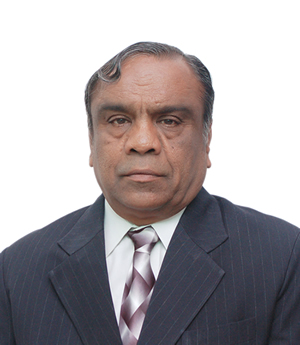
![]() Dr G Balasubramnian | G. Balasubramanian was born at Tirunelveli, Tamilnadu on 17th February, 1946. He had his initial schooling at Madurai and graduated in Chemistry from Presidency college, Chennai. He obtained a Post-graduation in Analytical & Inorganic Chemistry from Madras University, Post-graduation in Hindi from Sri Venkateswara University and Post-graduation in Education from Annamalai University. |
He obtained a Diploma in German from University of Madras, a Certificate in Project Technology from Trent College of Education, Nottingham U.K and a Certificate in Computer Education from Leeds University, U.K
Starting his career as a Post-graduate Teacher in Chemistry in a public school, he took over as a Principal of Hindu Senior secondary School, Triplicane, Chennai. He joined the Central Board of Secondary Education as a Joint Secretary in 1984 and has worked in several capacities in Academics, Examination, Confidential and Administration branches of CBSE.
Elevated to the Post of Director (Academic) in 1997, he held the additional charge of the Chief Vigilance Officer of the Board. He retired from the services of the Board on 28th Feb, 2006.
He was associated with several Boards of education and leading organizations like Quality Council of India, NABET, National Institute of Open Schooling, Global Indian international Schools in Singapore, Malaysia and Japan. He is the current chairperson of the international council for school leadership. He was the Chief Editor of the magazines – ‘The Progressive School’ and ‘The Progressive Teacher’ published by S. Chand group of companies. He is currently Advisor to the following companies – “Knowledge Tribe” and “Teacher Tribe” at Bengaluru.
His interests include philosophy, psychology, poetry and Literature. He has widely traveled to many countries and participated in several national and international conferences and presented papers on a wide variety of academic interests. Post retirement he has conducted over 7000 training programs for teachers and Principals covering over 85000 teachers.
His publications are:
- Mindscaping Education
- Case Studies in classrooms
- Quality Spectrum – A school’s Bandwidth
- Safety in schools – Issues and concerns
- Academic Leadership – ebook
- Schooling the kid – learning form K to 12
- Creativity in classrooms – eBook
- Unlearning Learning – eBook
- A Happy Journey (Poetry)
- Apologies to an Existence (Poetry)
His latest book “Walk with Viswa”- a journey to Leadership along the Farmlands is due for publication.
Awards won:
- Vocational Excellence Award from Rotary Club, Chennai
- Seva Rathna in Education from The Centenarian Trust, Chennai
- Lifetime Achievement Award from VIMHANS (Vidyasagar Institute of Mental Health and Neuro Sciences) Delhi
He has been a member of the High-Power committee constituted by the Government of Tamilnadu for School Education and has also been the chairperson of the Curriculum Reforms Committee and the Examination Reforms Committee for School Education in the Government of Tamilnadu.
If you would like to get connected to Dr G Balasubramanian write to editor@acadnews.com.