






The Future of Learning – Part 1

I am neither a futurologist nor an astrologer to predict what the future of education would be. I would, rather go by the words of Peter Drucker, the management Guru, who said ‘The best way to predict the future is to create it.”  A peep into the history of education reveals that education has always been passing through its ages, designing its goals, objectives and curricula as a response to its immediate challenges, yet upholding its fundamental value orientations engraved on the heritage of the respective geographies. However, the past few decades have witnessed a sea-change in the processes that define learning, the tools that empower learning and the environment that impacts learning. From a world where the “Joy of Learning” was celebrated, we have moved to a world where the designs of Learning respond to the contemporary stress and urgency. The goals of education and hence learning, have time and again, metamorphosed depending on the national and social needs and the resultant priorities. In the last few years some of the limitations on learning due to space and time, have been conquered by trying to capsule knowledge in mini-packages to deliver them as an instant takeaway.

In Retrospect

Learning is a natural inquisitive spirit of all living species, particularly in Homosapiens. History is evidence to the periodic reorganization of the learning behaviour and learning systems. The evolution of the Printing press as a gift of the industrial revolution was the most significant landmark that brought knowledge from open sources to condensed capsules for specific purposes. The universe of knowledge enlarged, giving more time for reflective consideration of knowledge, its analytics, as well as its authenticity. It offered better scope to scientifically evaluate the concepts, the proofs and the interpretations. The opportunities for challenging both the inputs as well as the outputs of knowledge processes added an investigative dimension, facilitating insightful research into several domains of knowledge.

The emergence of Informatics society ushered in a technology driven encapsulation of knowledge and facilitated better and deeper analytics in a shorter period. Further, it brought down the distances in knowledge transfer and sharing and triggered social construction of knowledge both in the closed structures as well as in open structures. The resultant impact on the knowledge economy was exciting and gravitated a closer attention and scrutiny. It impacted both the cognitive dimensions of the universe of knowledge as well the fiscal considerations that arise out of knowledge sharing, marketing and the related transactions. Transfer of knowledge from one domain to others became easier, cheaper, economical and speedy. It facilitated integrated consideration of knowledge components and thus synthesis of new knowledge. Hence the evolution of newer knowledge and ‘co-construction and syntheses of new knowledge perspectives acquired an exciting perspective.

The Knowledge Society, given its multifaceted access and mobility to all knowledge corridors, calls for a purposeful reconsideration of our existing understanding of the acquisition, management and processing of knowledge, as Knowledge has become a social and global wealth. The objectives, processes and styles of learning have, therefore, to be in harmony with the magnitude and direction of the flow of knowledge, as that would determine, the wealth of a nation. Rightly says Peter Ducker, “In the Knowledge Society there will no poor countries, but there will be only ignorant countries. Poverty will be determined by the level of ignorance a country has.” The learning curve in the knowledge society will neither be linear nor regular; it will fit into the views of Alvin Toffler who claimed that “The illiterate of the 21st century will not be those who cannot read and write, but those who cannot learn, unlearn, and relearn.”

The educational institutions of a country need to respond meaningfully to the emerging scenario, by re-engineering their physical and intellectual infrastructure. This is essential to ensure their learners to be a part of the concurrent learning structures and learning cultures across the world. In the new scenario, learning will move beyond the four walls of a classroom. With better access to knowledge, the learners would aspire for more freedom to examine the credibility and authenticity of the knowledge through questioning They will also tend to raise questions regarding their relevance and contextuality. Consequently, Learning is emerging as a co-constructive activity with the teacher, the peers and the physical support systems in place as facilitators. The challenge of the classrooms would be to overcome the boredom arising out of the repetition of knowledge that is already contained elsewhere. The apprehensions expressed by Michio Kaku in his book “The Future of Mind” in the following words is indeed a matter of concern: “One day scientists might construct an “Internet of minds” or brain-net, where thoughts and emotions are sent electronically around the world. Even dreams will be video-taped and then ‘brain- mailed’ across the internet”.

What are the challenges to the learners of the future? 

to be continued….

References

  1. The Future Shock by Alvin Toffler
  2. The Fifth Discipline by Peter Senge
  3. The Future of Mind by Michio Kaku
  4. The Future of Almost Everything by Patrick Dickson

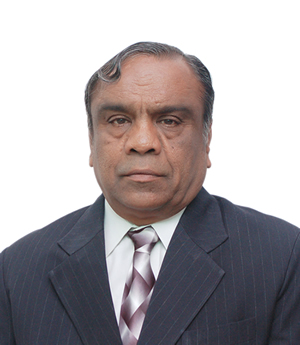
Dr G Balasubramnian
G. Balasubramanian was born at Tirunelveli, Tamilnadu on 17th February, 1946. He had his initial schooling at Madurai and graduated in Chemistry from Presidency college, Chennai. He obtained a  Post-graduation in Analytical & Inorganic Chemistry from Madras University, Post-graduation in Hindi from Sri Venkateswara University and Post-graduation in Education from Annamalai University.

He obtained a Diploma in German from University of Madras, a Certificate in Project Technology from Trent College of Education, Nottingham U.K and a Certificate in Computer Education from Leeds University, U.K

Starting his career as a Post-graduate Teacher in Chemistry in a public school, he took over as a Principal of Hindu Senior secondary School, Triplicane, Chennai. He joined the Central Board of Secondary Education as a Joint Secretary in 1984 and has worked in several capacities in Academics, Examination, Confidential and Administration branches of CBSE.

Elevated to the Post of Director (Academic) in 1997, he held the additional charge of the Chief Vigilance Officer of the Board. He retired from the services of the Board on 28th Feb, 2006.

He was associated with several Boards of education and leading organizations like Quality Council of India, NABET, National Institute of Open Schooling, Global Indian international Schools in Singapore, Malaysia and Japan. He is the current chairperson of the international council for school leadership. He was the Chief Editor of the magazines – ‘The Progressive School’ and ‘The Progressive Teacher’ published by S. Chand group of companies. He is currently Advisor to the following companies – “Knowledge Tribe” and “Teacher Tribe” at Bengaluru.

His interests include philosophy, psychology, poetry and Literature. He has widely traveled to many countries and participated in several national and international conferences and presented papers on a wide variety of academic interests. Post retirement he has conducted over 7000 training programs for teachers and Principals covering over 85000 teachers.

His publications are:

  1. Mindscaping Education
  2. Case Studies in classrooms
  3. Quality Spectrum – A school’s Bandwidth
  4. Safety in schools – Issues and concerns
  5. Academic Leadership – ebook
  6. Schooling the kid – learning form K to 12
  7. Creativity in classrooms – eBook
  8. Unlearning Learning – eBook
  9. A Happy Journey (Poetry)
  10. Apologies to an Existence (Poetry)

His latest book “Walk with Viswa”- a journey to Leadership along the Farmlands is due for publication.

Awards won:

  1. Vocational Excellence Award from Rotary Club, Chennai
  2. Seva Rathna in Education from The Centenarian Trust, Chennai
  3. Lifetime Achievement Award from VIMHANS (Vidyasagar Institute of Mental Health and Neuro Sciences) Delhi

He has been a member of the High-Power committee constituted by the Government of Tamilnadu for School Education and has also been the chairperson of the Curriculum Reforms Committee and the Examination Reforms Committee for School Education in the Government of Tamilnadu.

If you would like to get connected to Dr G Balasubramanian write to editor@acadnews.com.