







AI in the classroom,
the human at the centre
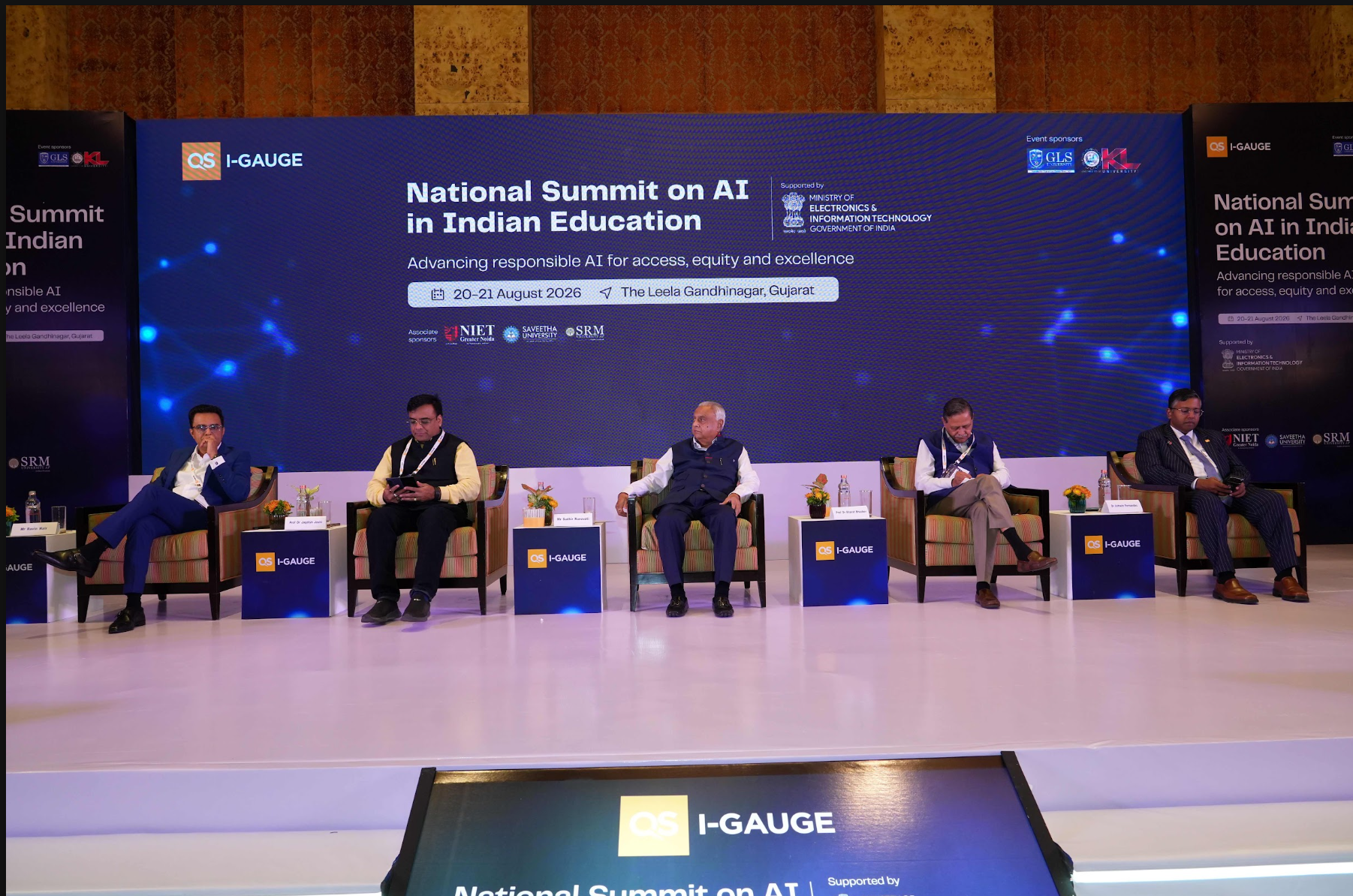
The question came late in the day, after the numbers had already been shared, after the panels had already staked out their positions. Prof. Dr. M.M. Ananth, Founder of Academic Network, put it simply.
“While we are still languishing in the world what we know, but how are we preparing for what is oncoming, that which we do not know.”
— Prof. Dr. M.M. Ananth, Founder, Academic Network
It’s worth sitting with that for a moment. Most of what gets discussed at AI conferences in higher education is really about the known. Better lecture notes. Faster grading. Cleaner administrative reporting. Useful things, but familiar things too. Ananth’s question points somewhere else entirely. If institutions are still catching up on delivering what they already know how to deliver, what are they doing to prepare learners for problems, careers and forms of knowledge that don’t exist yet?
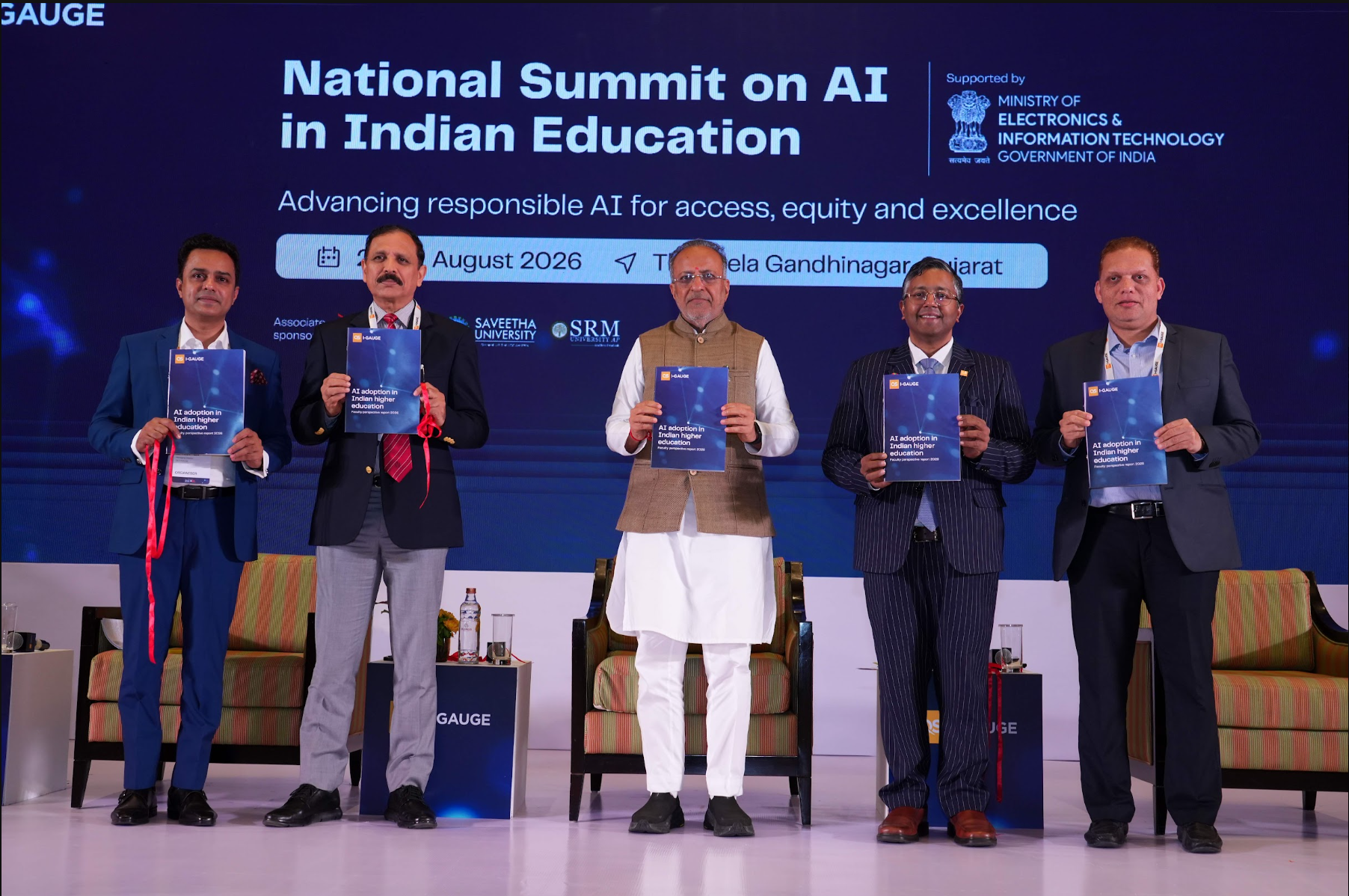
That tension, between competence in the known and readiness for the unknown, runs through almost everything else that surfaced in this year’s discussions on AI in Indian higher education, including the newly released QS I-GAUGE Faculty Perspective Report 2026, built on responses from over 1,100 faculty across 146 institutions in 27 states. The report, and the day of discussion built around it, owe much to Ravin Nair, Managing Director, QS I-GAUGE, and Dr Ashwin Fernandes, Chair, QS India and Vice President, Strategic and International Engagement at QS Quacquarelli Symonds, whose work brought both together.
The report’s headline finding isn’t resistance, it’s adoption, and fairly enthusiastic adoption at that. ChatGPT leads by a wide margin, used by 68% of faculty, with Google Gemini and Claude some way behind. Faculty use these tools mostly for preparing teaching content, supporting research and handling the administrative load that comes with accreditation cycles like NAAC and NBA. Specialised academic research tools barely register; faculty are, for the most part, reaching for the general-purpose assistant rather than anything built specifically for scholarly work.
TOP AI TOOLS USED BY FACULTY
SOURCE: QS I-GAUGE FACULTY PERSPECTIVE REPORT 2026
Confidence in the tools themselves is high. Ninety per cent of faculty describe AI interfaces as easy to navigate. Eighty three per cent say AI helps them get through administrative work faster. Eighty per cent believe their institutions are genuinely ready to bring AI into their programmes. This is not a faculty body waiting to be convinced. If anything, institutional policy is trailing behind individual practice; the report notes that 23% of faculty are already using AI on their own initiative, without any formal guidance from above.
90%
find AI tools easy to navigate
83%
say AI speeds up admin work
80%
believe their institution is AI-ready
Alongside that confidence sits a set of concerns that are just as consistently reported. Seventy eight per cent worry that leaning on AI too heavily will erode learners’ capacity for independent thought. Seventy two per cent are concerned about academic dishonesty. Sixty eight per cent worry that AI tools carry hidden bias when it comes to evaluating learner work, though notably, roughly a third of respondents did not flag this as a concern at all, which the report reads as a gap in AI literacy rather than genuine reassurance.
The most commonly cited day-to-day frustration, reported by 68% of faculty, is simply verifying whether an AI-generated answer is actually correct. AI is fluent, but fluency and accuracy are not the same thing, and faculty know it.
TOP FACULTY CONCERNS
SOURCE: QS I-GAUGE FACULTY PERSPECTIVE REPORT 2026
When asked what would help, faculty were specific rather than vague. Hands-on training workshops topped the list at 71%, ahead of access to properly licensed enterprise tools at 61%. What faculty are asking for is not permission to use AI. It’s structured support to use it well.
Parallel discussions among educators returned again and again to a narrower, harder question. Once AI can produce a competent essay in seconds, what should assessment actually be measuring?
Several ideas came up. Framing assignments around local, specific problems rather than generic prompts, since AI is far less useful when a question is rooted in a particular community or context. Reviving oral defence as a standard part of evaluation, so learners have to explain and stand behind their own reasoning aloud. One institution described what it called a “failure test,” where learners are assessed on how honestly they document where AI fell short and how they worked around it, with the best documented failure winning recognition rather than penalty.
Underneath all of these is the same instinct Ananth’s question points toward. None of these techniques are really about detecting AI use. They’re attempts to build the kind of independent, adaptive judgement that no amount of familiarity with the known can substitute for.
This is close to the territory Academic Network’s own IACT Meta-Intelligence Assessment Framework was built to describe. Roughly three quarters of what makes a professional effective over a career turns out to be durable Interpersonal, Adaptability and Cognitive capacity, not the technical skill that dates quickly and needs constant renewal.
75% Interpersonal, Adaptability and Cognitive traits (durable)
25% Technical skill (perishable)
ACADEMIC NETWORK’S IACT META-INTELLIGENCE ASSESSMENT FRAMEWORK
AI accelerates exactly that perishability. A technical skill that AI can now perform in seconds was never going to be the thing that made an institution, or a graduate, indispensable. What Ananth is really asking is whether Indian higher education is investing its energy in the durable 75%, or still, largely, in the 25% that is quietly going out of date even as it’s being taught.
The QS report is candid about where things stand. Ninety eight per cent of institutions have begun some form of AI adoption, but only a small fraction have anything resembling a coordinated, monitored strategy. Most sit somewhere between individual faculty experimenting on their own and formal policy still being drafted.
That gap, between enthusiasm for the known tools and a real strategy for the unknown demands ahead, is exactly the space Ananth’s question was aimed at.
“AI may sit in our hands, but the heart of the enterprise stays with the teacher.”
The harder work now is making sure institutions are building that heart to face what hasn’t arrived yet, not just what already has.
AcadNews Editorial · AN