





The National Education Policy is already on the table. It has also been followed up with National curricular Framework for implementation and other support initiatives to make it functional. Though its implementation appears to be moving ahead with a little less acceleration, the intent of its implementation is presently non-negotiable. Closely examined, the policy appears to be timely, contextual, comprehensive, and triggering changes which are necessary for a future vision of the social dynamics.
The India-centric vision of the policy appears to respond to much needed boost to Indian work force, Indian thought appropriacy to a global context, a recognition of the knowledge and skill resources at its shelf, the need to position India in the global leadership sooner than later. That indeed calls for a review and revalidation of the content and process of education in the country both at the formative level as well as its enriched higher education levels. No wonder, a scrutiny indicates that the policy formulations and suggestions for implementation appear closely aligned to the learning curve of an individual and to the development of the social health and wealth of the country.
Differences, debates, discussions, and deviations are a part of the any democratic process in a multi-lingual and multi-cultural context of a large country like India. That however will not defeat the spirit and dynamics of the new vision in progress.
The policy appears to reflect and question some of the fundamentals of our strategies in implementation which were designed to a mass production mechanism leading to standardization of learners on a normal distribution curve, least recognising the latent variance arising out of individual aspirations, interest, passions, and possibilities. The policy recognizes the need for appreciating these differences and providing the learner with much needed ‘freedom to learn’ in terms of content, context, and continuity. The opportunities to experiment, learn, modify, and upskill one’s competencies is the call of the future, and the policy appears to recognize these needs and tends to liberate learning from the shackles of custodian delivery systems positioned on the ivory towers of iconic knowledge corridors.
Learning is non-linear process shaped and impacted by multi-sensory inputs, influenced by perceptions, and driven by emotional priorities. Learning is never limited by time and space, though learning priorities are. The philosophies on learning have, over the years, absorbed and accommodated changing perspectives about learning and its influencers. They have endorsed and recommended variant strategies and pedagogies to be relevant to time, changes, styles, and visions. The National Education Policy and the National curricular Framework seems to have taken cognizance of the above. Celebrating the learnability of the learner as against the frameworks of learning as intellectual dietary prescription is the new way of thinking to move ahead for a generation of the emerging digital natives. The policy, therefore, accommodates multi-level entry and offers progressive as well as positive learning paths. The challenge is to the educational administrators who need to shed their traditional modes of articulating the tools and strategies to facilitate the same and position more flexible, tolerant, persuasive modes of encouraging and maximizing learning and learnt competencies. The time is ripe to move from a ‘defeatist mindset’ of ‘detaining’ learners to a positive mindset of ‘seeing possibilities’ and ‘encouraging enterprises’ in learning methods and resultant knowledge structures. The advocacy of the NEP and the curricular framework for ‘New knowledge’ as the outcome of learning pursuits is indeed commendable. That puts a tremendous pressure on educators to reflect, review and reposition their classroom dialogues and instill purposes to deliveries, rather than completing tasks.
Over the decades, skills and competencies have either been marginalized or considered subservient to intellectual celebrations. This was indeed due to poor understanding of the universe and the compass of skills and competencies consequent to a myopic vision. The policy underlines the importance of skills and competencies as the essential outcome of all learning engagements. Any piece of knowledge without a deep understanding of its relevance to a human individual or social need lacks value and lustre. Possibly adequate efforts are not made to discover their value to any given context. As such articulating, positioning, and contextualizing a skill system on the platforms of an organized knowledge structure calls for a comprehensive and critical consideration of the knowledge system itself. For the sake of convenience and comfort, intellectuals tend to keep them aside. This needs change and the policy does provide opportunities for ‘experiential learning’ and ‘skill-based learning.’ It is further fortified by ‘competency’ pursuits both in pedagogy and assessment. The mindscape of curriculum designers needs to seed and nurture new pathways to facilitate this.
“Research” is not a divine word. Unfortunately, the concept of ‘research’ and developing a ‘researching mind’ have been proclaimed as the exclusive propriety of intellectual giants.
Consequently, the dominance of academic performances provided the gateways for research, rather than a challenging mindset to question, investigate, critically evaluate and looking at things with a third eye. This has impacted both the quality and the possibilities of wide and wholesome research possibilities in the country.
This also has challenged the ‘entrepreneurial’ mindset of the younger generation. The NEP certainly focuses on developing a researching mindset even from the formative years. Researching mindset is not necessarily intended for a research degree, but it is a thought culture that links the present to the future as well as the past. It helps to unravel the unfathomed oceans of knowledge to seek new possibilities for human growth and development.
Learnability is a human asset. Neurocognitive research does indicate the enormous opportunities and possibilities because of neuroplasticity of the brain. It further endorses the idea of learnability till the last adventure of a human life. Closing the gateways to learning through pre-ordained, authoritarian models that infringe on the rights of the young learners to seek and explore their own universe through novel learning strategies should be welcome and encouraged. The NEP does offer opportunities through its broad recommendations. We need to acknowledge and work on that.
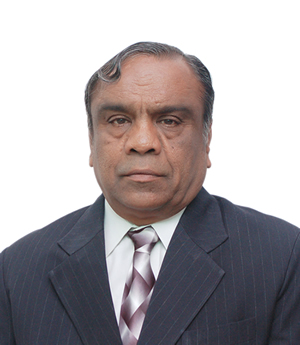
![]() Dr G Balasubramnian | G. Balasubramanian was born at Tirunelveli, Tamilnadu on 17th February, 1946. He had his initial schooling at Madurai and graduated in Chemistry from Presidency college, Chennai. He obtained a Post-graduation in Analytical & Inorganic Chemistry from Madras University, Post-graduation in Hindi from Sri Venkateswara University and Post-graduation in Education from Annamalai University. |
He obtained a Diploma in German from University of Madras, a Certificate in Project Technology from Trent College of Education, Nottingham U.K and a Certificate in Computer Education from Leeds University, U.K
Starting his career as a Post-graduate Teacher in Chemistry in a public school, he took over as a Principal of Hindu Senior secondary School, Triplicane, Chennai. He joined the Central Board of Secondary Education as a Joint Secretary in 1984 and has worked in several capacities in Academics, Examination, Confidential and Administration branches of CBSE.
Elevated to the Post of Director (Academic) in 1997, he held the additional charge of the Chief Vigilance Officer of the Board. He retired from the services of the Board on 28th Feb, 2006.
He was associated with several Boards of education and leading organizations like Quality Council of India, NABET, National Institute of Open Schooling, Global Indian international Schools in Singapore, Malaysia and Japan. He is the current chairperson of the international council for school leadership. He was the Chief Editor of the magazines – ‘The Progressive School’ and ‘The Progressive Teacher’ published by S. Chand group of companies. He is currently Advisor to the following companies – “Knowledge Tribe” and “Teacher Tribe” at Bengaluru.
His interests include philosophy, psychology, poetry and Literature. He has widely traveled to many countries and participated in several national and international conferences and presented papers on a wide variety of academic interests. Post retirement he has conducted over 7000 training programs for teachers and Principals covering over 85000 teachers.
His publications are:
- Mindscaping Education
- Case Studies in classrooms
- Quality Spectrum – A school’s Bandwidth
- Safety in schools – Issues and concerns
- Academic Leadership – ebook
- Schooling the kid – learning form K to 12
- Creativity in classrooms – eBook
- Unlearning Learning – eBook
- A Happy Journey (Poetry)
- Apologies to an Existence (Poetry)
His latest book “Walk with Viswa”- a journey to Leadership along the Farmlands is due for publication.
Awards won:
- Vocational Excellence Award from Rotary Club, Chennai
- Seva Rathna in Education from The Centenarian Trust, Chennai
- Lifetime Achievement Award from VIMHANS (Vidyasagar Institute of Mental Health and Neuro Sciences) Delhi
He has been a member of the High-Power committee constituted by the Government of Tamilnadu for School Education and has also been the chairperson of the Curriculum Reforms Committee and the Examination Reforms Committee for School Education in the Government of Tamilnadu.
If you would like to get connected to Dr G Balasubramanian write to editor@acadnews.com.