



Self -Learning For Future Readiness

The concept of self-learning has been an integral aspect of the history of the growth profile of the Homosapiens. From time immemorial the curiosity to know, either to face a challenge or to win over a situation has driven the human mind to know and learn. The history of self-learning can be traced to the stone age and thereafter. 

This limitless curiosity to know without any previous knowledge, understanding or experience has forced humans to evolve slowly and systematically through the process of self-learning. 

As such this has helped in formulating their views on co-habitation, formulating the rules for a social structure and to build communities, structures, and cultures. In all these developments one could see there is an inbuilt diversity in thought architectures, understandings, narrations, representations, and communications, thanks to the geographical, historical, and socio-cultural impacts. The entire spectrum of learning in such developments has been informal and there is poor evidence of a top-down approach; and even if there was a strategy of passing the knowledge to the future, it was non-conditional and facilitative of experimentation.

Over the centuries, several approaches have been laid down to explain how learning takes place. All these philosophies have been structured according to the concurrent times, concurrent understanding of the nature and the community in which they existed, further topped by the quality and quantum of knowledge flow of those times. None of these philosophies or approaches were able to comprehend learning in a holistic form. Research by Lord Kandel, who was awarded Nobel Prize in 2000 for his work on neural learning provided a more scientific and sophisticated approach to give a very pragmatic view about learning. His finding that

 ‘learning is essentially a neural network’ tried to put in place the scientific approach that demystified several dogmas that were descriptive of learning. 

“Learning is the only thing the mind never exhausts, never fears, and never regrets,” said Leonardo da Vinci.

Research on the pre-natal cognitive development of the foetus in several universities supported the idea that some basic learning network is formed even in the womb and babies do carry forward with them some of the experiences in their journey in the mother’s womb. Experiments have shown the repetition of the learning behaviour in the womb after they are born. Thus, the idea of learning without a formal articulated input or to be precise ‘self-learning’ in one form or the other, has been in evidence for long. 

“Research shows that you begin learning in the womb and go right on learning until the moment you pass on. Your brain has a capacity for learning that is virtually limitless, which makes every human a potential genius” says Michael J. Gelb.

The formal institutionalized model of learning, an off shoot of the industrial society conceptualized to mass production structured learning to a framework of education that would suit the needs and demands of a society for a larger purpose rather than curating to the individual’s intellectual, emotional and growth needs. Michelangelo said, “I saw an angel in the marble, and carved till I set him free.” 

The formal institutionalized model robbed the learner’s ability to see, identify and carve out the angels in the marble.

Being an active member of a social set up, while we do take up the formal modes of learning as a process of social commitment and evolution, the role of ‘self-learning’ as a powerful input to growth can never be underplayed. “Self-education is, I firmly believe, the only kind of education there is” says Isaac Asimov, known for his books on science-fiction.

Why self-learning is becoming increasingly important?

  1. The learning universe is fast expanding with convergence and divergence of knowledge, thereby creating diverse learning needs and opportunities, not caricatured in formal curricula.
  2. The speed of irrelevance of knowledge is overwhelming with the ushering in of new knowledge structures demanding immediate attention, both for survival and growth.
  3. The learning tools are becoming limitless, thereby supporting learning not only through formal structures, but enabling learning anytime and anywhere.
  4. The access to knowledge and skills is becoming easy, fast, and cost-effective (with increasing focus on free distribution of knowledge) simultaneously forcing competitive access to learning, performance, and productivity.
  5. The ignorance of new knowledge and new skills is no more an acceptable proposition with facility for empowerment available at the click of buttons in a web-enabled world.

There are several other reasons that demand a community that will focus on ‘self-learning.’

 The National Policy of Education strongly emphasizes on ‘self-learning’ and ‘self-directed learning.’ It demands the learners of the future to be ready with skills will help them to ‘learn how to learn.’  

Says Alvin Toffler, the author of ‘The Future Shock’ in his book “To survive, to avert what we have termed future shock, the individual must become infinitely more adaptable and capable than ever before. He must search out new ways to anchor himself, for all the old roots—religion, nation, community, family, or profession— are now shaking under the hurricane impact of the accelerative thrust. Before he can do so, however, he must understand in greater detail how the effects of acceleration penetrate his personal life, creep into his behaviour, and alter the quality of existence. He must, in other words, understand transience.” To face this impact, the learner must evolve as a self-learner. Self-learning also ensure provides the much-needed democratic approach to learning, free from fear, free from stress, free from pre-conditioning, free from evaluation and free from forced opinions. It encourages reflection, analysis, critical thinking, research, and further learning which are often denied opportunities in formal learning systems. Self-learning calls for focus, attention, choice, passion, commitment, engagement, and responsibility. Thus, it shifts the paradigm for an external source to the personal choice of the learner. Beyond the accountability vested with the learner, it demands a considered choice for further learning, its speed, and its direction. Thus, it manifests into ‘self-directed learning.’ In this process, the learner becomes one’s own catalyst, mentor, and coach. The sense of achievement by a self-learner is limitless and cannot be driven by an external attraction. It liberates the learner from ‘learned helplessness,’ facilitating the possibilities of re-engineering and re-construction of knowledge at one’s own convenience.

Take hold of the future or the future will take hold of you – be future wise, says Patrick Dixon in his book “The Future of Almost Everything.”  The features of knowledge acquisition in the future would be –

  • Technology enabled.
  • With freedom to learn
  • With speedy access
  • Facilitating social construction of knowledge
  • Time and space free
  • Customer friendly
  • Learning specific
  • Customized to needs.

With all these features at doors, the restrictions caused by the institutionalized learning would be negated both by the learner and the community.


“Formal education will make you a living; self-education will make you a fortune” says Jim Rohn. American author. Possibly, the future will prove him right.


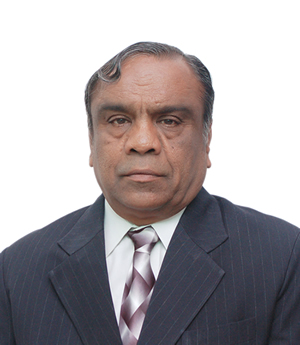
Dr G Balasubramnian
G. Balasubramanian was born at Tirunelveli, Tamilnadu on 17th February, 1946. He had his initial schooling at Madurai and graduated in Chemistry from Presidency college, Chennai. He obtained a  Post-graduation in Analytical & Inorganic Chemistry from Madras University, Post-graduation in Hindi from Sri Venkateswara University and Post-graduation in Education from Annamalai University.

He obtained a Diploma in German from University of Madras, a Certificate in Project Technology from Trent College of Education, Nottingham U.K and a Certificate in Computer Education from Leeds University, U.K

Starting his career as a Post-graduate Teacher in Chemistry in a public school, he took over as a Principal of Hindu Senior secondary School, Triplicane, Chennai. He joined the Central Board of Secondary Education as a Joint Secretary in 1984 and has worked in several capacities in Academics, Examination, Confidential and Administration branches of CBSE.

Elevated to the Post of Director (Academic) in 1997, he held the additional charge of the Chief Vigilance Officer of the Board. He retired from the services of the Board on 28th Feb, 2006.

He was associated with several Boards of education and leading organizations like Quality Council of India, NABET, National Institute of Open Schooling, Global Indian international Schools in Singapore, Malaysia and Japan. He is the current chairperson of the international council for school leadership. He was the Chief Editor of the magazines – ‘The Progressive School’ and ‘The Progressive Teacher’ published by S. Chand group of companies. He is currently Advisor to the following companies – “Knowledge Tribe” and “Teacher Tribe” at Bengaluru.

His interests include philosophy, psychology, poetry and Literature. He has widely traveled to many countries and participated in several national and international conferences and presented papers on a wide variety of academic interests. Post retirement he has conducted over 7000 training programs for teachers and Principals covering over 85000 teachers.

His publications are:

  1. Mindscaping Education
  2. Case Studies in classrooms
  3. Quality Spectrum – A school’s Bandwidth
  4. Safety in schools – Issues and concerns
  5. Academic Leadership – ebook
  6. Schooling the kid – learning form K to 12
  7. Creativity in classrooms – eBook
  8. Unlearning Learning – eBook
  9. A Happy Journey (Poetry)
  10. Apologies to an Existence (Poetry)

His latest book “Walk with Viswa”- a journey to Leadership along the Farmlands is due for publication.

Awards won:

  1. Vocational Excellence Award from Rotary Club, Chennai
  2. Seva Rathna in Education from The Centenarian Trust, Chennai
  3. Lifetime Achievement Award from VIMHANS (Vidyasagar Institute of Mental Health and Neuro Sciences) Delhi

He has been a member of the High-Power committee constituted by the Government of Tamilnadu for School Education and has also been the chairperson of the Curriculum Reforms Committee and the Examination Reforms Committee for School Education in the Government of Tamilnadu.

If you would like to get connected to Dr G Balasubramanian write to editor@acadnews.com.