





Freedom To Learn- Are We Ready?

Efforts to explain how learning happens has been an engaging activity for the philosophers, psychologists, pedagogues and cognitive researchers. Innumerable theories have been put across to explain the process of learning from their own perspectives from time to time. Each of these theories have celebrated one perception of the process of learning or one pathway of its dynamics. In doing so, there have been efforts to superimpose teaching over learning. They also had a poor audience sitting in a theatre to spend their time. Myths that lead to establish teaching as the essential cause of learning have had their short life. 

The first principle of Aurobindo’s theory that states “The first true principle of teaching is that nothing can be taught” provided an insight that raised the eyebrows of the educational philosophers. 

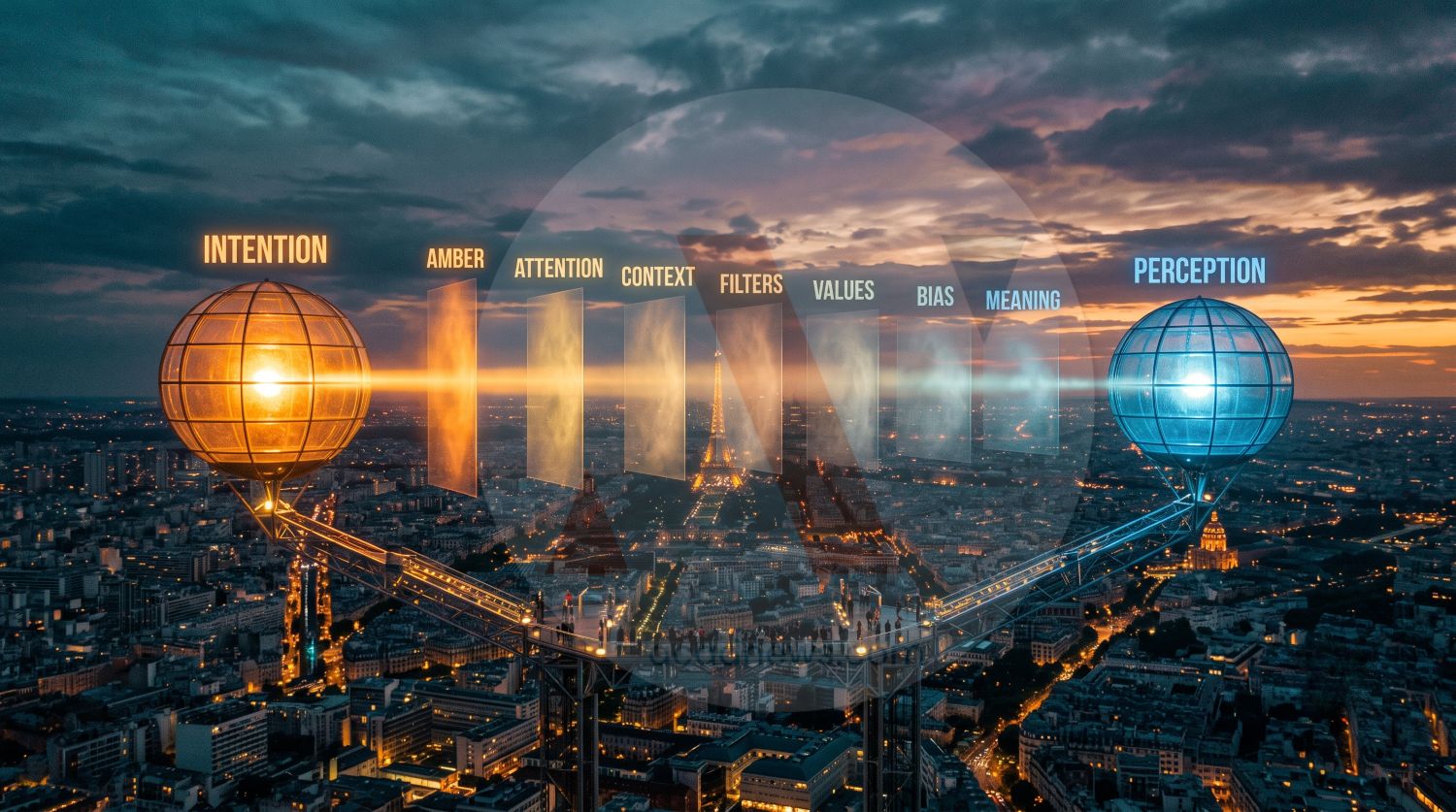
The freedom of choice to the learner that exists in the space between stimuli and response is indeed the privilege, and the freedom that vested with the learner to celebrate one’s pursuit of life. “Between stimulus and response, there is a space. In that space lies our freedom and our power to choose our response. In our response lies our growth and our happiness”, said Victor Franki, the American neurologist and philosopher. This freedom of choice is exercised by every learning organism in its existential cycle to varying degrees. This power to choose the freedom of response appears to be born out of learning.

The last few decades of research by neurocognitive psychologists have established ‘learning’ as a purposeful activity from the fetal stage. “Research shows that you begin learning in the womb and go right on learning until the moment you pass on. Your brain has a capacity for learning that is virtually limitless, which makes every human a potential genius”, says Michael J. Gelb, the American Management coach. There have also been serious debates about the process of learning, mistakenly linking it to acquisition of knowledge, the ability to remember, the ability to repeat or respond, the levels and the power of understanding. Many of these theories have tried to put impactful arguments to convince and create a ‘make-believe’ model for both the learners and learning-mentors. These exercises did certainly try to populate ideas and beliefs which were celebrated in contexts to a limiting success. 

Says Dr.V.R. Ramachandran, the neuro-cognitive scientist, in his book ‘The Tell-Tale Brain’- “What do we mean by “knowledge” or “understanding”? And how do billions of neurons achieve them? These are complete mysteries. 

Admittedly, cognitive neuroscientists are still very vague about the exact meaning of words like “understand,” “think,” and indeed the word “meaning” itself.” This puts several of the arguments to test as well as rest, taking us back to re-examine learning and its dynamics based on the functions of the brain.

In recent times, there appears to be a better agreement on the argument that ‘learning cannot be caused; it can only be facilitated”. Research by Eric Kandel, that won him a Nobel prize, does establish learning as a neural activity. 

The ability of neural linkages and their stability have been significantly and effectively linked to the process and dynamics of learning. 

On the cognitive side, the following words of Howard Gardner have forced serious thinking among pedagogues- “Since we all have different cognitive profiles, educators should take those individual differences very seriously”. The role of intelligence and the diverse portals of intelligence narrated by Howard Gardner did win some appreciation to relook both the environment and the process of learning. With all criticism to his theories, they do provide a perspective a case to facilitate and empower learning more on a customized approach.

The discoveries and innovations in the fields of science and technology have repeatedly been questioning the way and the styles of facilitating learning. One significant observation relates to the belief about the linearity of learning. From our current understanding about the functions of human brain, it is now largely accepted that learning is not linear, but basically a synthetic response that is an output of the brain- encompassing the information, the relevance, the meaning, the emotions and the biological support. “Learning is synthesizing seemingly divergent ideas and data”, says Terry Heick, the educator. The power of synesthesia of the human brain has helped for a deeper understanding of the creative potentials of the human brain and what freedom of learning could do to enhance this potential.

The discoveries, innovations and researchers have impacted in redefining and restructuring the following domains of learning:

  1. The Learning Universe.
  2. The Learning Content.
  3. The Learning Styles.
  4. The Learning Dynamics, and
  5. The Learning Needs.

The undertone of all these finally makes the learner as the nucleus of the entire activity of learning. But the moot question that arises is ‘whether the learner enjoys his freedom to learn’ or ‘is a victim of a pre-ordained social need’ that directs him to learn what he doesn’t want or in which he has no aptitude to learn. This also raises the question whether the formal systems of learning are compulsive complications that imprison ‘the freedom of learning’ denying the learner the opportunities to explore the joy of learning in an expanding universe for learning. No wonder, the statement of Sir Winston Churchill, “I am always ready to learn although I do not always like being taught”. The innumerable Churchill alike learners in the classroom may be waiting for someone to free the clips on their wings facilitating them to fly to newer horizons. That puts in context, the words of Jiddu Krishnamurti:

 “There is no end to education. It is not that you read a book, pass an examination, and finish with education. The whole of life, from the moment you are born to the moment you die, is a process of learning.”

A system of learning that dictates what one should learn, how one should learn and where one should learn possibly may be a social and administrative convenience to create a population of people who would have enhanced loyalty to a system but denies and deprives the core freedom to learn that one would expect to which they have been ushered. “Spoon feeding in the long run teaches us nothing but the shape of the spoon”, said E. M. Forster. 

But the industrial model of mass production of learners has only tried to perfect the quality of the spoons, rather than the possibilities that is latent and inherent to the metal.

The classrooms which design and prepare a generation of learners enriched with ‘learned helplessness’ tamed to follow than to think, is essentially a threat to a growing economy and prosperity of any nation, both in terms of natural wealth as well as the acquired wealth. 

Said Confucius “He who learns but does not think, is lost! He who thinks but does not learn is in great danger.” The current learning models has profuse evidence to justify this conflict.

There is an urgent need to reconsider the idea of ‘freedom to learn’ and restoring the privilege for the pursuit of learning to the learner. The very acceptance of the theories of ‘constructivism’ and ‘connectivism’ acknowledge this privilege of the learner to this right. This essentially calls for repurposing education with educational administrators, educators and classroom mentors working towards changing their mindscape. There is an urgent need to understand that education is not essentially that which either leads to schooling or to a process of certification. It is more than that. 

“True teachers are those who use themselves as bridges over which they invite their students to cross; then, having facilitated their crossing, joyfully collapse, encouraging them to create their own.” says Nikos Kazantzakis, the Greek writer, journalist and philosopher.

Talent hits a target no one else can hit. Genius hits a target no one else can see, says Michio Kaku in his book “The Future of Mind.” 

The objective of any education system is to facilitate the learner to unravel the talent in the self and seek to identify the genius within. There lies the objective of the ‘Freedom to learn’.  Are we ready?

Will the freedom to learn help to change the course of history through a deeper understanding? It may be a dream to desire. But the words of Sr. V.S. Ramachandran, make a case in the point: “I learned an important lesson: Never take the obvious for granted. Once upon a time, it was so obvious that a four-pound rock would plummet earthward twice as fast as a two-pound rock that no one ever bothered to test it. That is, until Galileo Galilei came along and took ten minutes to perform an elegantly simple experiment that yielded a counterintuitive result and changed the course of history.”


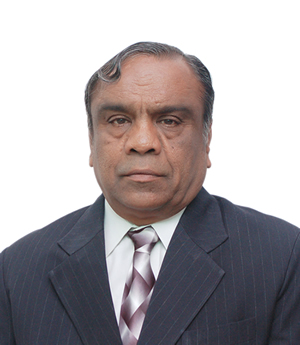
Dr G Balasubramnian
G. Balasubramanian was born at Tirunelveli, Tamilnadu on 17th February, 1946. He had his initial schooling at Madurai and graduated in Chemistry from Presidency college, Chennai. He obtained a  Post-graduation in Analytical & Inorganic Chemistry from Madras University, Post-graduation in Hindi from Sri Venkateswara University and Post-graduation in Education from Annamalai University.

He obtained a Diploma in German from University of Madras, a Certificate in Project Technology from Trent College of Education, Nottingham U.K and a Certificate in Computer Education from Leeds University, U.K

Starting his career as a Post-graduate Teacher in Chemistry in a public school, he took over as a Principal of Hindu Senior secondary School, Triplicane, Chennai. He joined the Central Board of Secondary Education as a Joint Secretary in 1984 and has worked in several capacities in Academics, Examination, Confidential and Administration branches of CBSE.

Elevated to the Post of Director (Academic) in 1997, he held the additional charge of the Chief Vigilance Officer of the Board. He retired from the services of the Board on 28th Feb, 2006.

He was associated with several Boards of education and leading organizations like Quality Council of India, NABET, National Institute of Open Schooling, Global Indian international Schools in Singapore, Malaysia and Japan. He is the current chairperson of the international council for school leadership. He was the Chief Editor of the magazines – ‘The Progressive School’ and ‘The Progressive Teacher’ published by S. Chand group of companies. He is currently Advisor to the following companies – “Knowledge Tribe” and “Teacher Tribe” at Bengaluru.

His interests include philosophy, psychology, poetry and Literature. He has widely traveled to many countries and participated in several national and international conferences and presented papers on a wide variety of academic interests. Post retirement he has conducted over 7000 training programs for teachers and Principals covering over 85000 teachers.

His publications are:

  1. Mindscaping Education
  2. Case Studies in classrooms
  3. Quality Spectrum – A school’s Bandwidth
  4. Safety in schools – Issues and concerns
  5. Academic Leadership – ebook
  6. Schooling the kid – learning form K to 12
  7. Creativity in classrooms – eBook
  8. Unlearning Learning – eBook
  9. A Happy Journey (Poetry)
  10. Apologies to an Existence (Poetry)

His latest book “Walk with Viswa”- a journey to Leadership along the Farmlands is due for publication.

Awards won:

  1. Vocational Excellence Award from Rotary Club, Chennai
  2. Seva Rathna in Education from The Centenarian Trust, Chennai
  3. Lifetime Achievement Award from VIMHANS (Vidyasagar Institute of Mental Health and Neuro Sciences) Delhi

He has been a member of the High-Power committee constituted by the Government of Tamilnadu for School Education and has also been the chairperson of the Curriculum Reforms Committee and the Examination Reforms Committee for School Education in the Government of Tamilnadu.

If you would like to get connected to Dr G Balasubramanian write to editor@acadnews.com.