






The Future of Learning – Part 2

What are the challenges to the learners of the future? (continued from Part 1)

1. Synthesis of New Knowledge

There will be focus on construction of new knowledge. Extended learning, collaborative learning and interactive learning will trigger newer interpretations of the existing knowledge domains in the social and geo-political contexts. Re-evaluation of knowledge constructs and concepts based on the new findings would urge repositioning of the earlier knowledge constructs and concepts, much to the dismay of the learners attuned to classical learning cultures. Classrooms would be expected to be more open where the teacher would have no option, but to be a co-learner. Focus will shift to the ‘learnability’ of the learner from the formal structured learning feeds and formats that were conceived as essential learning.  

There will be a greater focus on the power of knowledge than the content of knowledge. Emergence of newer knowledge systems, apps that would provide packed skills embedded with knowledge and the speed of delivery of knowledge applications would be better sought after. There are likely to be repeated questions on – what do we do with this knowledge and why do we have it? – rather than mute acceptance because it is delivered from ivory towers or priestly pedestals. The shelf life of knowledge will depend on its ‘power’ and ‘relevance’.  

The styles of learning would undergo a sea-change as more ‘encapsulated forms of knowledge’ and ‘ready to use’ packages would be available. We have already started realizing its impact on the ‘Reading styles’ and ‘Writing Styles’. The emergence e-books and audiobooks have transformed the reading habits among learners. The retention of knowledge over a given period is considered more as an unwarranted necessity as the same is available at the touch-down of a button. Short reading, fast reading and time-bound reading skills are being practiced. Similarly, the impact of technology has transformed the classical language structures with innovative words, newer grammatical styles and newer modes of addressing people and issues. Such changes would continue to evolve, and the learning spaces need to be conscious of these dynamics, whether they like it or not.

With augmented and virtual realities impacting learning, the experiences with knowledge and skills would be more fun filled, edutaining, with a greater thrust on accuracy, accountability and authenticity. Performance evaluation of knowledge and skills would replace the time-tested classical models of assessment. Higher order thinking, critical thinking, creative thinking and analytical thinking tagged to several types of intelligences might be evaluated by articulating the content to facilitate such options. The optics of assessment would be designed through joint structures from education and industry, to ensure their immediate applicability.

Better understanding of the concept of neuroplasticity will open new windows for alternate models of learning. Intensive research in Brain sciences will pave way for redefined taxonomies facilitating personalized and customized learning models and products. The current taxonomies for learning structured on linear learning models will have to give way for learning strategies that represent integrated, inter-disciplinary, multi-disciplinary and multi-polar learning. The role of edtech industries to exploit the opportunities available for enabling and empowering learning consequent to research in brain sciences will open newer investigations to product designs and learning-specific interventions. The domain of cognitive research will seek newer pastures for investigation and learning, which are more exciting, adventurous and futuristic.

 “Computers will overtake the humans with AI within the next 100 years. When that happens, we need to make sure that computers have goals aligned with ours”, said Stephen Hawking. The logistics of functioning of the Artificial Intelligence is not too complex as compared to the logistics of the functions of the human intelligence. However, the man-machine interface has created a magic by re-articulating the truth to fancy the human mind with a sense of awe. The derivatives of Artificial intelligence in assisting manufacture, services and social relationships appear to be triggering a change in the working culture. Its intense effort in impacting human thought designs to replace them with their own presence through fabricated technologies will be ushering a new dimension seeking functional reforms in our approach to work. Naturally, education being an instrument for designing thought architectures, will get influenced and evolve into a newer generation. Enough evidence is already available on how content and its auxiliary systems in learning are responding to Artificial intelligence. Its multiplier effect in the next few years would completely redesign the content architectures and its delivery systems – and as a resultant, the way people handle knowledge or learn.

Thus, the future of learning appears to be a scenario which would be adventure driven, more focused with wider avenues for learning, yet fun filled. The educational systems, wherever they are, would have no scope for re-tracking their footsteps, but will be under an obligation to run a race with or without a choice.

Meeting the challenge

Educational institutions would become “Learning Organizations” – engaged in a continuous process of learning, both through external knowledge inputs and of course, with their own periodic learning experiments. The emergence of “Learning Organizations” and “Learning Communities” will impact the learning styles, targets and purposes. Institutions of learning would seek to brand themselves based on their institutional learning cultures. The National Education Policy, 2020 has taken cognizance of these questions in shaping its strategies for designing the future curricula. However, the indicators of the future show that the process of learning is moving far from the shackles of any prescriptive curricula towards more open and ‘free learning systems’ attuned to the emergent needs and choices of the learner.

The words of Peter Senge in the introduction of his book “The Fifth Discipline” makes an interesting observation:

“There is an adage ‘The eye cannot see the eye’. Learning, that changes mental models is immensely challenging. It is disorienting. It can be frightening as we confront beliefs and assumptions. It cannot be done alone. It can occur only with a community of learners.”

References

  1. The Future Shock by Alvin Toffler
  2. The Fifth Discipline by Peter Senge
  3. The Future of Mind by Michio Kaku
  4. The Future of Almost Everything by Patrick Dickson

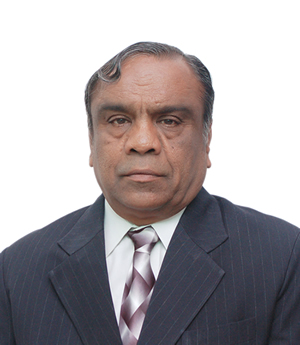
Dr G Balasubramnian
G. Balasubramanian was born at Tirunelveli, Tamilnadu on 17th February, 1946. He had his initial schooling at Madurai and graduated in Chemistry from Presidency college, Chennai. He obtained a  Post-graduation in Analytical & Inorganic Chemistry from Madras University, Post-graduation in Hindi from Sri Venkateswara University and Post-graduation in Education from Annamalai University.

He obtained a Diploma in German from University of Madras, a Certificate in Project Technology from Trent College of Education, Nottingham U.K and a Certificate in Computer Education from Leeds University, U.K

Starting his career as a Post-graduate Teacher in Chemistry in a public school, he took over as a Principal of Hindu Senior secondary School, Triplicane, Chennai. He joined the Central Board of Secondary Education as a Joint Secretary in 1984 and has worked in several capacities in Academics, Examination, Confidential and Administration branches of CBSE.

Elevated to the Post of Director (Academic) in 1997, he held the additional charge of the Chief Vigilance Officer of the Board. He retired from the services of the Board on 28th Feb, 2006.

He was associated with several Boards of education and leading organizations like Quality Council of India, NABET, National Institute of Open Schooling, Global Indian international Schools in Singapore, Malaysia and Japan. He is the current chairperson of the international council for school leadership. He was the Chief Editor of the magazines – ‘The Progressive School’ and ‘The Progressive Teacher’ published by S. Chand group of companies. He is currently Advisor to the following companies – “Knowledge Tribe” and “Teacher Tribe” at Bengaluru.

His interests include philosophy, psychology, poetry and Literature. He has widely traveled to many countries and participated in several national and international conferences and presented papers on a wide variety of academic interests. Post retirement he has conducted over 7000 training programs for teachers and Principals covering over 85000 teachers.

His publications are:

  1. Mindscaping Education
  2. Case Studies in classrooms
  3. Quality Spectrum – A school’s Bandwidth
  4. Safety in schools – Issues and concerns
  5. Academic Leadership – ebook
  6. Schooling the kid – learning form K to 12
  7. Creativity in classrooms – eBook
  8. Unlearning Learning – eBook
  9. A Happy Journey (Poetry)
  10. Apologies to an Existence (Poetry)

His latest book “Walk with Viswa”- a journey to Leadership along the Farmlands is due for publication.

Awards won:

  1. Vocational Excellence Award from Rotary Club, Chennai
  2. Seva Rathna in Education from The Centenarian Trust, Chennai
  3. Lifetime Achievement Award from VIMHANS (Vidyasagar Institute of Mental Health and Neuro Sciences) Delhi

He has been a member of the High-Power committee constituted by the Government of Tamilnadu for School Education and has also been the chairperson of the Curriculum Reforms Committee and the Examination Reforms Committee for School Education in the Government of Tamilnadu.

If you would like to get connected to Dr G Balasubramanian write to editor@acadnews.com.