Being a votary of needonomics (economics of needs), I consider it my moral duty to say something concrete on the various concepts under its domain to be understood by the stakeholders including consumers, producers, distributors, traders including exporters, policy makers and politicians for enhancing its influence in decision making. Needo-consumption as mindful consumption (righteous consumption) is necessary and sufficient by the consumers to play their role as a stakeholder in any economy of the world including India. Why the global citizens as consumers should draw inspiration from needonomics?
It may be surprising to many that I developed the Needonomics School of thought through the wantlessness definition of economics by Prof J. K. Mehta of the University of Allahabad towards minimizing consumption may not be exactly needo-consumption . We must develop needo-understanding of the needo-consumption in right perspectives.
I believe that a consumer as a hero of economics is always interested in heroin (goods and services) and all those who pollute the relationship are called villains in the real drama in the market. Everyone is a consumer and is expected to behave in the market with rational behaviour which falls in the domain of consumer psychology with its relevance for needo-consumption.
It is relevant to know consumerism and consumer activism as two sides of the same coin in present times of materialism. Consumerism refers to the culture that encourages the acquisition of goods and services in ever-increasing amounts. It is fueled by advertising, media, and societal pressures, often leading to overconsumption and materialism. In consumerist societies, the emphasis is placed on buying and owning, often equating consumption with happiness and success. On the other hand, consumer activism is a form of activism that aims to influence corporations or governments to change their practices or policies through collective action by consumers based on Consumer Protection Act 2019. A consumer can file a complaint with Consumer Dispute Redressal Commissions (CDRCs) in relation to: (i) unfair or restrictive trade practices; (ii) defective goods or services; (iii) overcharging or deceptive charging; and (iv) the offering of goods or services for sale which may be hazardous to life and safety. CDRCs at the district level known as (DCDRC) and Consumer Dispute Redressal Commissions at the State level known as (SCDRC) and Consumer Dispute Redressal Commissions at the National Level known as (NCDRC). Consumer activism involves individuals or groups using their purchasing power, boycotts, protests, or other means to advocate for social or environmental change. Consumer activists may target issues such as fair labor practices, environmental sustainability, animal welfare, or corporate transparency.
While consumerism can sometimes clash with consumer activism, as the former encourages consumption while the latter often seeks to challenge it, they are not necessarily mutually exclusive. Consumer activism can harness the power of consumerism by redirecting purchasing decisions towards more ethical, sustainable, or socially responsible options. It can also serve as a counterbalance to the negative aspects of consumerism by promoting mindful consumption, conscious consumer choices, and advocating for systemic change in the way goods and services are produced and consumed. Ultimately, consumer activism highlights the potential of consumers to not only shape markets but also to drive broader social and environmental change, making it a powerful force in contemporary society.
Consumer psychology is the study of why and how people buy things in the market (online and offline). Every consumer should consume the goods and services as per their needs. Unfortunately, leading economists of the world promote greed as the basis of economic growth, turning it into “Greedonomics”. Economics should be based on need, not on greed. It should be a “Needonomics”, and not a “Greedonomics”.
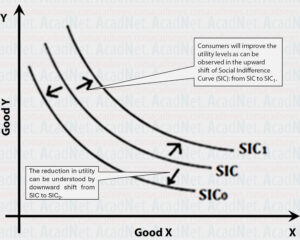
To boost the immunity of the people as consumers, we have to adopt an eclectic approach towards the consumption of food by replacing the attitude of eating to live in comparison to the Americans who live to eat. The concept of needo-consumption is guided by the Law of Diminishing Marginal Utility (DMU).
It is relevant to quote here the Household Consumption Expenditure Survey (HCES) 2022-23 released on 24th February 2024 telling us that household spending increased 2.6 times in rural areas (RA) and 2.5 times in urban areas (UA) of India since the last survey in 2011-12 with far-reaching implications. The survey reveals that the monthly per capita expenditure is Rs 3773 in RA compared to Rs 6459 in UA. The gap between urban and rural consumption has narrowed to 1.71 times in 2022-23 from 1.8 times in 2011-12. The immediate implication is that we have to assign fresh weights of food (46% in RA and -39 % in UA) and non-food items for measuring inflation. Earlier 53 %in RA and 42.6 % in UA in 2011-12. Actually, the consumption is higher if adjusted with free goods via social welfare programmes. Imputed values can be used for adjusting the consumption (Rural households spend 2.3 % higher Rs 3860 and UA Rs 6521 1 per cent more including free goods. The safest implication is that the availability of free goods in RA is more than in UA. The consumption data conceals more than it reveals the consumption patterns of the various types of consumers as male, female, young and old.