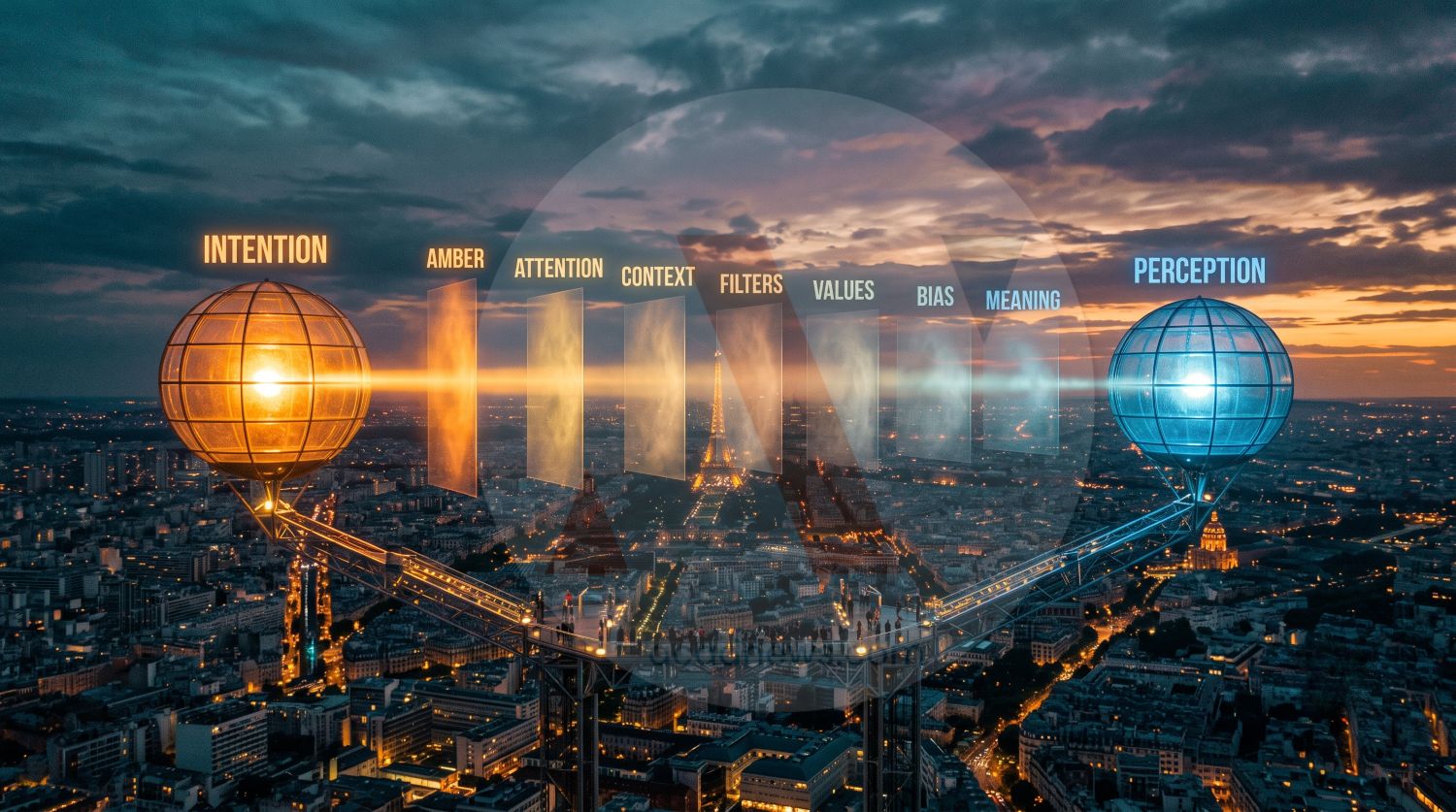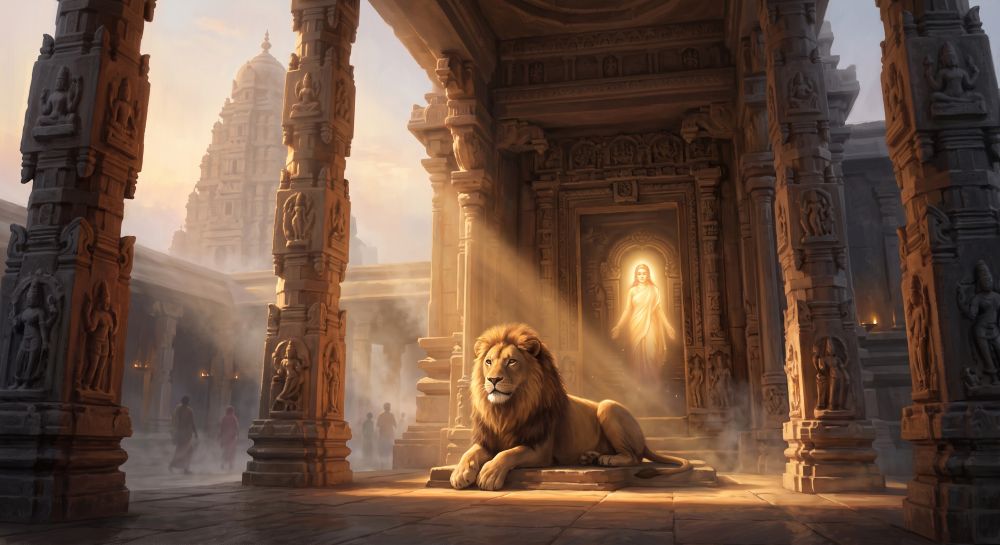



Art by definition is undefined, and one of the greatest ways to communicate without usage of words as a medium; per say gestural communication or non -verbal communication. In the world, though fine art many abstract, invisible or complex feelings and emotions can be expressed easily. The artists symbolize the intended messages and codify them and allow the spectator or viewer to decode and interpret the hidden messages or meanings. The vehicle they use to convey reaches simultaneously to the mind and the heart of the beholders and the language they use is the language of imagery, symbolism, gesture or body movements.
In Indian dance, the human body has been conceived of as a mass, which can be equally divided among the central median. Further movement is determined by the nature of deflections from this median….
What is distinctive in Bharatanatyam is the fact that it conceives of movement in space mostly along either straight lines or triangles.
“The head forms the first unit and lateral movements of the head are common. The torso is seen as another unit and is hardly ever broken up into the upper or the lower torso. The lower limbs are seen as either straight lines or two sides of an imaginary triangle in space. The upper limbs either follow the lower limbs or weave circular patterns along space which is governed by the lower limbs. It is the latter aspect, along with the use of the torso as a single unit that gives Bharatanatyam its particularity.[1]”
Dance is “a harmonious expression that reveals the inner nature of things, regardless of the subject, where the theme, expression, contact and form are in balance”
Dance is representatives of all arts. Many artists and scholars believe that among various forms of fine arts, dance art was the very first fine art. As we all know, the impulse of dance is inborn, and is capable of solving many purposes. It serves communication as a common language of signs and movements through which one is not only able to express one’s sentiments, emotions or feelings but can also release, elevate or understand inner conflicts, tensions, fears, aspirations, hopes or ideals. According to Krishna Sahai[2] dance is, “… a harmonious expression that reveals the inner nature of things, regardless of the subject, where the theme, expression, contact and form are in balance.” Being the very first visual commentary on concrete manifestations of thought and composite form of all arts, dance can be regarded as a representative of all arts to understand the culture of a society as it has been used as an important medium to preserve, perpetuate and develop the experiences, knowledge, culture or customs of society from one generation to another.
History of Narratives and Gestures
Gestures and narrating with gestures are akin to man so long ago as the creation of life on earth. The first language that humans developed was gestures. There was nothing primitive about this language that flowed from people’s hands and face. There is nothing that we say now that could not be said in the endless array of movements possible with the fine bones of the fingers and wrists [3]. During the Age of Silence, people communicated more, not less. Basic survival demanded that the hands were almost never still, and so it was only during sleep (and sometimes not even then) that people were not saying something or the other to each other.
Gestures like clapping, pointing, giving the thumbs-up, or nodding in agreement, enlarging the eye pupil in fright were basic human reactions to emotions that were experienced on a day today basis. Narrating with gestures and using the art of mime is how naturally man came to sustain. Every movement of the hand, extended limbs, eyes, face, etc. conveyed a meaning to the observer. Therefore, narration with gestures is as old as human creation itself.
Pictorial narration came into existence in the Paleolithic age. In the sense that even when people did not know about sounds emulated in the form of language, they felt the need to express themselves to each other in some way. “Pictorial Narration” is a trope that at once lends the diverse pieces in this volume into a common platform for a meaningful dialogue. Crucial to the understanding of the visual narrative is the distinctive cultural performance associated with each of the showings – “… facial and bodily gestures and postures, singing with or without the accompaniment of musical instruments, dance, theatrical rendering of scenes, and even audience participation” – thereby amplifying the experience of the narrative for the viewer/participant [4].
Origin of Narration from Bharata’s Natyashastra
Dance being the medium to communicate to the masses is an all known fact. Dance and Drama were two aspects that were both entertaining and at the same time educating to the masses from ancient times. The need for a narrative form of fine art was felt very early in the creation of man. A few of them are scripted even in our mythological texts. The following few examples from a mythological context draws inference to the fact that Bharathanatyam was pictured to be a form whose narrative aspect was to inform and therefore influence the common man and the gods, alike. There are various versions of the mythological origins of Bharatanatyam. This chronological development, when studied, displays a lot of instances where the requirement of this virtually expressive art as reaching out to people was important.
Gods and Goddesses pleaded with Lord Brahma for another Veda to be created that would be simple for the common man to understand, which was particularly important in Kali Yuga. Granting their wish, Lord Brahma created the Panchamaveda, the Natyaveda, an essence of the main four Vedas. Brahma took padya (words) from the Rigveda, abhinaya (communicative elements of body movements, mime) from the Yajurveda, geet (music and chant) from Samaveda, and rasa (aesthetic element) from Atharvaveda to form the fifth Veda, Natyaveda. After creating this Veda, Lord Brahma bestowed it to the sage Bharata, and asked him to propagate it on earth. Sage Bharata wrote the Natyashastra. It became the most authoritative text on the artistic technique of classical Indian dances. It is also possible that the term Bharatanatyam derives its name from sage Bharata.
Bharathanatyam’s origin was meant to be a medium that would bring enlightenment to the masses through entertainment. Bharata’s Natya Shastra explains the origin of the art. “ when the world had become steeped in greed and desire, in jealousy and anger, in pleasure and pain, the Supreme One (Brahma) was asked by the people to create an entertainment which could be seen and heard by all, for the scriptures were not enjoyed by the masses, being too learned and ambiguous.” Natya (that which included dramatized dance) was created with the intent of brining in an expression (bhava) for every movement in world, whether in work or play, linked to the deeds of all mankind [5].
In the introductory chapter of Natyashastra, it is mentioned that the danavas (demons) troubled the dancers by freezing them into stillness by magic, at the time of their performance in front of the gods. At this time lord Indra rescued them by defeating the demons completely. And a secured enclosure where dance could be performed was constructed. Here the reference of the first ever built theatre by the divine architect ‘Vishwakarma‘ is found. When the demons found that drama depicted their own defeat, they remonstrated with Brahma , and this offered an occasion of dramatic art, not to flatter any party, but to represent the true or essential nature of the world. This means that the cause of this art was to propagate in an aesthetic way and not become of a sort of blandishment or adulation. Different authors have quoted different stories for the mythological origin of this art. But the gist of all these directs us towards the concept of a union of divinity and humanity.
Legends apart, we have enough evidence to establish that early Vedic rites were performed amidst pleasing aesthetic surroundings, and that dancing constituted an integral part of ceremony. Even the Vedic texts do contain direct references to Natya. The art of dancing has been repeatedly mentioned in Rig-Veda, Atharva-Veda, and Yajur-Veda. Natya being the medium with which the common man relates to the proceedings of the rituals, because the common man did not understand scriptures and relied on people to translate it to him any possible way. Natya therefore became the most subtle and yet convincing and endorsed medium through which any man could relate to god and the auspicious and the needs born out of it. A. B. Keith mentions in his book that dancing played a prominent part in Vedic rituals reciting and enacting the offering of sacrifices to the gods, the consecrations of kings, the performance of marriages and other auspicious functions [6].
[1] KapilaVatsyayan, Indian Classical Dance (Publications Division: Ministry of Information and Broadcasting, Govt. of India, 1974.) p. 9
[2] KrishnaSahai, The Story of a Dance: Bharata Natyam (Delhi: Indialog Publications Pvt. Ltd, 2003)
[3] KraussNicole, The History of Love, (W. W. Norton & Company, May 17, 2006) p. 2
[4] JyotindraJain, Ed. Picture Showmen, Insights into the Narrative Tradition in Indian Art, (Mumbai: Marg Publications, 1998) p. 18
[5] HariKrishnan, “Inscribing Practice.” Ed. DeveshSoneji, Bharathanatyam A Reader. ( Oxford University Press, 2010) p. 70
[6] Keith, A.B. Religion and philosophy of Vedas. (Harbard University Press, 2005) p. 201
 SMITA RAJAN
 |
About the Author
Smita Rajan a certified Dance and Movement Therapist and Mental Health Practitioner is a Co-founder (Programs and Outreach) at Thunai Trust (www.thunai.org) – An organization working in Trauma-Resilience building and Maternal Mental Health. She also teaches Bharathanatyam and Movement classes at her institution, Parampara—Dance for wellbeing. |