





All for the Children, and for All the Children
तेजस्विनावधीतमस्तु मा विद्विषावहै ।
ओं शान्तिः शान्तिः शान्तिः ।।
saha nau bhunaktu
saha vīryaṅ karavāvahai
tejasvi nāvadhītamastu mā vidviṣāvahai
oṅ śāntiḥ śāntiḥ śāntiḥ
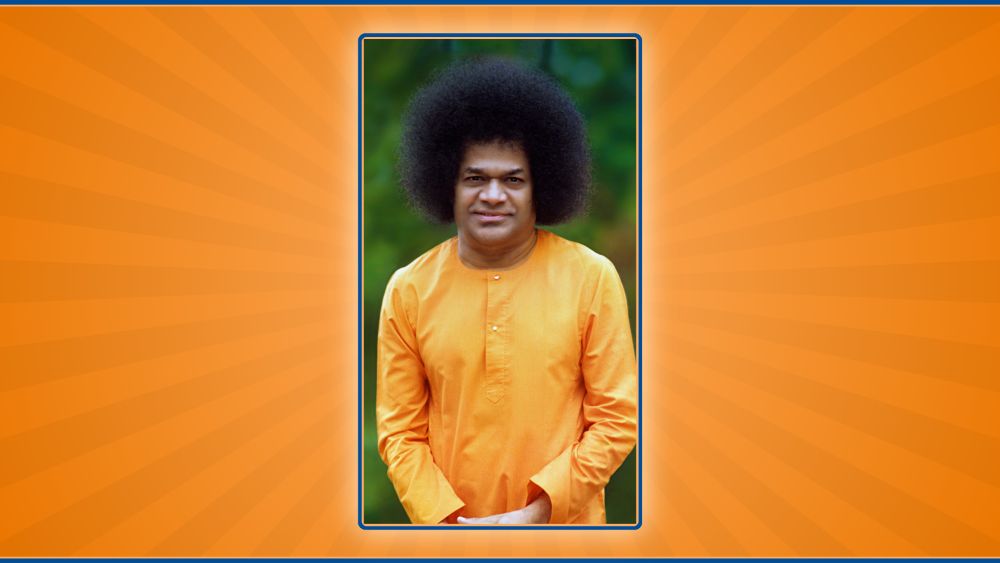
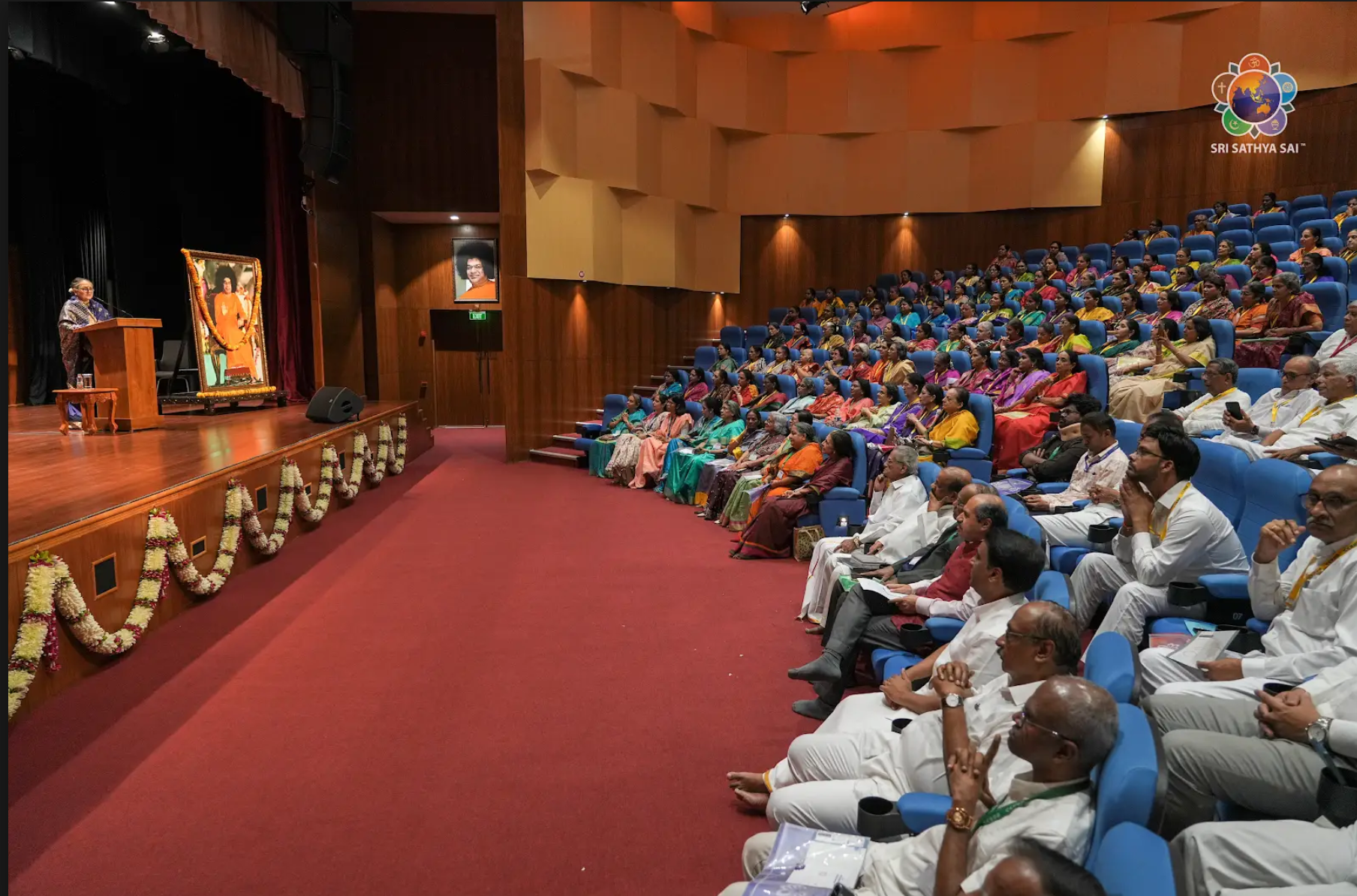
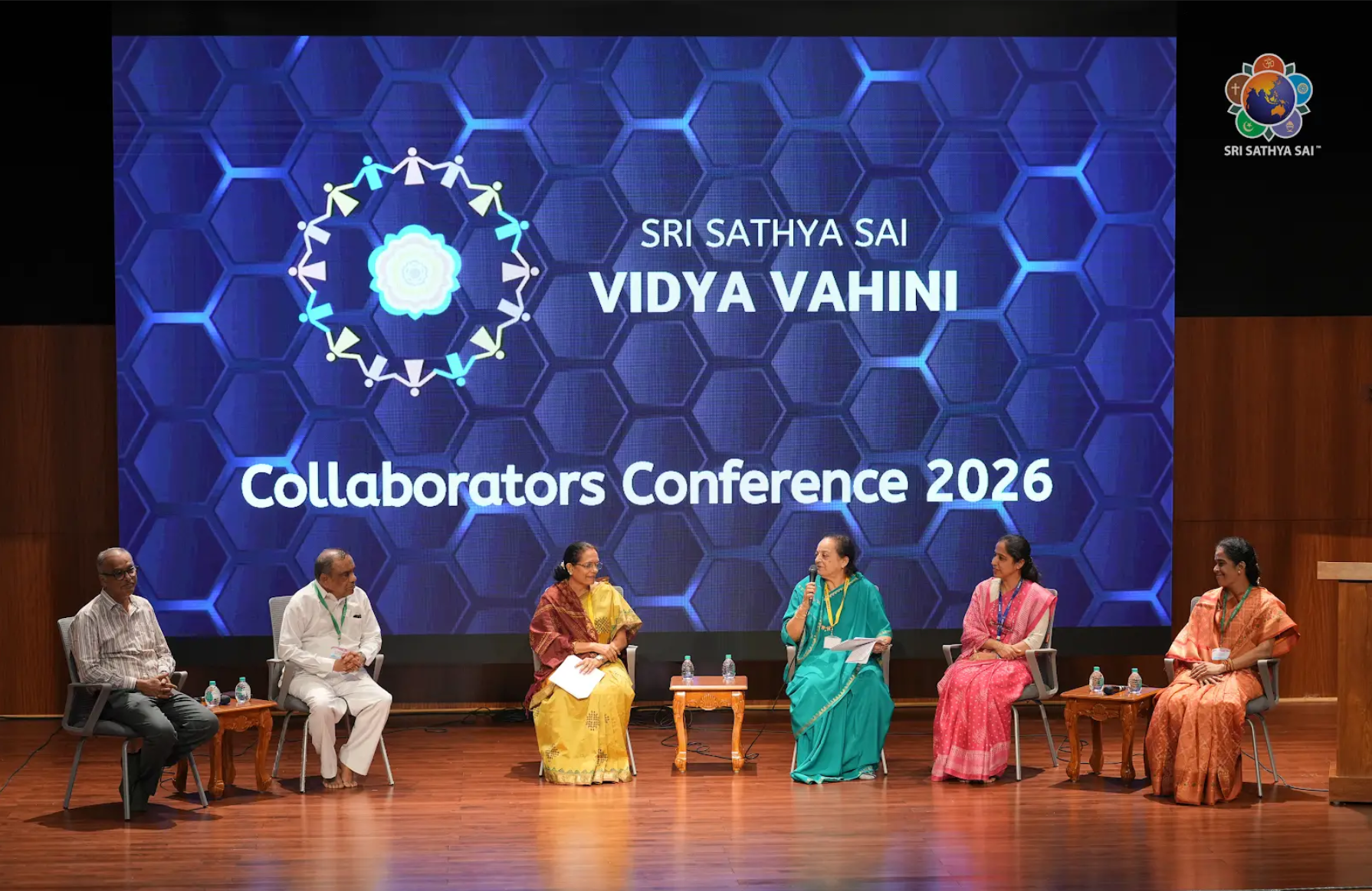
With the spirit of this beautiful prayer as a beacon light, the volunteers of Sri Sathya Sai Vidya Vahini (SSSVV), an EdTech platform through which volunteers build values-infused teaching resources for the school teachers of Bharat, congregated in the hallowed precincts of Prasanthi Nilayam, Puttaparthi. This is the Janmabhoomi and Karmabhoomi of our beloved Bhagawan Sri Sathya Sai Baba, and I was fortunate to be part of the collaborators’ conference held there on 18 and 19 September 2026.
SSSVV supplies school teachers with Learning Teaching Plans, Value Content plans, worksheets and multimedia aids built around human values. It is, by volume, the single largest contributor to the Prime Minister’s Digital Infrastructure for Knowledge Sharing (DIKSHA) portal, having uploaded more than 9,000 assets to date. Over the two days, collaborators from across the education sector shared their work and their views. The Director of SSSVV, Smt. Karuna Munshi, led from the front, proudly yet humbly, holding everyone together with quiet dignity and offering every achievement to Bhagawan Baba rather than to herself.
That was the question one speaker put to the gathering, and it framed much of what followed. Just as the sun does not charge a lotus to help it bloom, and a flowing river does not charge a field to irrigate it, education too should flow freely to all who need it. SSSVV operates under the aegis of the Sri Sathya Sai Central Trust, and is as much an exercise in nation building as it is an opportunity for volunteers like me to offer service, with love, to our beloved Master.
A Three-Legged Stool
The development of education, several speakers argued, rests on a three-legged stool: public, private and philanthropic institutions coming together to build the country’s educational road map. This is most visible in the case of children with special needs (CWSN), since many mainstream schools remain unwilling to accept and integrate them.
Shri Chetan Kapoor, Chief Executive Officer of the Tech Mahindra Foundation, spoke about connecting children with disabilities to solution providers as central to taking education to the last person in the queue, noting that those most in need of help are often unaware that platforms like SSSVV exist at all. Shri K. Chakravarthy (IAS, retired), Chancellor of the Sri Sathya Sai University, was looked up to by volunteers as a grandsire figure since Bhagawan Baba left the body, and his presence and words of encouragement were deeply valued through the two days.
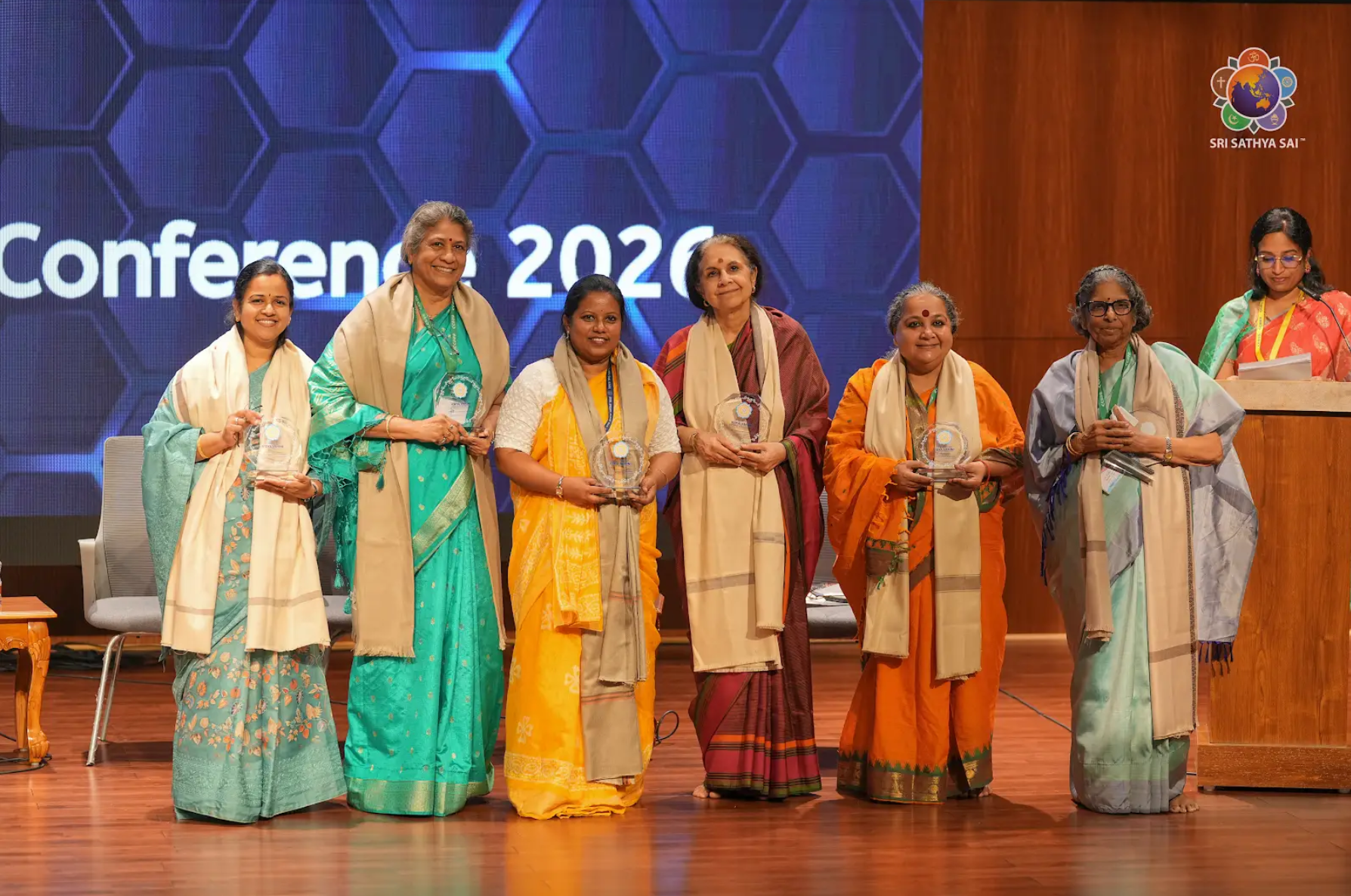
Sri P. Hariharan set out the structural challenge facing philanthropic education providers: beyond the Central Board of Secondary Education (CBSE), most Indian states run their own boards, each with its own curriculum and language of instruction. Creating content in every language is one challenge; reaching the users who need it most is a bigger one; and earning acceptance from academia, government, non-governmental organisations (NGOs) and public and private institutions alike is bigger still. He walked the gathering through the verticals under which SSSVV has built exactly that credibility.
Partnerships That Reach the Last Child
With the central government, SSSVV has partnered with the National Council of Educational Research and Training’s Central Institute of Educational Technology (NCERT–CIET) to build mainstream educational content, and content for inclusive schools, across Mathematics, Science, English and Environmental Studies (EVS), values-infused while staying true to the prescribed syllabus. With the NCERT syllabus recently revised, that content is now being remade and re-uploaded to DIKSHA. The organisation’s most significant DIKSHA contribution is content for children with special needs; workshops with the NCERT led the government to invite SSSVV to build the ‘Equitable and Inclusive Education – Learning for All’ vertical on DIKSHA, headed by Dr Srividya Sridhar.
With the NITI Aayog (National Institution for Transforming India), SSSVV ran a pilot in the aspirational district of Virudhunagar, Tamil Nadu, training teachers in SOPAAN, a bilingual foundational-learning programme, alongside foundational literacy and numeracy. Parallel work continues in the Vidisha district of Madhya Pradesh. Through IITM Pravartak, the Indian Institute of Technology (IIT) Madras has partnered with SSSVV to build ten teacher-upskilling courses on Swayam Plus, India’s industry-backed massive open online course (MOOC) platform for employability and professional skills; two of these are now compliant with the National Credit Framework (NCrF) and run for thirty hours each.
SSSVV’s collaboration with the Indian Space Research Organisation (ISRO) produced ‘Space on Wheels’, a customised truck carrying live models that introduce school children to space science. ISRO scientists have travelled with the truck through Karnataka, Tamil Nadu and Kerala. A separate partnership with the All India Institute of Speech and Hearing (AIISH), Mysuru, a Ministry of Health and Family Welfare institution, brings specialised health services to individuals with speech and hearing impairment.
Corporates Show Up
The corporate collaborations were, by the volunteers’ own account, some of the deepest. Tata Consultancy Services (TCS) helped build SSSVV’s content-delivery platform. The Association of Chartered Certified Accountants (ACCA) has run financial-literacy programmes with SSSVV and held Fin-Lit festivals together. Deloitte has held an annual Impact Day for over a decade, in which every employee, on a designated day, offers voluntary service to prepare content for SSSVV; the firm has now contributed more than 500,000 hours of that work. PricewaterhouseCoopers (PwC) held online interactions with 26 partner schools, in which PwC employees taught students using SSSVV-built content and gifted each school a Smart TV.
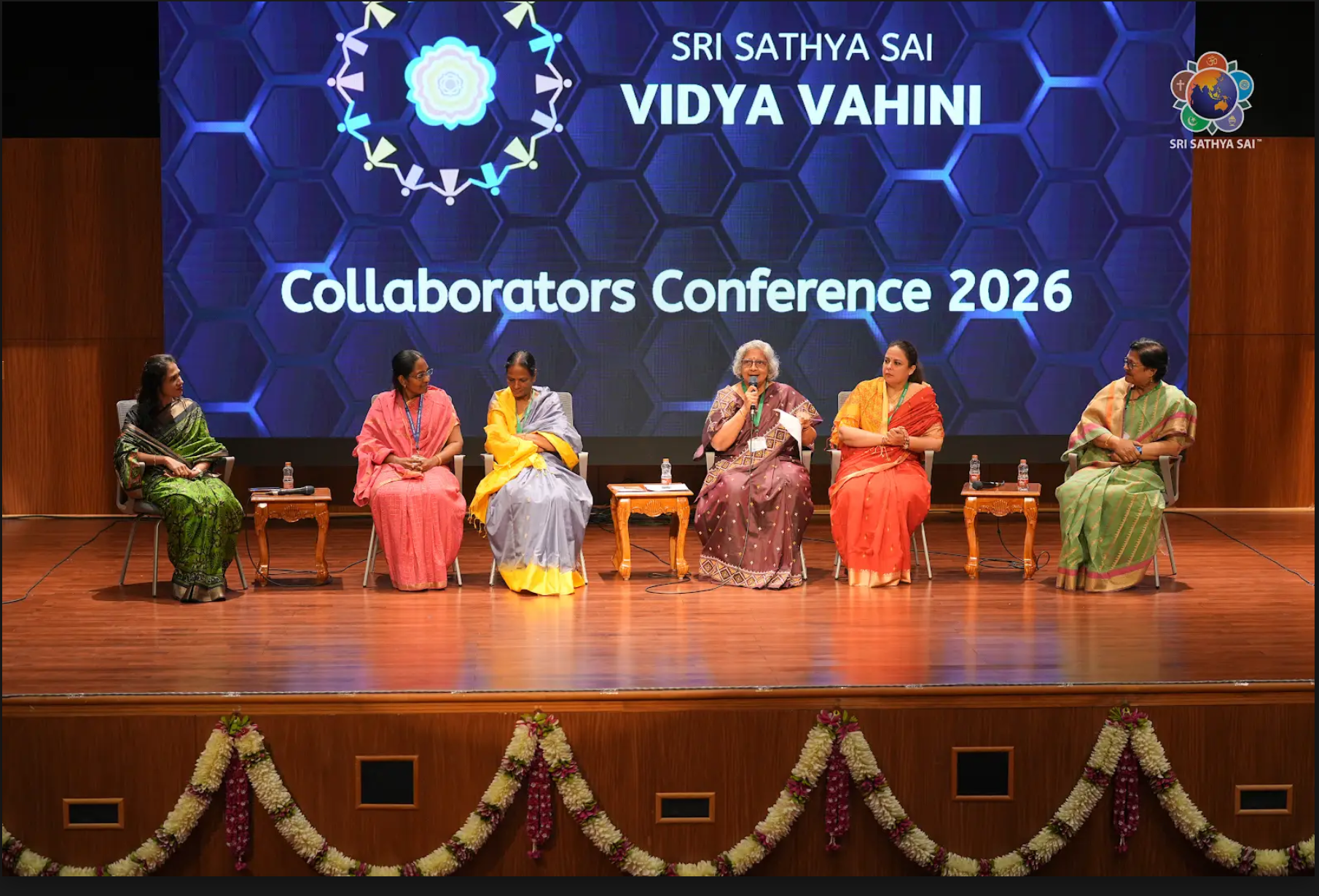
Beyond the large corporates, the conference recognised a wide circle of collaborators: Ms Premalatha Panneerselvam of the Mahatma Group of Schools, Madurai; the Father Agnel Multipurpose Group of Schools, Navi Mumbai; the Muskan Foundation; the Indore Deaf Bilingual Academy; the Together Foundation, Hosur; RSM; and Inditek Pioneer Solutions. Lovely Professional University, Punjab, is expected to join the list of collaborators soon. Three panel discussions brought panellists from public, private and philanthropic partners together, one after another, across the two days.
Voices from the Floor
Ms Ahuja posed a question that stayed with many of us: children run out of school the moment it ends, happy to go home. Why can’t schools be places children are just as happy to stay in?
Dr Goud, whose foundation gives 640 visually impaired children free schooling, college education, boarding and lodging, spoke of three stages the scriptures describe: Jnanam (knowing the skill), Vigyanam (understanding the skill) and Pragyanam (using the skill well). He praised SSSVV’s flagship Mission English programme, which he said matters well beyond examinations for visually impaired learners because it builds not just communication but the confidence to communicate, and with it, eligibility for employment. Of the 64 Kalaas, or classical skills, described in scripture, he said the visually impaired can already master 62, and that with technology, they should be positioned to master the remaining two by 2047.
Dr Balasubramanium spoke of Bhagawan Baba’s idea of Educare, holistic education that tends to body, mind and soul, and teaches the synchronicity of head, heart and hands. Mrs Bhuvaneswari Rajshekar, Principal of Tilak Public School, Nerul, Navi Mumbai, described her own route from what she calls the Sai Education Policy (SEP), learned during four years at the Sri Sathya Sai Girls College, Anantapur, to the National Education Policy (NEP) 2020, which she found strikingly close to the SEP she had grown up with, and which she has since built successfully into her own school.
A New Portal, and an MoU
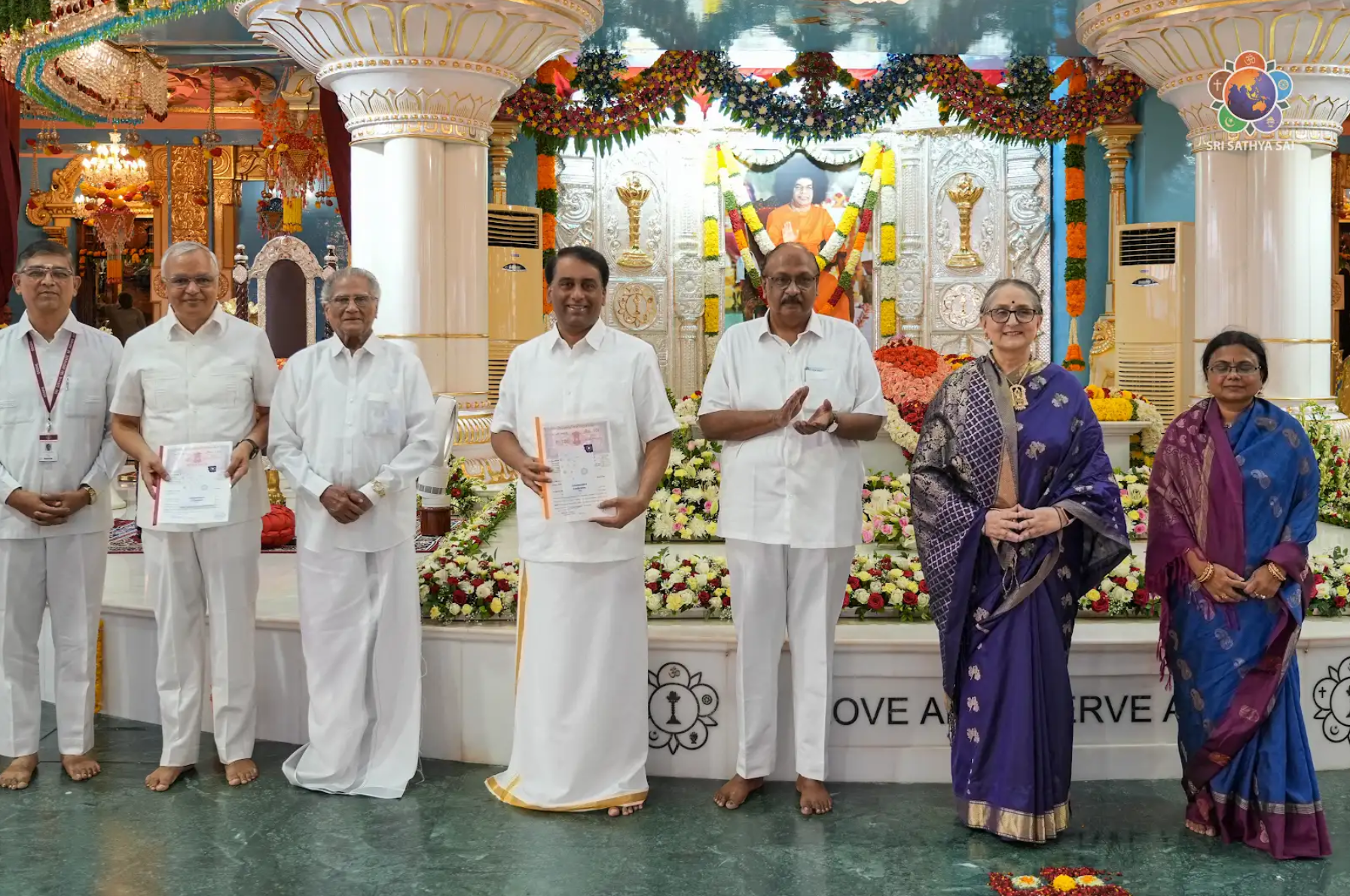
SSSVV used the conference to launch its portal on Inclusive Education, a free digital repository of barrier-free educational resources for neurodiverse learners and children with special needs, to be made available to every inclusive school that reaches out to SSSVV. Two interactive web-based learning games, built by students of the Sri Sathya Sai Institute of Higher Learning (SSSIHL) for neurodiverse learners, were also presented for the first time. The occasion further saw the exchange of a Memorandum of Understanding (MoU) between SSSVV and SSSIHL, formalising their collaboration on technology-enabled tools for inclusive education.
The Evening at Sai Kulwant Hall
The evening session, held in Sai Kulwant Hall, welcomed Mr TK Anil Kumar, Indian Administrative Service (IAS), Secretary for School Education and Literacy, Government of India, as Chief Guest. He commended SSSVV’s contribution to digital education at the national level, and underlined the importance of ethical artificial intelligence (AI), multilingual education and inclusive opportunity for learners with special needs. A soulful musical presentation by Manoj Govindraj and Adithya Venkatesh closed the evening for a hall full of volunteers.
Just What Each Child Needs
Every child needs equity, not sameness. To succeed, each child needs a specific kind of support, resources and opportunity of their own; treating every child identically can be an exercise in futility, because no two humans share the same fingerprints, the same looks, the same habits, or the same needs. Our task is to give each child just what they need to blossom.
Readers wishing to volunteer, with a skill, time, or simply willingness, can reach Sri Sathya Sai Vidya Vahini through www.srisathyasaividyavahini.org
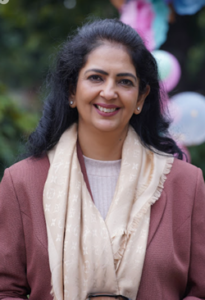 Priya Tandon | About the Author Priya Tandon is a versatile individual with a diverse skill set and a strong educational background, holding a B. Com (Hons) LLB degree. Alongside her roles as a Member of the National Stock Exchange and Vice-President of the Tandon Foundation, Priya wears many hats in her professional life. A talented writer, artist, blogger, lyricist, and homemaker, Priya’s creative endeavors span various domains, showcasing her passion for self-expression and storytelling. As a co-author of seven books, including titles like “Sunrays for Sunday” and “Sunrays for Friday,” Priya’s works are deeply rooted in the teachings of her spiritual guide, Guru Bhagwan Sri Sathya Sai Baba. |
If you would like to get connected to Priya Tandon write to editor@acadnews.com.