







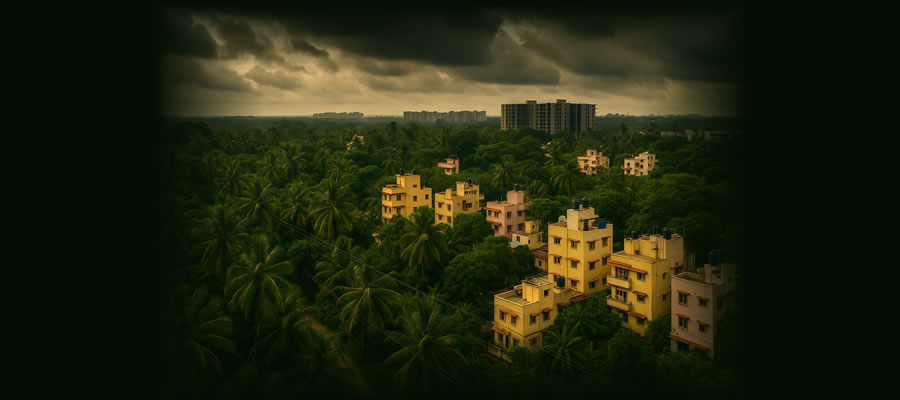
Bengaluru’s Vanishing Urban Forests in the Age of Concrete
From the terraces of Bengaluru’s expanding suburbs, a bittersweet panorama unfolds—one that tells the story of India’s fastest-growing tech hub caught between its green heritage and concrete ambitions.
Bengaluru’s Green-Concrete Reality
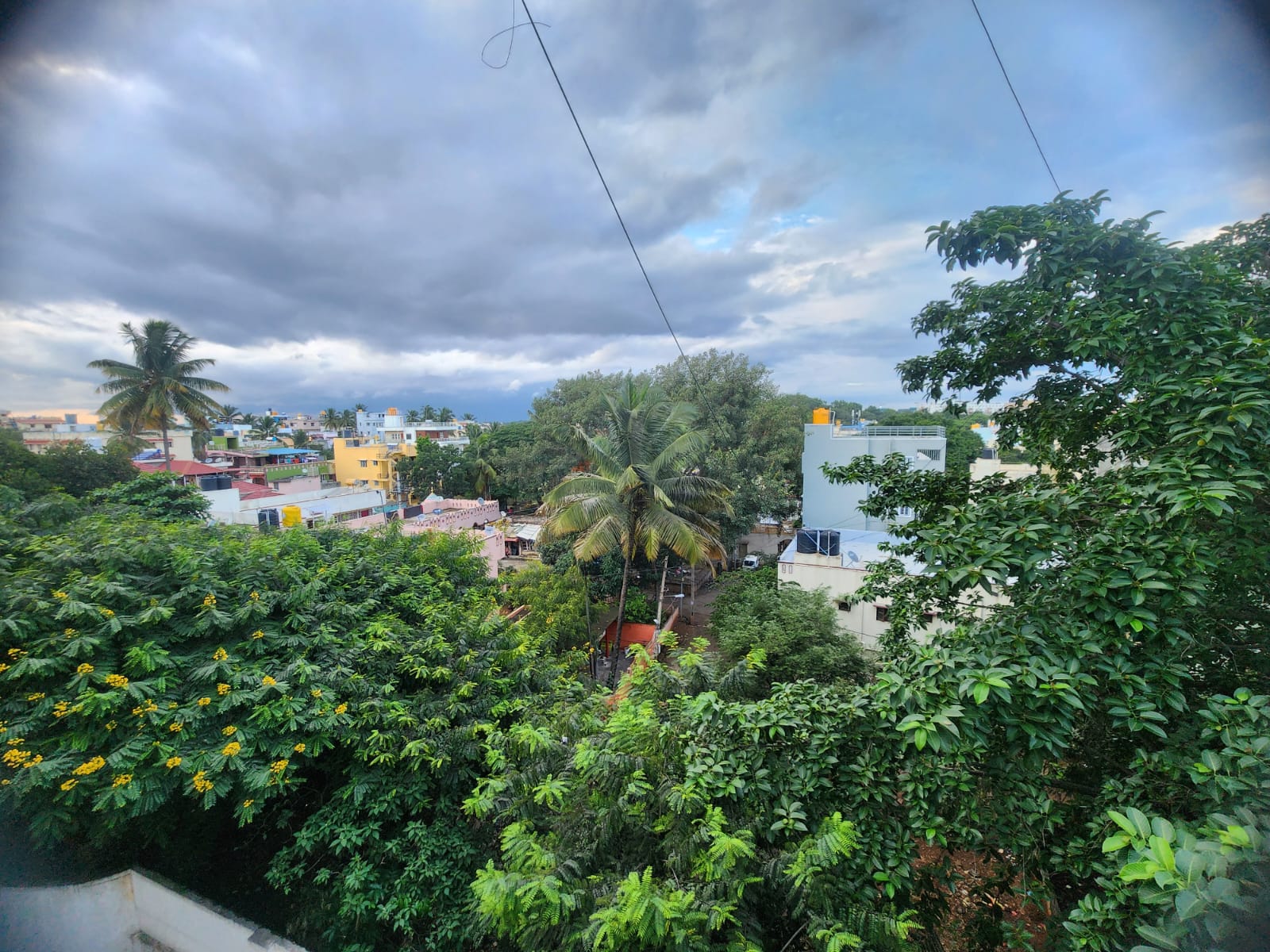
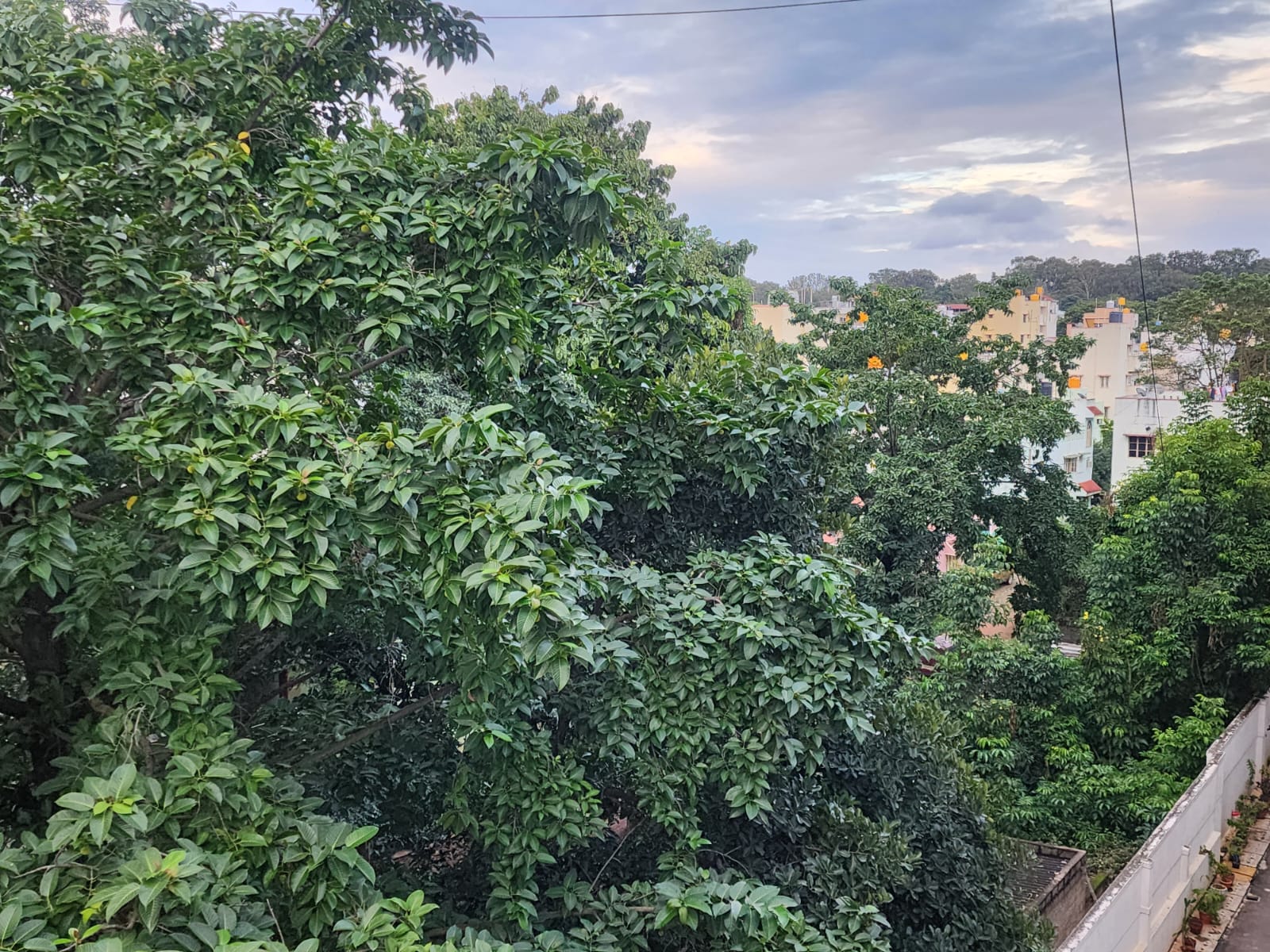
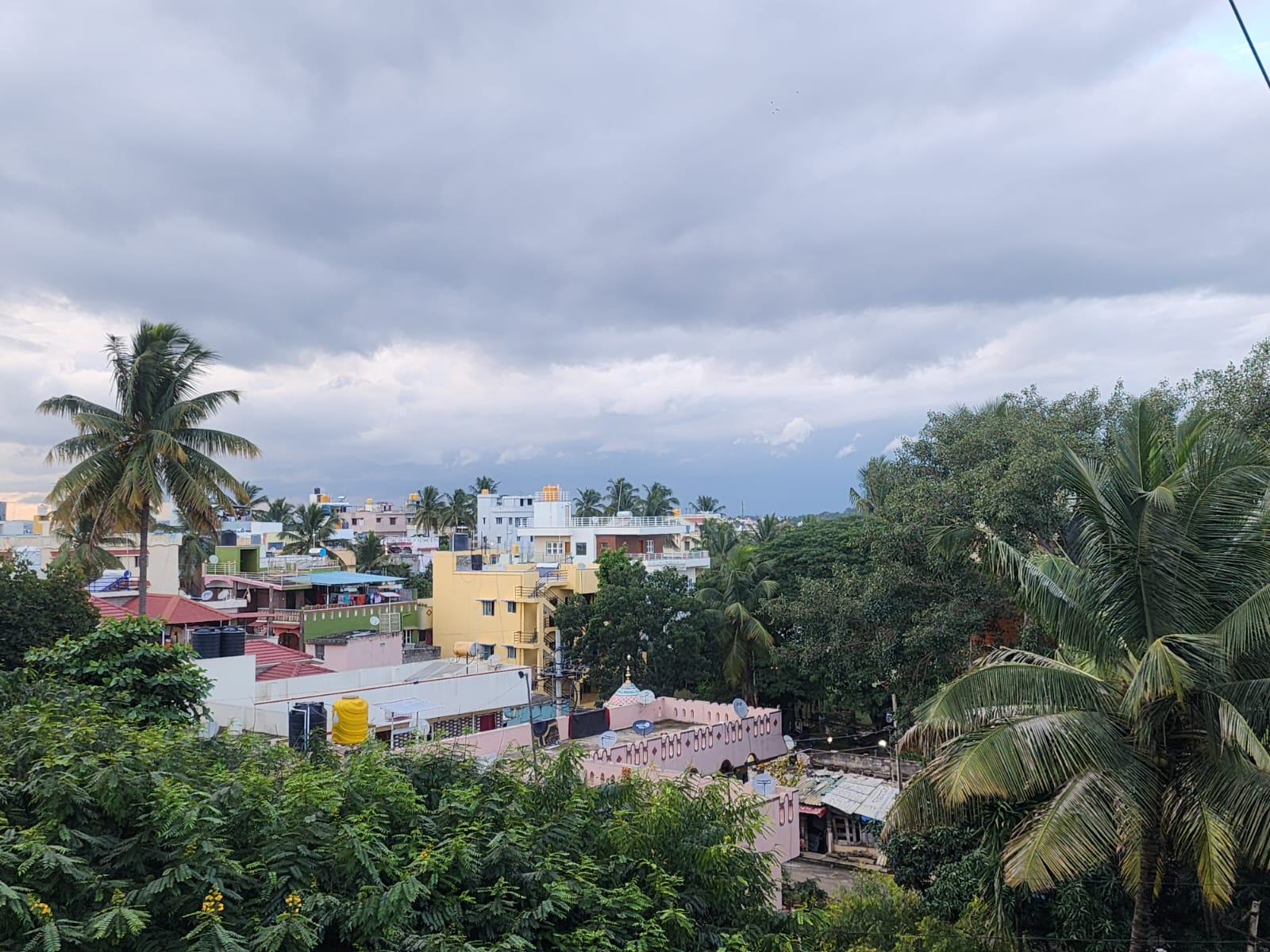
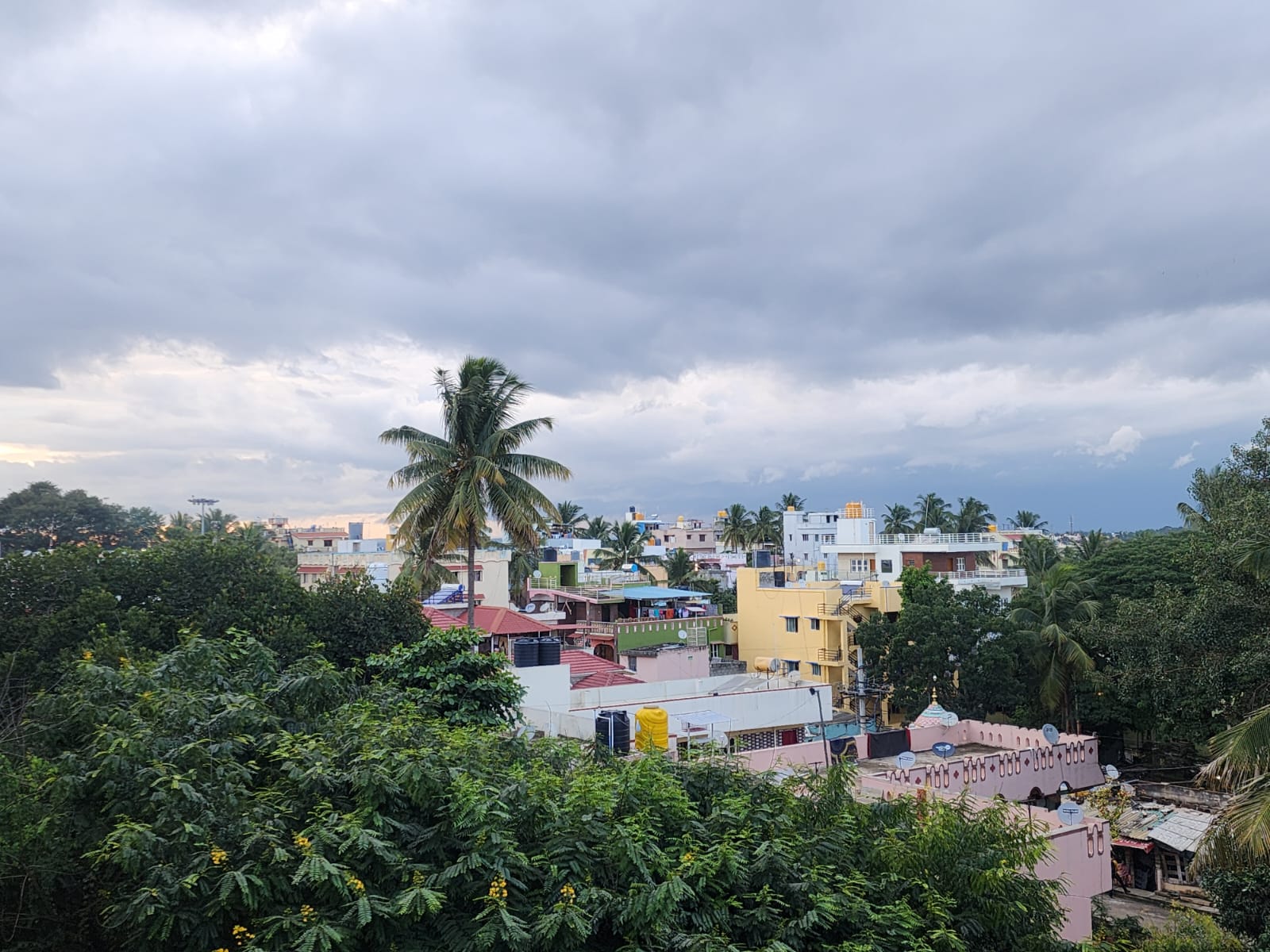
These photographs, captured from the outskirts of Bengaluru during the onset of monsoon season, reveal a city in profound transition. The dramatic cloudy skies seem to mirror the uncertainty below—where coconut palms and indigenous trees stand as silent witnesses to an urbanization process that threatens to erase the very green identity that once defined this “Garden City.”
Climate Reality Check
Bengaluru has lost 88% of its green cover since 1973, contributing to a 2-3°C temperature rise
The Concrete Creep
What strikes most powerfully in these images is the aggressive march of concrete structures—yellow, pink, and white buildings that seem to sprout from the earth with an almost organic inevitability. Yet this growth pattern tells a troubling story. Unlike the planned green corridors of European cities or the vertical forests of Singapore, Bengaluru’s expansion follows a more chaotic logic driven by real estate speculation and inadequate urban planning.
Each multi-story structure visible in these frames represents families seeking better lives, entrepreneurs chasing dreams, and a city trying to accommodate explosive growth. But at what cost? The dense vegetation that once provided natural air conditioning, flood control, and biodiversity is being systematically replaced by heat-absorbing concrete and asphalt.
The Numbers Don’t Lie
- 1960s: Bengaluru had 68% green cover
- 2025: Less than 8% green cover remains
- Heat island effect: City centers now 5-7°C hotter than surroundings
- Flooding frequency: Increased 400% in the last decade
Nature’s Last Stand
Yet these photographs also capture something resilient and hopeful. Notice how the existing vegetation—the towering coconut palms, the dense undergrowth, the fruit trees—continues to thrive in the spaces between buildings. This isn’t accidental; it’s a testament to both nature’s persistence and the lingering wisdom of residents who understand that trees aren’t luxury but necessity.
The lush green canopy visible in these images serves multiple critical functions. During Karnataka’s increasingly unpredictable monsoons, these trees prevent soil erosion and reduce flood risk. In the scorching summer months, they provide crucial shade and cooling through evapotranspiration. For local communities, they offer everything from fresh coconuts to medicinal plants to nesting sites for the birds that still call urban Bengaluru home.
Solutions on the Horizon
• Mandatory 30% green cover for new developments • Rooftop gardens and vertical farming initiatives • Community-led tree plantation drives • Greywater recycling for urban agriculture • Integration of traditional water harvesting systems
A Climate Crossroads
The dramatic sky captured in these photographs—heavy with monsoon clouds—serves as a powerful metaphor for the climate challenges facing not just Bengaluru but cities across the Global South. As climate change intensifies, the city experiences more extreme weather patterns: devastating droughts followed by catastrophic floods, heat waves that make outdoor work impossible, and air quality that routinely exceeds safe limits.
The urban heat island effect, exacerbated by the loss of green cover, means that Bengaluru’s residents now endure temperatures that their grandparents never experienced. This isn’t just uncomfortable—it’s dangerous, particularly for outdoor workers, children, and the elderly.
“We are the last generation that can choose to live in harmony with nature, or the first to face the full consequences of ignoring it.”
— Dr. Harini Nagendra, Urban Ecologist, Azim Premji University
The Path Forward
These images from Bengaluru’s periphery offer more than documentation—they provide a blueprint for what thoughtful urban development might look like. Notice how some buildings seem to emerge from the landscape rather than dominate it, how green corridors connect different areas, how traditional architecture still accommodates the climate rather than fighting it.
The future of cities like Bengaluru depends on learning from these organic patterns of development while applying modern understanding of sustainable urban planning. This means mandating green building standards, protecting existing tree cover, and creating new models of development that see nature not as an obstacle to progress but as its foundation.
As the monsoon clouds gather over these neighborhoods, they remind us that nature still sets the rhythm of life here. The question is whether we’ll learn to dance to that rhythm or be swept away by our own concrete tide.
Join the Movement
Every tree planted, every rooftop garden, every voice raised for green spaces matters. Bengaluru’s future—and our planet’s—depends on the choices we make today.
 M Muruganant | About the Author Professor M. Muruganant is a distinguished academic and innovator who earned his Doctorate from the University of Cambridge, UK, through prestigious Commonwealth and DAAD fellowships. |
| Professor Muruganant, with extensive experience in academia and management, formerly served as the Director of Higher Education at Adani Group, where he established Adani University and served as its inaugural Provost. He founded the Global Education Forum, focusing on educational transformation and sustainability. Recognized as an institutional leader, he has initiated several centers to empower faculty and enhance student experiences. His contributions to materials science are notable, and he advocates for STEAM education while emphasizing value education and Bharatiya culture. As the youngest Ministry of Steel Chair Professor, he promotes academic initiatives and engages in significant policy discussions on India’s National Education Policy – 2020. | |
If you would like to get connected to Dr M Muruganant write to editor@acadnews.com.