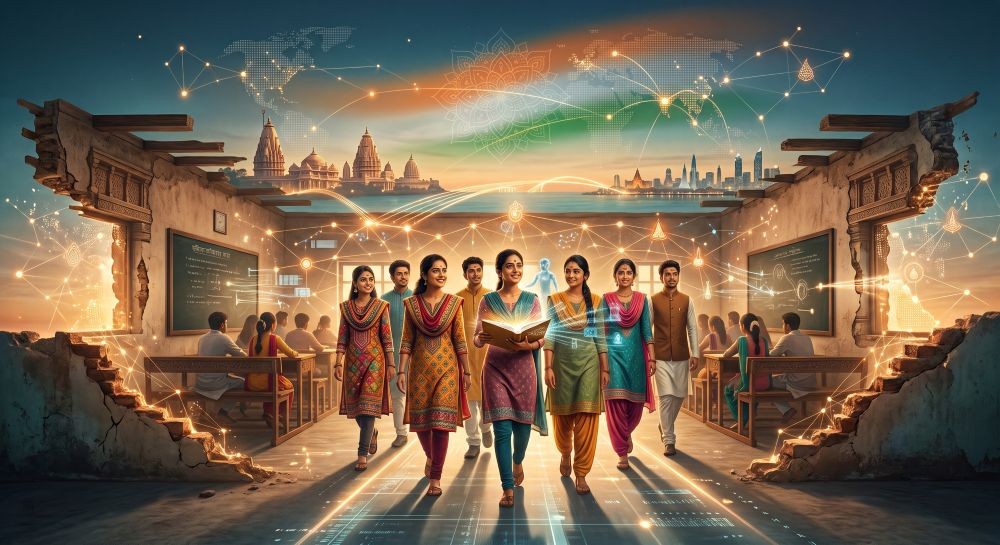







The education outcomes for future citizens should aim to develop a well-rounded set of skills, knowledge, and values that prepare individuals to thrive in a rapidly changing and interconnected world. Here are some key education outcomes for future citizens:
- Critical Thinking and Problem-Solving: Future citizens should be equipped with the ability to analyze information critically, think creatively, and solve complex problems. They should be able to evaluate different perspectives, make informed decisions, and apply logical reasoning in various contexts.
- Creativity and Innovation: Education should foster creativity and encourage individuals to think outside the box. Future citizens should be able to generate new ideas, embrace ambiguity, and adapt to changing circumstances. They should be encouraged to explore their passions and develop innovative solutions to societal challenges.
- Adaptability and Flexibility: Given the pace of change in the world, future citizens should be adaptable and resilient. Education should equip individuals with the skills to navigate uncertainty, embrace change, and learn from failure. They should be prepared to continuously learn and upskill throughout their lives.
- Collaboration and Teamwork: Future citizens should possess strong interpersonal skills and be able to work effectively in diverse teams. Education should promote collaboration, empathy, and effective communication. Individuals should be able to collaborate across cultures, disciplines, and perspectives to achieve common goals.
- Digital Literacy and Technological Proficiency: In an increasingly digital world, future citizens should be digitally literate and proficient in using technology. They should have the skills to navigate digital platforms, critically evaluate online information, and leverage technology for communication, creativity, and problem-solving.
- Cultural Competence and Global Awareness: Education should foster cultural competence and a global mindset. Future citizens should have an understanding and appreciation of diverse cultures, languages, and perspectives. They should be able to engage respectfully with people from different backgrounds and contribute positively to a globalized society.
- Environmental Consciousness: Education should instill a sense of environmental responsibility and sustainability. Future citizens should be aware of the impact of their actions on the environment and be equipped with the knowledge and skills to address environmental challenges. They should be advocates for sustainable practices and be committed to preserving the planet for future generations.
- Ethical Decision-Making: Education should develop a strong moral compass and ethical decision-making skills in future citizens. They should understand the importance of integrity, empathy, and social justice. Individuals should be able to navigate ethical dilemmas and make principled decisions that consider the well-being of individuals and communities.
- Lifelong Learning: Given the rapid pace of change, future citizens should be lifelong learners. Education should instill a love for learning, curiosity, and a growth mindset. Individuals should be equipped with the skills and motivation to pursue continuous learning, adapt to new technologies, and stay relevant in their personal and professional lives.
- Entrepreneurial Mindset: Education should foster an entrepreneurial mindset, encouraging individuals to take initiative, embrace risk, and create value. Future citizens should be equipped with the skills to identify opportunities, think innovatively, and navigate the complexities of the modern world.
These education outcomes for future citizens aim to develop individuals who are adaptable, innovative, culturally competent, environmentally conscious, and ethically responsible. They should possess the skills and values necessary to contribute positively to society, navigate global challenges, and lead fulfilling lives.
Future Citizens: Skillset required and the Education focus a glimpse presented in below tables.
| Aspect | Future Citizens |
|---|---|
| Skillset | Critical thinking and problem-solving |
| Creativity and innovation | |
| Adaptability and flexibility | |
| Collaboration and teamwork | |
| Digital literacy and technological proficiency | |
| Cultural competence and global awareness | |
| Emotional intelligence and resilience | |
| Environmental consciousness | |
| Ethical decision-making | |
| Lifelong learning | |
| Entrepreneurial mindset | |
| Civic engagement and social responsibility |
Education:
| Aspect | Future Education |
|---|---|
| Learning Methods | Personalized and adaptive learning |
| Project-based and experiential learning | |
| Blended and online learning | |
| Gamification and immersive technologies | |
| Collaborative and cooperative learning | |
| Skills-based and competency-focused education | |
| Interdisciplinary and holistic learning | |
| Continuous and lifelong learning | |
| Global and multicultural education | |
| Emphasis on critical thinking and problem-solving | |
| Integration of technology and digital tools | |
| Focus on creativity, innovation, and entrepreneurship |
In the future, citizens will require a broader skillset to thrive in a rapidly changing world. Education will need to adapt to meet these evolving needs, shifting towards personalized and adaptive learning methods. The focus will be on developing critical thinking, creativity, adaptability, and collaboration skills. Future citizens will also need to be digitally literate, culturally competent, and environmentally conscious. Education will emphasize interdisciplinary and holistic learning, integrating technology and fostering an entrepreneurial mindset. Lifelong learning and civic engagement will be encouraged, promoting social responsibility and ethical decision-making.
Please note that these are general characteristics and the specific attributes of future citizens and education may vary depending on cultural, social, and technological contexts.