







The All India Council for Technical Education (AICTE) is a statutory body established by the Government of India to regulate and promote technical education in the country. It was established in 1945 as an advisory body and was later given statutory status in 1987.
The main objectives of AICTE are:
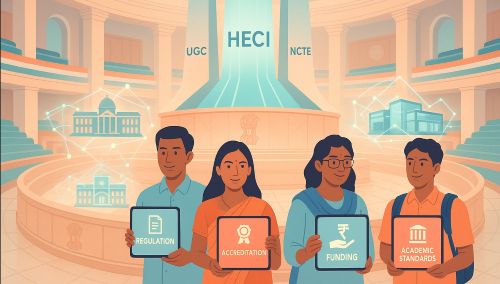
- Regulation and Approval: AICTE is responsible for regulating and approving technical education institutions in India. It formulates policies and guidelines for the establishment and functioning of technical institutions, including engineering colleges, management institutes, and polytechnics.
- Curriculum Development: AICTE plays a role in curriculum development and revision for technical education programs. It sets guidelines and standards for course content, teaching methods, and evaluation procedures. It encourages the inclusion of emerging areas of knowledge and industry-relevant skills.
- Quality Assurance: AICTE ensures the quality of technical education in India by conducting inspections and assessments of institutions. It sets standards and norms for infrastructure, faculty, and other resources. It also encourages institutions to adopt best practices and quality improvement measures.
- Research and Development: AICTE promotes research and development activities in technical education institutions. It provides funding and support for research projects, encourages collaboration between academia and industry, and facilitates technology transfer and innovation.
- Industry-Institution Interaction: AICTE encourages collaboration and interaction between technical education institutions and industries. It facilitates internships, industrial visits, and guest lectures by industry experts. It also promotes entrepreneurship and skill development among students.
- Student Welfare: AICTE takes initiatives for the welfare of students in technical education institutions. It provides scholarships and financial assistance to deserving students. It also ensures the availability of necessary facilities and resources for the overall development of students.
- International Cooperation: AICTE promotes international cooperation and collaborations in technical education. It facilitates student and faculty exchange programs, joint research projects, and partnerships with foreign institutions.
AICTE plays a vital role in ensuring the quality, relevance, and growth of technical education in India. It strives to maintain high standards, foster innovation and research, and bridge the gap between academia and industry. Its efforts contribute to the overall development of technical professionals and the progress of the nation.